🥟 Wanton Mee vs 🍴 Fishball Noodles: Singapore's Ultimate Food Showdown
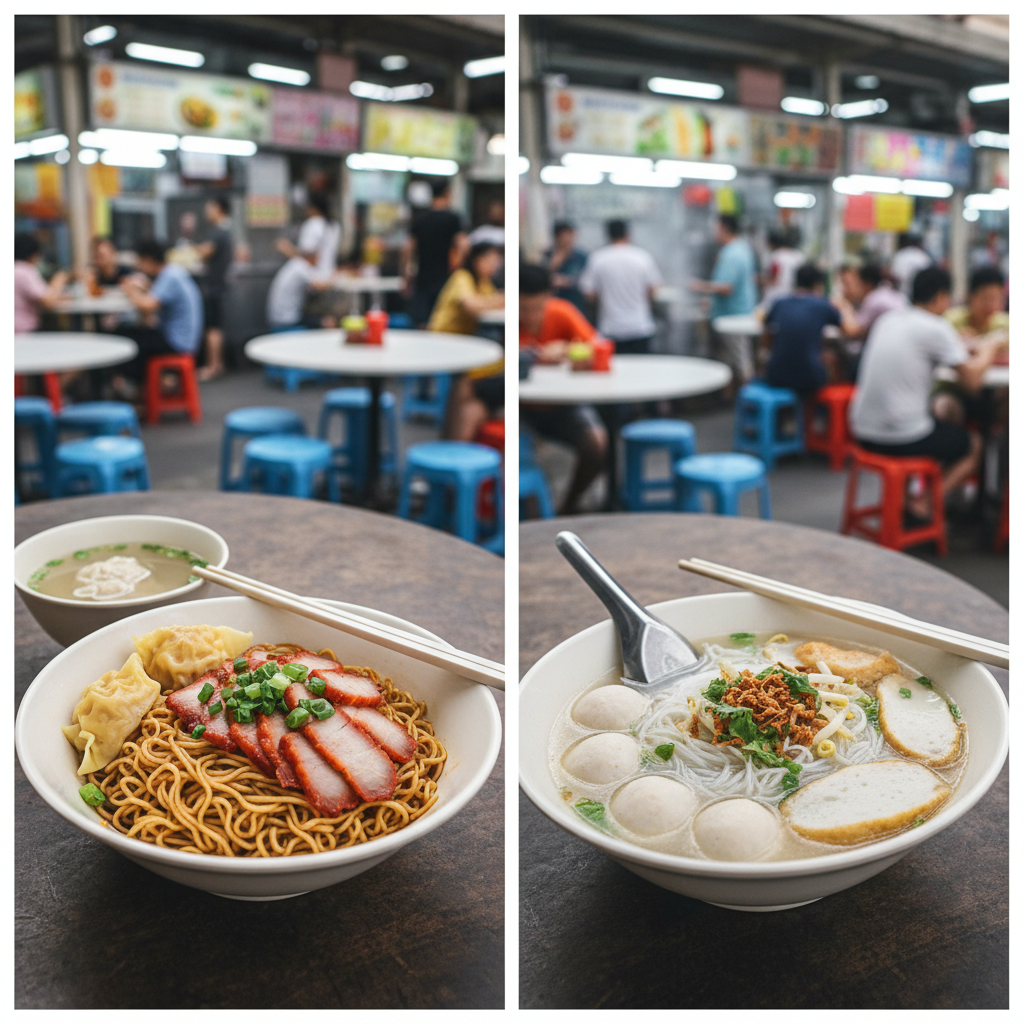
Eh, foodies! If there’s one thing Singaporeans love more than complaining about the weather, it’s talking about food. And today, we’re diving headfirst into a classic hawker centre clash that gets hearts racing and stomachs rumbling: the epic showdown between Wanton Mee and Fishball Noodles! Both are iconic, both are utterly delicious, and both hold a special place in our national culinary heart. But if you had to pick just ONE for your lunch, which would it be? 😱 This isn't just about noodles and toppings; it's about history, texture, flavour profiles, and that undeniable 'oomph' that makes a dish truly Singaporean. Are you Team Wanton Mee, with its savoury char siu and plump dumplings? Or are you a loyal follower of the bouncy, QQ goodness of Fishball Noodles? Join me as we dissect these two legends, pitting them against each other in a no-holds-barred food battle. Get ready to salivate, because things are about to get *shiok*!
🥟 Wanton Mee: The Char Siu & Dumpling Champion!
History and Origin in Singapore
Wanton Mee, while having its roots in Cantonese cuisine, has evolved significantly in Singapore. Unlike its Hong Kong counterpart (which is typically served in a soupy broth), Singaporean Wanton Mee often comes in a 'dry' version, tossed in a dark, savoury, and often spicy sauce. It's believed that early Hainanese hawkers adapted the dish, adding their unique touch, leading to the distinct style we love today. It’s a testament to Singapore’s culinary melting pot!What Makes It Special
Oh, where to begin! Singapore Wanton Mee is a symphony of textures and flavours. You've got the incredibly springy, al dente egg noodles, coated in a secret blend of dark soy sauce, chilli, and often a touch of lard (for that irresistible fragrance, lah!). Then there’s the star of the show: thin slices of succulent char siu (barbecued pork), usually lean but caramelised beautifully. And of course, the wantons themselves – small, flavourful pork dumplings, either deep-fried to a crisp golden brown or boiled tenderly in a light broth. The combination is just *sedap*!Best Places to Eat It
1. Joo Chiat Wanton Mee (59 Joo Chiat Place): Famous for its springy noodles and aromatic chilli sauce. A true institution! 2. Kok Kee Wanton Mee (Hong Lim Market & Food Centre, #02-19): A heritage brand known for its traditional, old-school taste, especially the lard-laced sauce. 3. Nam Seng Noodle House (25 China St, #01-01 Far East Square): A legendary stall, run by an elderly hawker, serving a consistent, comforting bowl for decades.Price Range
Expect to pay between SGD 3.50 to SGD 6.00 for a standard plate, depending on the stall and portion size.Taste Profile
A burst of umami from the sauce, balanced with a subtle sweetness from the char siu, and a delightful kick from the chilli. The noodles are firm and chewy, the char siu tender, and the wantons provide either a crispy crunch or a comforting chewiness. It's a robust, satisfying flavour bomb!🍴 Fishball Noodles: The Bouncy, Brothy Delight!
History and Origin in Singapore
Fishball Noodles, often associated with Teochew cuisine, is another quintessential hawker staple deeply ingrained in Singapore's food fabric. The craft of making fishballs by hand, from fresh fish paste, has been passed down through generations. These humble noodles have been a source of comfort and sustenance for Singaporeans for decades, appearing in almost every hawker centre and coffee shop across the island.What Makes It Special
The magic of Fishball Noodles lies in its simplicity and the quality of its core ingredients. The fishballs themselves are paramount – they should be bouncy ('QQ' as we say!), light, and made from fresh fish, giving them a subtle sweetness. The dish comes in two main forms: 'dry' (tossed in a vinegary, chilli, and soy sauce concoction) or 'soup' (served in a clear, flavourful broth). Both versions often include springy yellow noodles or kway teow, slices of fishcake, and sometimes a minced pork topping, all garnished with spring onions and fried shallots.Best Places to Eat It
1. Thye Hong Fishball Noodle (ABC Brickworks Market & Food Centre, #01-138): Known for their bouncy, handmade fishballs and robust chilli sauce in the dry version. 2. Ah Hua Eating House (427 Beach Rd): A popular spot for its springy noodles and delicious, fresh fishballs, often with a good queue. 3. Song Kee Fishball Noodle (128 Tembeling Rd): Famous for their unique, elongated fish dumplings and a distinctly flavourful dry chilli sauce.Price Range
Typically ranges from SGD 3.00 to SGD 5.50 for a standard bowl, making it a super affordable and satisfying meal.Taste Profile
Clean, light, and refreshing for the soup version, with a delicate sweetness from the fish. The dry version offers a tangy, spicy, and savoury punch from the vinegar and chilli, perfectly complementing the subtle flavour of the fishballs and fishcake. The noodles are firm, and the fishballs are wonderfully chewy and bouncy.⚔️ Head-to-Head: The Ultimate Hawker Showdown!
Taste Comparison
* Wanton Mee: Offers a more intense, complex flavour profile. The dark sauce is rich, the char siu adds sweetness and smokiness, and the chilli brings the heat. It’s a full-bodied, indulgent experience. * Fishball Noodles: Generally lighter and fresher. The dry version has a vibrant tang from the vinegar and chilli, while the soup version is clean and comforting. The focus is on the springy texture of the noodles and the bouncy freshness of the fishballs.Value for Money
Both dishes are incredibly wallet-friendly. Fishball Noodles often slightly edge out Wanton Mee in terms of starting price point (you can find bowls for as low as SGD 3.00). However, a larger, more satisfying bowl of Wanton Mee with generous char siu and wantons might feel like a more substantial meal for a similar price. It's a close call here, as both offer fantastic bang for your buck.Availability
Excellent for both! You’d be hard-pressed to find a hawker centre in Singapore without at least one stall selling either Wanton Mee or Fishball Noodles. They are omnipresent, making them easy to satisfy your craving anytime, anywhere. Wanton Mee stalls might be slightly more specialised, while fishball noodles are often sold alongside other Teochew-style noodles like Bak Chor Mee.Tourist-Friendliness
* Wanton Mee: Can be quite spicy, which might be a surprise for some tourists. However, the flavours are generally familiar (pork, noodles, dumplings), making it an approachable choice. * Fishball Noodles: The soup version is arguably one of the most 'gentle' introductions to Singapore hawker food. Its clean flavours and bouncy textures are generally well-received. The dry version's vinegary kick might be an acquired taste for some, but it’s easy to ask for less chilli and vinegar!🏆 The Verdict: Who Reigns Supreme?
Winner: Wanton Mee (by a hair, for indulgence!)
Alright, folks, this was a *tough* battle! Both Wanton Mee and Fishball Noodles are undisputed champions in their own right, and honestly, you can't go wrong with either.
However, if I absolutely *had* to pick a winner for sheer indulgence and a complex flavour journey, I'd lean towards **Wanton Mee**. The rich, savoury-spicy sauce, the tender char siu, and the crispy/tender wantons just create an explosion of taste and texture that’s hard to beat. It feels like a more 'complete' and satisfying meal for those moments when you want to treat yourself to something truly flavourful. It’s got that 'oomph' factor that leaves you craving for more!
But let's be real, Fishball Noodles isn't far behind. For an everyday comfort food, a lighter meal, or when you just want that bouncy, clean deliciousness, Fishball Noodles is the clear victor. It's the perfect choice when you want something comforting but not overly heavy. So, while Wanton Mee snags the 'ultimate indulgence' crown, Fishball Noodles remains the reigning champion of 'everyday comfort'. Truly, both are must-tries when you're here in Singapore!
📍 Where to Try: Your Hawker Food Adventure Starts Here!
- [object Object]
- [object Object]
❓ Frequently Asked Questions
🎯 Final Thoughts
And there you have it, folks – a delicious deep dive into two of Singapore's most beloved noodle dishes! Whether you’re team Wanton Mee or team Fishball Noodles, one thing is certain: our hawker scene is a treasure trove of flavours, history, and pure culinary joy. Don't just take my word for it; head out to one of the recommended stalls, grab a bowl (or two!), and decide for yourself which noodle legend truly captures your heart and your stomach.
So, which one are YOU craving right now? Let me know in the comments below! Share your favourite stall or memory with these iconic dishes. Happy eating, and remember to always eat with an open heart and a hungry belly! #SupportLocalHawkers 🇸🇬