The Ultimate Guide to Wanton Mee in Singapore: A Hawker Food Enthusiast's Handbook
Introduction: Your Gateway to Wanton Mee Wonderland
Selamat datang, fellow food adventurers! If you’re like me, constantly on the prowl for the next unforgettable hawker experience, then you’ve landed in the right place. Today, we’re diving headfirst into the comforting, complex, and utterly captivating world of Wanton Mee – a Singaporean hawker staple that holds a special place in the hearts (and stomachs) of locals and tourists alike. This isn't just a plate of noodles; it's a symphony of textures and flavours, a testament to culinary heritage, and a dish that truly defines Singapore's vibrant food scene. In this ultimate guide, you'll learn everything from its fascinating history and diverse components to where to find the absolute best renditions across our sunny island, along with crucial ordering tips, price expectations, and insider secrets that'll turn you into a Wanton Mee connoisseur in no time. Get ready to slurp, chew, and savour!
The Hearty History of Wanton Mee: From Guangzhou to Our Hawker Plates
While Wanton Mee (云吞面) might feel inherently Singaporean, its roots stretch back across the South China Sea, primarily to Guangzhou and Hong Kong. Originally, it was a simple, comforting bowl of springy egg noodles, delicate pork and prawn dumplings (wantons), and sometimes thin slices of char siew (BBQ pork), all bathed in a clear, flavourful broth.
When early immigrants from Southern China arrived in Singapore, they brought their culinary traditions with them. However, as with many dishes, Wanton Mee underwent a glorious local transformation. In Singapore, the 'dry' version became king. Instead of a predominant soup, local hawkers developed a rich, dark sauce – a secret blend of dark soy sauce, sesame oil, sometimes lard oil, and crucially, a fiery chilli paste – tossed generously with the noodles. The char siew evolved too, often featuring a distinctively red hue and a sweeter glaze, appealing to local palates. Fried wantons also became a popular accompaniment, adding a delightful crispy dimension not typically found in its Cantonese counterparts. This evolution created a dish that is uniquely Singaporean, a perfect blend of heritage and local innovation.
Decoding the Delicious Components: What Makes a Great Wanton Mee?
A perfect plate of Wanton Mee is a harmonious ensemble of distinct elements, each playing a crucial role:
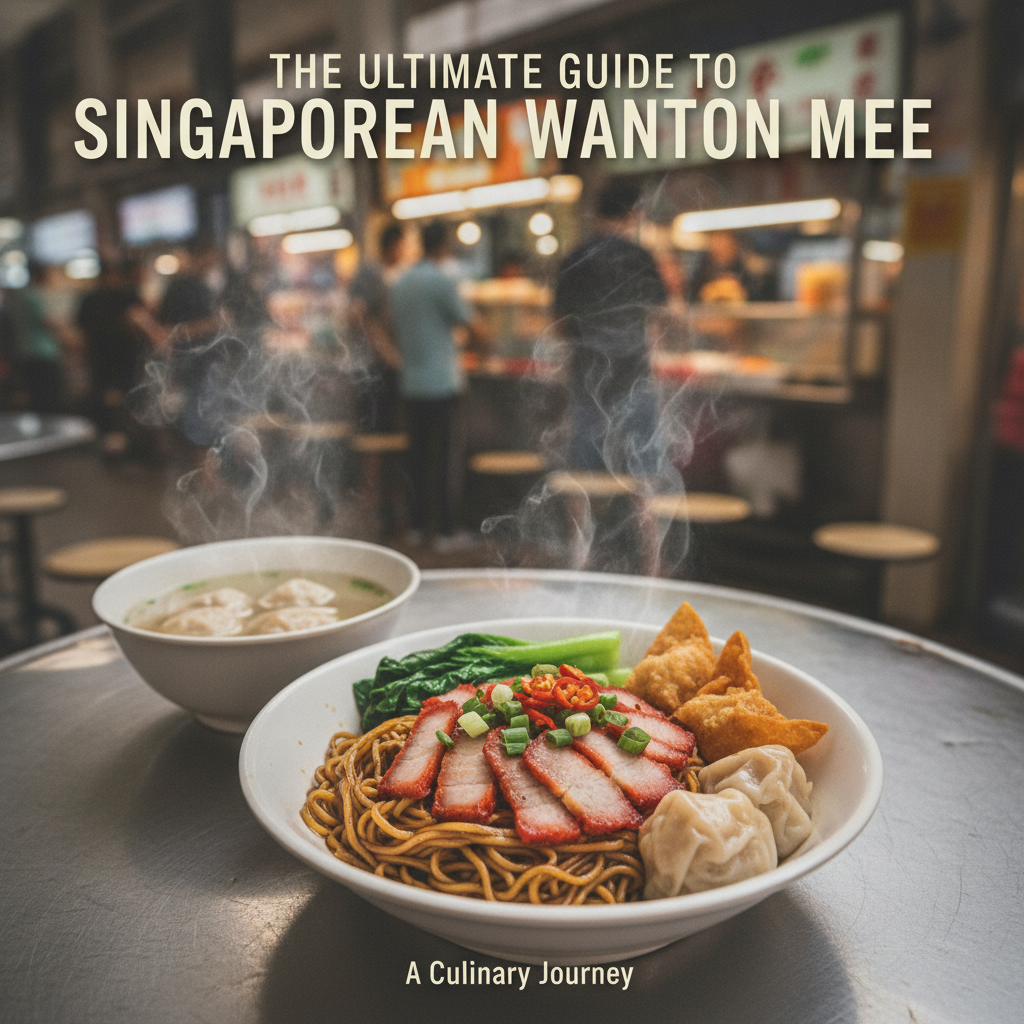
* **The Noodles:** This is the backbone of the dish. Expect thin, springy, al dente egg noodles (mee kia) that have a satisfying chew. The perfect noodle should be firm enough to carry the sauce but tender enough to slurp effortlessly. * **The Char Siew (BBQ Pork):** The bright, often glistening, slices of roast pork are unmistakable. Singaporean char siew can vary from leaner, more traditional cuts to fattier, sweeter, and more caramelised versions, sometimes with deliciously charred edges. The visual pop of red is iconic. * **The Wantons:** These delicate dumplings come in two glorious forms: * **Boiled Wantons:** Small, tender parcels typically filled with seasoned minced pork (and sometimes a touch of prawn), usually served in a clear, savoury broth that accompanies your dry noodles, or as the star of the soup version. * **Fried Wantons:** Crispy, addictive, golden-brown pockets of joy! These deep-fried delights offer a wonderful textural contrast and a slightly different, often more intensely seasoned, pork filling. Don't skip these! * **The Sauce (for Dry Wanton Mee):** This is the soul of the Singaporean dry Wanton Mee. A complex, often closely guarded secret blend usually involves dark soy sauce, light soy sauce, sesame oil, a touch of sugar, and often fragrant lard oil. The star addition is the **chilli paste**, ranging from mildly spicy to explosively fiery, coating every strand of noodle with a piquant kick. * **The Broth (for Soup Wanton Mee):** A clear, light, yet deeply flavourful broth, typically made from pork bones and sometimes dried anchovies or prawns, serving as the comforting base for the soup version or a sidekick to the dry. * **The Greens:** A simple garnish of blanched choy sum or kailan, adding a touch of freshness and a vibrant green to the plate.
The Hunt for Hawker Heaven: Where to Find Singapore's Best Wanton Mee
Singapore is brimming with incredible Wanton Mee stalls, each with its own loyal following. Here are some legendary and beloved spots you simply must try:
* **Eng's Wanton Mee (Joo Chiat Place & multiple outlets):** Famous for its incredibly potent and addictive chilli, Eng's serves up springy noodles and delicious wantons. Be warned, their chilli is no joke – it’s legendary for a reason! Prepare for a fiery but satisfying kick. * **Kok Kee Wanton Mee (Previously Lavender Food Square, now multiple locations including Farrer Park):** A true heritage brand, Kok Kee is celebrated for its unique, savoury sauce that some describe as having a nostalgic, old-school flavour. The noodles are consistently springy, and the char siew is well-executed. * **Fei Fei Roasted Noodle (72 Joo Chiat Place):** Located in the East, Fei Fei is another local favourite known for its delicious char siew, which is often roasted to perfection with a slightly caramelised glaze, alongside well-tossed noodles and crispy fried wantons. * **Tan's Wanton Mee (Sim Lim Square, #02-04):** A bit of a hidden gem, tucked away in the tech mall, Tan's offers a wonderfully traditional rendition that many regulars swear by. Its old-school charm and consistent quality make it a must-try for those seeking authenticity. * **Pontian Wanton Noodles (Various hawker centres and coffeeshops island-wide):** While a chain, Pontian offers a reliable and consistent plate of Wanton Mee, often serving as a great introduction for newcomers. Their chilli is milder, making it a good entry point before you dive into the spicier variations. * **Hon Ni Food (Old Airport Road Food Centre, #01-140):** A solid choice at one of Singapore's most famous hawker centres, offering a well-balanced plate with good char siew and noodles.
**Pro Tip:** Don't be afraid to explore! Most large hawker centres will have at least one Wanton Mee stall. Keep an eye out for queues – often a good indicator of quality!
Mastering the Order: Tips and Etiquette for a Smooth Wanton Mee Experience
Navigating a bustling hawker centre can be daunting for the uninitiated, but ordering Wanton Mee is relatively straightforward once you know the lingo:
* **Dry or Soup?** The most fundamental choice. Say 'gan' (干) for dry (the most popular local style) or 'tang' (汤) for soup. If you're new, start with dry. * **Chilli or No Chilli?** For dry Wanton Mee, you'll be asked if you want chilli. If you can handle spice, definitely say 'chilli' or 'ham' (辣). If you prefer it mild, say 'buay ham' or 'no chilli' (不辣). Some stalls offer different chilli levels; don't hesitate to ask. * **Extra Ingredients?** You can often request 'jia char siew' (加叉烧 – extra char siew) or 'jia wanton' (加云吞 – extra wantons) for a small additional fee. Some stalls also allow 'jia mee' (加面 – extra noodles). * **Be Ready to Order:** Know what you want before you reach the front of the queue. Hawker stalls are fast-paced! * **Payment:** Cash is king at many stalls, but increasingly, stalls accept PayNow/PayLah (QR code payment) or NETS. Check for signs. * **Queue Etiquette:** Be patient and wait your turn. Don't cut queues – it's a major hawker faux pas! * **Tray Return:** In most modern hawker centres, there's a centralised tray return system. Please return your tray and crockery after you're done; it helps keep the place clean and efficient.
What to Expect: Price Points for Your Wanton Mee Fix
One of the beautiful things about hawker food in Singapore is its incredible affordability, and Wanton Mee is no exception.
* **Standard Plate:** A typical, satisfying plate of Wanton Mee at a hawker centre or coffeeshop will generally set you back between **S$3.50 to S$5.00**. * **Larger Portions / Extra Ingredients:** Opting for a bigger plate or adding extra char siew or wantons will usually push the price to **S$5.50 to S$7.00**. * **Food Court / Restaurant Versions:** In some air-conditioned food courts or dedicated restaurant chains, you might find Wanton Mee priced slightly higher, perhaps **S$7.00 to S$10.00**, reflecting the overheads.
Given the generous portions and the deliciousness factor, Wanton Mee offers exceptional value for money and is a truly fulfilling meal.
Common Wanton Mee Missteps to Avoid
To ensure you have the best Wanton Mee experience, steer clear of these common blunders:
* **Not Trying the Chilli (if you can handle spice):** Seriously, for the dry version, the chilli is often half the magic. Unless you have a low spice tolerance, give it a go! * **Ignoring the Fried Wantons:** These crispy gems add a fantastic textural contrast and are often overlooked. Don't make that mistake; they're delicious on their own or mixed with your noodles. * **Sticking to Just One Stall:** Every hawker has a slightly different secret recipe for their sauce, their char siew, and their chilli. The beauty of Wanton Mee lies in its variety. Explore! * **Expecting Hong Kong Style:** While related, Singaporean Wanton Mee is distinct. Appreciate it for its unique qualities rather than comparing it directly to its Cantonese cousin. * **Forgetting to Stir:** Especially with the dry version, give your noodles a good toss to ensure every strand is coated in that glorious sauce and chilli. * **Failing to Return Your Tray:** It’s good manners and helps our hardworking hawkers and cleaners.
Hawker Whisperer's Wisdom: Insider Tips for the Discerning Eater
Now that you're armed with the basics, let me share some pro-tips to elevate your Wanton Mee journey:
* **Go During Off-Peak Hours:** To avoid the maddening crowds and potentially enjoy a shorter wait time, try visiting hawker centres outside of typical lunch (12-2 PM) and dinner (6-8 PM) hours. * **The Power of 'Dabao':** If you're not dining in, you can always order for 'dabao' (takeaway). Some locals swear the noodles taste even better after a short 'marination' time in the sauce during transit. * **Observe the Locals:** Watch how seasoned patrons order and eat. It’s a great way to pick up nuances, like asking for specific cuts of char siew or an extra dollop of chilli. * **Pair with a Local Drink:** A refreshing Kopi O (black coffee), Teh O (black tea), or a fresh Sugarcane Juice makes for a perfect companion to your meal, cutting through the richness. * **Look for Stalls Specialising in Roast Meats:** Often, the best Wanton Mee stalls also excel in their char siew and siew yoke (roast pork belly). If they offer 'sio bak' (roast pork belly) as an addition, definitely try it for an extra layer of flavour and texture! * **Ask for Vinegar (if available):** Some traditional stalls might offer a small dish of black vinegar. A dash of this can add a lovely tanginess that cuts through the richness of the sauce.
Your Burning Questions Answered: Wanton Mee FAQ
**Q: Is Wanton Mee generally spicy?** A: The dry version of Singaporean Wanton Mee often comes with a potent chilli paste that can range from mildly piquant to intensely fiery. You can always request 'buay ham' (no chilli) if you prefer. The soup version is typically not spicy.
**Q: What's the main difference between Singapore and Hong Kong Wanton Mee?** A: Singapore's dry Wanton Mee is characterised by its dark soy sauce and chilli-based dressing, coupled with vibrant red char siew and often fried wantons. Hong Kong Wanton Mee, on the other hand, is predominantly a clear, prawn-based broth with delicate pork and prawn wantons and lighter-coloured, plain noodles.
**Q: Can I get vegetarian Wanton Mee?** A: Unfortunately, traditional Wanton Mee is not vegetarian-friendly. The noodles contain egg, the wantons are pork-based, the char siew is roasted pork, and the broth is usually pork or prawn-based. Some stalls might offer plain noodles with vegetables, but it won't be the authentic experience.
**Q: What exactly is a wanton?** A: A wanton is a type of Chinese dumpling, typically made with a thin, square wrapper (egg noodle skin) filled with seasoned minced pork, and sometimes a mix of pork and prawns. They can be boiled or deep-fried.
**Q: What are the best drinks to pair with Wanton Mee?** A: Local favourites that complement Wanton Mee perfectly include Kopi O (black coffee), Teh O (black tea), refreshing Sugarcane Juice, or a tangy Lime Juice to cleanse the palate.
The Last Bite: Embracing the Wanton Mee Journey
There you have it – your comprehensive guide to navigating the wonderful world of Wanton Mee in Singapore! This dish is more than just a meal; it's a culinary journey, a cultural immersion, and a flavourful testament to Singapore's rich hawker heritage. From the springy bite of the noodles to the succulent char siew and the spicy kick of the chilli, every element plays a vital role in creating a truly satisfying experience.
So, whether you're a seasoned local or a curious tourist, I encourage you to venture out, explore different stalls, and discover your own favourite rendition. Don't be afraid to experiment with chilli levels, try both dry and soup versions, and chat with the hawkers if you can. Each plate tells a story, and each slurp is a taste of Singapore's soul. Now go forth, eat well, and share your Wanton Mee adventures with me! Selamat Makan!