The Ultimate Guide to Singapore Wanton Mee: A Hawker's Heaven Explored
Introduction: Your Quest for the Perfect Plate Begins Here
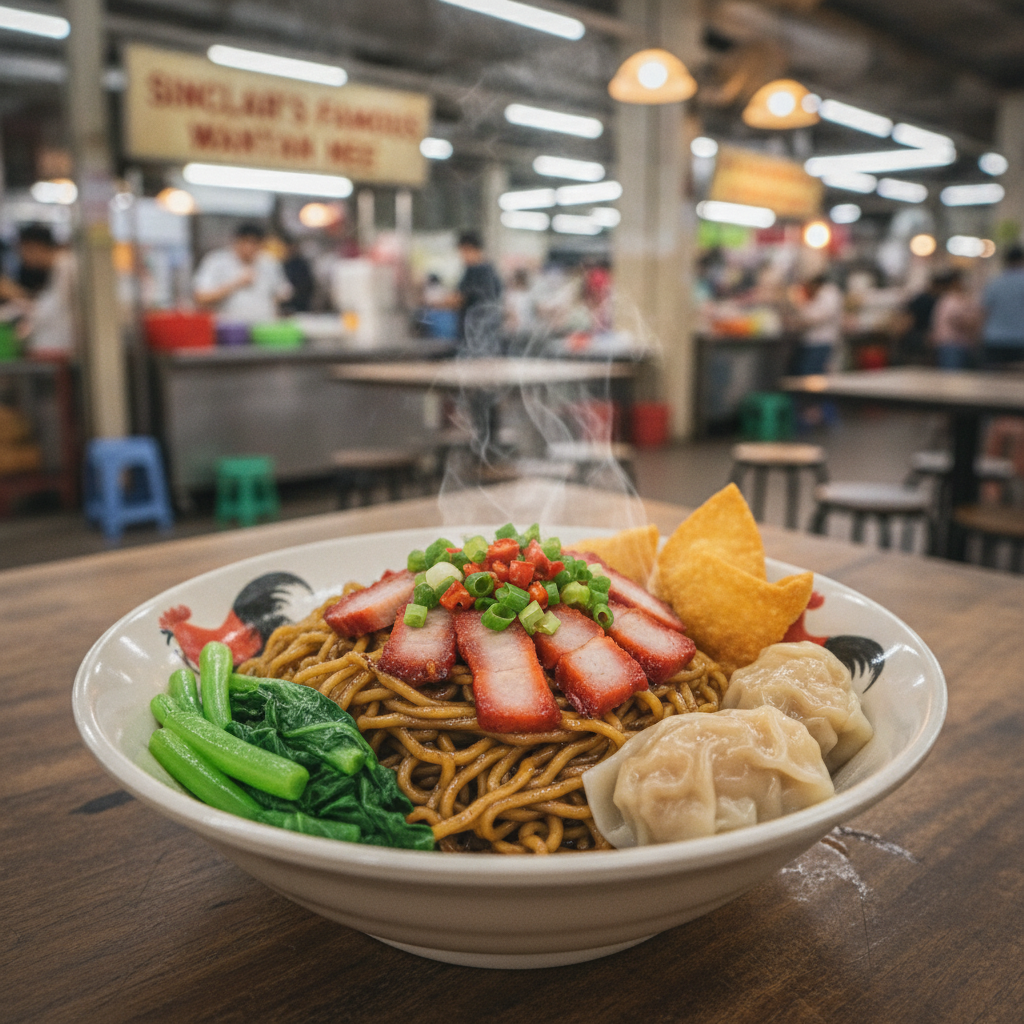
Ah, Wanton Mee. Just the name conjures up images of springy egg noodles, glistening char siew, plump wantons, and that irresistible, secret sauce. It's more than just a dish; it's a Singaporean institution, a comfort food, and a culinary canvas where hawkers express their unique artistry. From the bustling hawker centres to air-conditioned food courts, Wanton Mee holds a special place in the hearts (and stomachs!) of locals and tourists alike.
As your resident Singapore food blogger, I've slurped countless bowls and scrutinised countless plates to bring you this comprehensive, no-holds-barred guide. Whether you're a seasoned foodie or a curious first-timer, this article will equip you with everything you need to navigate the wonderful world of Singaporean Wanton Mee. We'll delve into its fascinating history, dissect its key components, reveal the best spots to find it, and arm you with insider tips to ensure every bite is a revelation. Get ready to embark on your ultimate Wanton Mee adventure!
A Taste of History: From Cantonese Roots to Singaporean Icon
Wanton Mee's journey to becoming a Singaporean staple is a tale woven with threads of migration, adaptation, and culinary evolution. Its origins trace back to Guangzhou, China, where it started as a humble Cantonese noodle dish – thin, springy egg noodles served in a clear, flavourful broth with delicate pork and shrimp dumplings (wantons).
When Chinese immigrants, particularly those from Guangdong province, arrived in Singapore in the early 20th century, they brought their beloved culinary traditions with them. Over generations, the dish underwent a delightful transformation to suit local palates. While the soup version remains popular, the 'dry' version emerged as the quintessential Singaporean style. This involved tossing the noodles in a dark, savoury sauce concoction – a blend of soy sauce, dark soy sauce, chilli, vinegar, and often, fragrant pork lard oil – creating a rich, complex flavour profile distinct from its Cantonese ancestor. The traditional plain boiled char siew was also often replaced with the sweeter, more caramelised local char siew, further cementing its unique Singaporean identity. Today, it stands proudly as a testament to Singapore's diverse and dynamic food heritage.
Decoding the Plate: Key Components of Singapore Wanton Mee
A plate of Singapore Wanton Mee is a symphony of textures and flavours. Here's what makes it sing:
* **The Noodles (面 - Mian):** The heart of the dish. Expect thin, springy egg noodles, often handmade or specially sourced, with a delightful 'QQ' (chewy) texture. They should be perfectly cooked – not too soft, not too hard.
* **The Wantons (云吞 - Wun Tun):** These delicate dumplings come in two forms: * **Fried Wantons:** Crispy, golden pockets of minced pork (sometimes with prawn), offering a delightful crunch and savoury burst. A must-have for textural contrast. * **Soup Wantons:** Soft, silky dumplings swimming in a light, flavourful broth, showcasing the tender pork filling and thin wrapper. Often served on the side in a small bowl of soup.
* **The Char Siew (叉烧):** Slices of barbecued pork, often lean but ideally with a good ratio of fat. In Singapore, char siew tends to be sweeter and more caramelised than its Malaysian counterpart, with a reddish-brown glaze that's both visually appealing and delicious. The best stalls roast their own, ensuring smoky perfection.
* **The Sauce (酱料 - Jiang Liao):** This is the secret weapon of dry Wanton Mee. A magical concoction typically involving dark soy sauce, light soy sauce, chilli paste (sambal), vinegar, sesame oil, and crucially, fragrant pork lard oil. Each hawker has their unique recipe, making every plate slightly different. It coats the noodles beautifully, delivering a punch of savoury, spicy, and sometimes sweet and tangy notes.
* **Green Vegetables (青菜 - Qing Cai):** A scattering of blanched leafy greens, usually kai lan (Chinese broccoli), offering a fresh, slightly bitter counterpoint to the richness of the noodles and meat.
Where to Find Your Wanton Mee Fix: Top Stalls & Hidden Gems
Singapore is brimming with Wanton Mee stalls, but some stand head and shoulders above the rest. Here are a few must-try spots, ranging from heritage names to modern interpretations:
* **Kok Kee Wanton Mee (Lavender Food Square / Foch Road):** A legendary stall with a loyal following, known for its old-school taste, special sauce, and handmade springy noodles. Prepare for queues, especially during peak hours. (Location: Lavender Food Square, Foch Road.)
* **Eng's Wanton Mee (Various locations, e.g., Tanjong Katong Road):** Famous for its notoriously spicy chilli. Eng's has a bit of a dramatic family history, with several branches operating under similar names. The key is finding one with the chilli kick you crave. (Main branch: 287 Tanjong Katong Road).
* **Fei Fei Roasted Noodle (Joo Chiat Road):** Another well-known spot, often lauded for its robust char siew and generous portions. A good choice for those who prefer a slightly less spicy take. (Location: 62 Joo Chiat Place).
* **Dunman Road Char Siew Wanton Mee (Dunman Food Centre):** A perennial favourite in the East, celebrated for its tender, well-marinated char siew and consistently good noodles and sauce. (Location: Dunman Food Centre, 271 Onan Rd, #02-19).
* **A Noodle Story (Amoy Street Food Centre):** A Michelin Bib Gourmand recipient, offering a 'Singapore-style ramen' interpretation of Wanton Mee. Expect premium ingredients like char siew that's more pork belly-like, a hot spring egg, and deep-fried potato-wrapped prawns. A modern, gourmet twist. (Location: Amoy Street Food Centre, 7 Maxwell Rd, #01-39).
* **Hon Ni Kitchen (Old Airport Road Food Centre):** A hidden gem known for its savoury sauce, well-executed noodles, and generous char siew. A local favourite for a reason. (Location: Old Airport Road Food Centre, #01-149).
**Pro Tip:** Don't limit yourself to just these! Many hawker centres have fantastic local stalls. Look for long queues or recommendations from friendly locals.
Ordering Like a Pro: Tips & Hawker Etiquette
Navigating a hawker centre can be daunting, but with these tips, you'll order your Wanton Mee like a seasoned pro:
1. **Queue Patiently:** Hawkers are efficient, but popular stalls will have lines. Join the queue orderly and wait for your turn. 2. **Know Your Order:** Decide between 'dry' (干捞 - gan lao) or 'soup' (汤 - tang) and your preferred size (small - 小, medium - 中, large - 大) before you reach the front. Some stalls may also ask if you want extra char siew or wantons (加叉烧/云吞 - jia cha shao/wun tun). 3. **Customise Your Chilli:** Many stalls have different levels of chilli. If you're not a fan of extreme spice, specify 'less chilli' (少辣 - shao la) or 'no chilli' (不要辣 - bu yao la). If you love it hot, ask for 'more chilli' (加辣 - jia la). 4. **Cash is King (Mostly):** While cashless payments are becoming more common, always have small denominations of cash ready, especially at older stalls. 5. **Self-Service:** Most hawker stalls require you to collect your food and cutlery yourself. Look for the designated collection area. 6. **'Chope' Your Table:** In Singapore, it's common practice to 'chope' (reserve) a table with a packet of tissue paper or an umbrella while you queue for food. Just remember to be mindful of others and share tables if it's very crowded. 7. **Return Your Trays:** Once you're done, clear your table and return your tray and crockery to the designated tray return points. This helps keep the hawker centre clean and allows others to use the table.
Price Expectations: What Your Plate Will Cost You
Wanton Mee is generally an affordable and value-for-money meal in Singapore:
* **Hawker Centres:** Expect to pay **S$3.50 to S$6.00** for a standard small to medium plate. Larger portions or extra ingredients might push it to S$7.00. * **Food Courts:** Prices are typically slightly higher, ranging from **S$5.00 to S$8.00**. * **Cafes/Restaurants (e.g., A Noodle Story):** For gourmet or more upmarket versions, prices can range from **S$8.00 to S$15.00** or even more, reflecting the quality of ingredients and preparation.
Even at the higher end, it's still an incredibly satisfying and worthwhile culinary experience.
Common Mistakes to Avoid on Your Wanton Mee Journey
To ensure you have the best Wanton Mee experience, steer clear of these common blunders:
1. **Only Trying the Soup Version:** While delicious, the 'dry' version is arguably the quintessential Singaporean Wanton Mee experience. Don't miss out on that glorious sauce-coated noodle goodness! 2. **Shying Away from Chilli:** Unless you have a genuine aversion, don't ask for 'no chilli' outright. Singaporean Wanton Mee chilli is a unique blend of savoury, spicy, and sometimes sweet notes that elevates the dish significantly. Start with 'less chilli' if you're unsure. 3. **Going During Peak Hours (without patience):** Lunch (12 PM - 2 PM) and dinner (6 PM - 8 PM) can see long queues at popular stalls. If you're pressed for time, try going slightly earlier or later. 4. **Ignoring the Char Siew:** Good char siew is crucial. Don't be afraid to ask for 'more fatty char siew' (加肥叉烧 - jia fei cha shao) if you prefer it – the caramelised fat is incredibly flavourful. 5. **Only Eating at One Stall:** Every Wanton Mee stall has its unique charm, sauce recipe, and char siew style. Explore a few to find your personal favourite. Variety is the spice of life, and especially of Wanton Mee! 6. **Not Returning Your Tray:** It's a small but important act of courtesy in Singapore's hawker culture.
Insider Tips for the Savvy Wanton Mee Enthusiast
Elevate your Wanton Mee game with these pro tips:
* **Look for the Roast:** Some of the best stalls roast their char siew in-house. If you see a charcoal roaster or freshly glazed char siew hanging, it's often a good sign of quality and freshness. * **Observe the Locals:** A long queue of locals is usually a good indicator, but also observe how people are eating. Are they adding extra chilli? Mixing thoroughly? Mimic the pros! * **The Power of Pork Lard:** Don't be afraid of the pork lard! That golden oil is a flavour bomb, adding an incredible depth and aroma to the dry noodles. If you're health-conscious, you can request 'no lard' (不要猪油 - bu yao zhu you), but you'll be missing out on a key component of the authentic taste. * **Pair with a Drink:** A refreshing glass of iced Kopi-O (black coffee with sugar) or Teh-O (black tea with sugar) cuts through the richness beautifully. * **Some Stalls Sell Out Early:** Popular stalls, especially those with limited char siew production, might sell out before their official closing time. Go early to avoid disappointment. * **Don't Forget the Fried Wantons:** While the soup wantons are classic, the crispy fried wantons provide an addictive textural contrast that you shouldn't skip.
Frequently Asked Questions (FAQ)
Here are some common questions about Singapore Wanton Mee:
* **Is Wanton Mee spicy?** It can be! Singaporean dry Wanton Mee almost always comes with a dollop of chilli. You can request 'less chilli' or 'no chilli' if you prefer, or 'extra chilli' if you love the heat.
* **Can I find vegetarian Wanton Mee?** It's extremely rare to find authentic vegetarian Wanton Mee, as the wantons are typically pork-based and the sauce often contains pork lard. Some vegetarian hawker stalls might offer a noodle dish with vegetarian dumplings and char siew, but it won't be the traditional Wanton Mee.
* **What's the difference between Singaporean and Malaysian Wanton Mee?** While both originate from Cantonese cuisine, the main difference lies in the sauce for the dry version. Singaporean Wanton Mee tends to use more dark soy sauce, chilli, and pork lard, resulting in a darker, spicier, and more savoury-sweet flavour profile. Malaysian Wanton Mee (especially from Kuala Lumpur) often features a lighter, more savory-sweet sauce without as much chilli, allowing the distinct char siew flavour to shine through more.
* **Are the wantons made with shrimp or just pork?** Most commonly, wantons in Singapore are made with minced pork. Some premium stalls or those with Cantonese leanings might include a mix of pork and shrimp, or even exclusively shrimp for a higher price.
* **Is Wanton Mee a healthy meal?** While it's a delicious meal, Wanton Mee, particularly the dry version with pork lard and sweet char siew, is not typically considered a 'healthy' low-calorie option. It's best enjoyed as a flavourful treat in moderation.
Conclusion: Your Wanton Mee Odyssey Awaits!
From its humble Cantonese beginnings to its vibrant Singaporean interpretation, Wanton Mee is more than just a dish – it's a culinary journey, a cultural touchstone, and an absolute must-try for anyone exploring Singapore's food scene. Each plate tells a story, each hawker adds their unique signature, and every bite connects you to generations of tradition and innovation.
Now, armed with this ultimate guide, you're ready to dive headfirst into the world of Singaporean Wanton Mee. Seek out the springy noodles, savour the caramelised char siew, delight in the plump wantons, and most importantly, embrace that magical, secret sauce. Go forth, explore, and find your own perfect plate of Wanton Mee. Happy slurping!