The Ultimate Guide to Satay in Singapore: Your Complete Culinary Journey
Introduction: Skewers of Pure Singaporean Delight
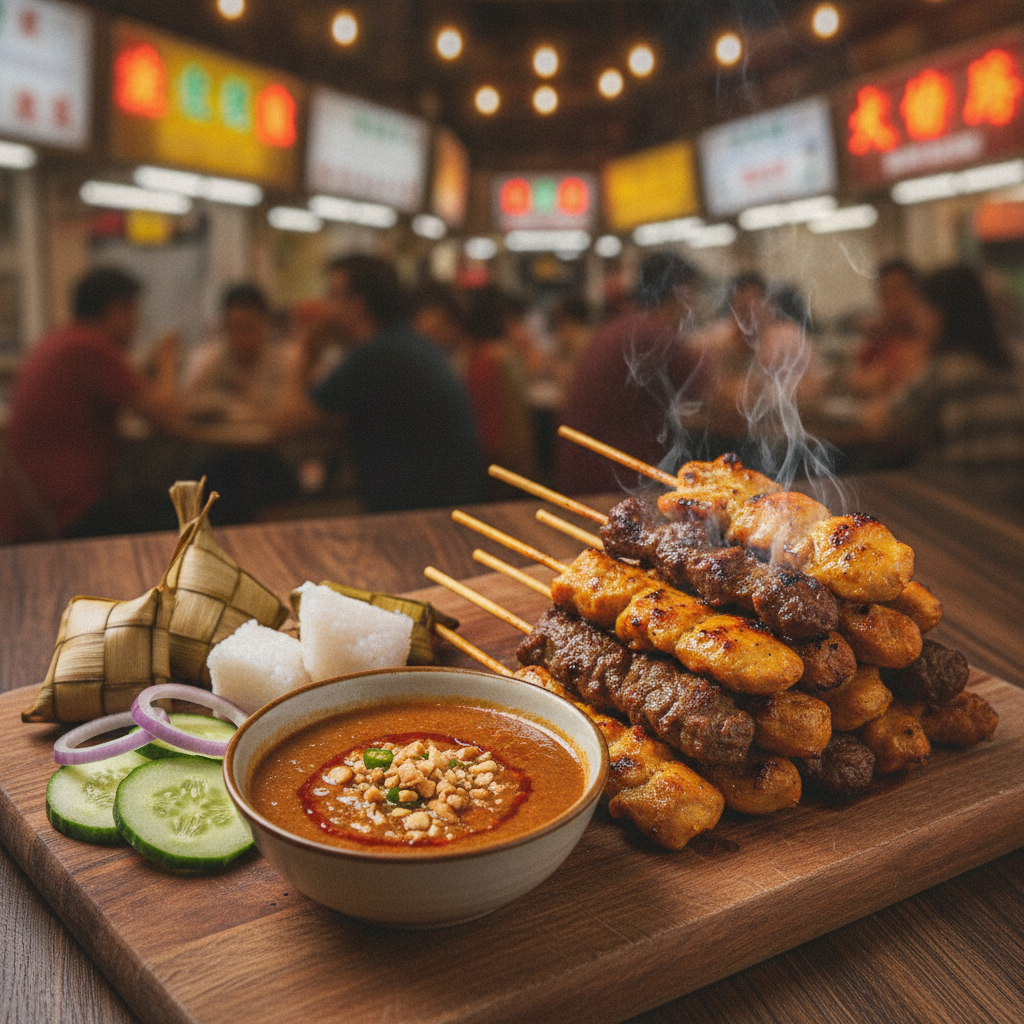
Ah, satay! Just the mention of it conjures images of smoky grills, succulent marinated meats, and that glorious, nutty peanut sauce. In Singapore, satay isn't just food; it's a culinary institution, a communal experience, and a vibrant thread woven into the fabric of our hawker culture. From bustling food centres to iconic 'Satay Street' under the stars, these humble skewers hold a special place in the hearts of locals and visitors alike.
As your resident Singapore food blogger, I'm here to take you on a deep dive into the world of satay. In this ultimate guide, you'll learn everything you need to know: its fascinating history, the different types to savour, where to find the absolute best, how to order like a pro, price expectations, common pitfalls to avoid, and those coveted insider tips that'll elevate your satay game. Get ready to embark on a flavourful journey – your taste buds will thank you!
A Taste of History: The Roots of Singapore's Beloved Skewers
While often associated with Singapore, satay's origins actually trace back to Indonesia, where it's believed to have been inspired by Indian kebabs brought by Muslim traders. Over centuries, it evolved into the beloved dish we know today, with countless regional variations across Southeast Asia.
When satay arrived in Singapore (likely carried by early Malay and Indonesian immigrants), it quickly found a home in our burgeoning hawker scene. The dish perfectly suited Singapore's multi-ethnic tapestry, adapting and evolving with Chinese, Malay, and Indian influences. Each community brought its own marinade secrets and grilling techniques, contributing to the rich diversity of satay available today. It became a supper staple, a street-side snack, and eventually, a national obsession, celebrated for its simple yet profound deliciousness.
Key Dishes and Items to Try: The Anatomy of a Perfect Satay Meal
Beyond just 'meat on a stick,' a true satay experience is a symphony of flavours and textures. Here are the essential components:
* **Chicken Satay (Satay Ayam):** Arguably the most popular choice. Tender chunks of chicken thigh, marinated in a fragrant blend of turmeric, lemongrass, galangal, and other spices, then grilled to a beautiful char. The marinade gives it that distinctive golden hue and aromatic flavour. * **Mutton Satay (Satay Kambing):** For the more adventurous, mutton satay offers a richer, gamier flavour. Prepared similarly to chicken, the marinade is often more robust to complement the lamb's distinct taste. Don't worry about it being tough; good mutton satay is surprisingly tender. * **Beef Satay (Satay Daging):** Leaner than mutton but still packed with flavour, beef satay is a solid choice. Look for stalls that use good quality cuts, ensuring tenderness after grilling. * **Pork Satay (Satay Babi):** Predominantly found at Chinese hawker stalls, pork satay often features a sweeter marinade, sometimes with hints of five-spice or rock sugar, and may include small cubes of pork fat for extra juiciness. A delicious deviation from the more common halal versions. * **Lontong (Compressed Rice Cakes):** An absolute must-have accompaniment! These firm, slightly chewy rice cakes are perfect for soaking up every drop of that glorious peanut sauce. They add a starchy balance to the rich meat. * **Peanut Sauce (Kuah Kacang):** The undisputed star of the show. This thick, luscious sauce is a complex blend of roasted peanuts, chilli, garlic, shallots, tamarind, and palm sugar. Each stall has its secret recipe – some are sweeter, some spicier, some thicker, some with a delightful hint of pineapple puree for tanginess. Don't be shy; slather it on! * **Cucumber & Onion:** Refreshing slices of cucumber and raw red onion are served alongside, providing a crisp, cooling counterpoint to the rich, smoky satay and spicy sauce. They act as natural palate cleansers. * **Pineapple Puree (Optional):** Some stalls offer a small dollop of sour pineapple puree, often mixed into the peanut sauce, to cut through the richness and add a zesty kick. If you see it, try it!
Where to Find Them: Singapore's Satay Hotspots
Singapore is blessed with an abundance of fantastic satay spots. Here are some of the most iconic and highly recommended places:
* **Lau Pa Sat (Satay Street):** The most famous satay experience, hands down. Every evening, Boon Tat Street (right next to the historic Lau Pa Sat market) transforms into a bustling open-air 'Satay Street.' Dozens of stalls fire up their grills, creating an unforgettable atmosphere. It's tourist-friendly but also a local favourite for late-night supper. **Must-try stalls:** *Best Satay*, *Kwong Satay* (look for the yellow sign). * **Old Airport Road Food Centre:** A legendary hawker centre known for its incredible variety and quality. You'll find a few excellent satay stalls here that boast robust marinades and perfectly grilled skewers. **Must-try stalls:** *Chong Pang Huat*, *Kwong Satay* (yes, they have a branch here too!). * **East Coast Lagoon Food Village:** Perfect for a relaxed evening by the beach. This open-air food village has several satay stalls, offering a laid-back vibe to enjoy your skewers with the sea breeze. **Must-try stalls:** *Haron Satay*, *Lagoon Chicken Satay*. * **Newton Food Centre:** While often criticized as a 'tourist trap,' Newton still houses a few reputable satay stalls. If you find yourself here, just be savvy with your choices and pricing. **Must-try stalls:** *Hup Kee Satay* (do your research before going). * **Chomp Chomp Food Centre (Serangoon Gardens):** A supper haven for North-siders. This vibrant hawker centre offers a great selection of local favourites, including a few solid satay options. It's an authentic local experience, especially popular with families and late-night diners. **Must-try stalls:** *Chong Pang Huat* (another branch!). * **Hawker Centres Galore:** Don't limit yourself to the big names! Many neighbourhood hawker centres across Singapore (e.g., Tiong Bahru Market, Amoy Street Food Centre) will have at least one or two satay stalls that are local gems.
Ordering Tips and Etiquette: Savoring Satay Like a Local
To ensure a smooth and enjoyable satay experience, keep these tips in mind:
* **Order by the Stick:** Satay is always ordered by the stick. Most stalls have a minimum order, usually 10 sticks. You can mix and match different meats (e.g., '10 chicken, 5 mutton'). * **Specify Lontong:** Don't forget to order your lontong! It usually costs extra per serving. Just say 'dengan lontong' (with lontong) or 'satu lontong' (one serving of lontong). * **The Sauce is Supreme:** The peanut sauce is integral. Don't be shy about asking for an extra dollop if you're a sauce fanatic, though usually, a generous amount is provided. * **Be Patient:** Especially at popular stalls during peak hours, there might be a wait. Good satay takes time to grill properly. Grab a drink, soak in the atmosphere, and anticipate the deliciousness. * **Chop Your Table (If applicable):** If you're at a hawker centre during a busy period, remember to 'chope' (reserve) your table with a packet of tissues or an umbrella before ordering. This is standard Singaporean etiquette. * **Clap When They Call:** When your order is ready, the hawker will usually call out your table number. Give a clap or raise your hand to signal them. Don't be alarmed if they just put the food down – it's efficient service!
Price Expectations: What to Budget for Your Satay Feast
Satay remains one of Singapore's relatively affordable and satisfying meals. Here's a general guide:
* **Per Stick:** Expect to pay between **S$0.70 to S$1.20** per stick, depending on the type of meat and the location (e.g., beef/mutton might be slightly pricier than chicken; tourist-centric spots might be at the higher end). * **Lontong:** A serving of lontong typically costs **S$1.00 to S$1.50**. * **Typical Meal Cost:** For a satisfying meal of 15-20 sticks of mixed satay and one serving of lontong, you're looking at **S$15 - S$25**. Add a drink, and you're still well within a reasonable budget for a delicious and iconic Singaporean experience. Prices are generally consistent across reputable hawker centres, with Lau Pa Sat's Satay Street being slightly on the higher end due to its prime location and popularity.
Common Mistakes to Avoid: Don't Let These Ruin Your Satay Experience
Even seasoned foodies can sometimes stumble. Here are a few common missteps to steer clear of:
* **Skipping the Lontong:** Seriously, don't do it. The rice cakes are essential for balancing the richness and soaking up the sauce. It's not just a filler; it's a flavour enhancer. * **Only Trying Chicken Satay:** While delicious, you're missing out if you don't venture into mutton, beef, or even pork satay (if you're at a non-halal stall). Each offers a unique flavour profile. * **Ignoring the Peanut Sauce:** Some tourists might be wary of 'sauce,' but the peanut sauce is the heart and soul of satay. It's not just a dip; it's a flavour bomb that completes the dish. Don't just dab; fully immerse those skewers! * **Going to an Empty Stall:** While not always true, a long queue is often a good indicator of a popular and delicious satay stall. Locals know best! * **Being Afraid of the Char:** A slight char on the satay isn't a mistake; it's a mark of perfectly grilled skewers, adding a delightful smoky flavour and texture. Don't mistake it for being 'burnt.' * **Not Pairing with a Cold Drink:** Satay, especially with its rich sauce and smoky flavour, cries out for a refreshing cold drink. A local beer (Tiger, Bintang) or a sugar cane juice is perfect.
Insider Tips: Unlock the Secret to Satay Perfection
Ready to eat satay like a true local? Heed these insider secrets:
* **Go During Supper Hours (for Satay Street):** While Lau Pa Sat's Satay Street opens earlier, the magic truly happens after sunset, when the grills are ablaze, the beer flows, and the atmosphere is electric. It's a quintessential Singaporean supper experience. * **Look for the Smoke (and the Queue):** A stall with a steady plume of smoke and a visible queue usually means fresh, continuously grilled satay and a popular, trusted vendor. The aroma alone will guide you! * **Ask for Extra Pineapple Puree (if available):** If your stall offers a side of pineapple puree or a pineapple-infused sauce, definitely ask for it. The sweet-tartness is a fantastic cut to the richness of the peanut sauce. * **Dip the Cucumber:** Don't just eat the cucumber and onion plain. Try dipping them into the peanut sauce (or even the pineapple puree). It's a surprisingly refreshing combination. * **Pair with Local Beer:** A cold bottle of local beer (like Tiger or Anchor) is the perfect companion to satay. The slight bitterness cuts through the richness and spice beautifully. * **Chat with the Hawkers:** If it's not too busy, engage with the hawkers! Many are passionate about their craft and might share a tidbit or two about their family recipes or grilling techniques.
Frequently Asked Questions (FAQ) About Satay
* **Q: Is all satay in Singapore halal?** * **A:** Most satay stalls are indeed halal (serving chicken, mutton, beef), especially those run by Malay-Muslim hawkers. However, there are also Chinese-run stalls that specifically sell pork satay (Satay Babi). If in doubt, look for a halal certification or ask the vendor.
* **Q: How spicy is satay?** * **A:** The marinade on the meat itself is generally not spicy. The spiciness primarily comes from the peanut sauce. Most sauces have a mild to medium kick, but you can sometimes request a spicier version if available, or add fresh chilli padi provided on the side.
* **Q: Can I take satay home?** * **A:** Absolutely! Satay is a popular takeaway item. It's often packed with the peanut sauce in a separate container, along with the cucumber and onion. It reheats surprisingly well in a toaster oven or air fryer.
* **Q: What's the best drink to pair with satay?** * **A:** A cold, crisp local beer (like Tiger or Anchor) is a classic pairing. For non-alcoholic options, iced Milo, calamansi juice, or sugarcane juice are excellent choices that complement the rich flavours.
* **Q: Is satay healthy?** * **A:** While it's grilled meat, satay is generally seen as an indulgence rather than a health food due to the rich peanut sauce and occasional fatty cuts. Enjoy it in moderation as part of a balanced diet!
Conclusion: Your Satay Adventure Awaits!
There you have it – your comprehensive guide to navigating and relishing the world of satay in Singapore! From its humble beginnings to its status as a national culinary icon, satay offers a rich tapestry of flavours, aromas, and cultural experiences.
Don't just eat satay; experience it. Seek out the smoky grills, savour the perfectly marinated meats, drown them in that glorious peanut sauce, and let the vibrant hawker atmosphere wash over you. Whether you're a first-time visitor or a seasoned local, there's always a new satay stall to discover, a different nuance in the sauce to appreciate, or a new memory to be made over these irresistible skewers.
So, go forth, explore, and let your taste buds be your guide. And when you find your favourite satay spot, come back and tell me all about it in the comments below! Happy feasting, fellow foodies!