The Ultimate Guide to Roti Prata in Singapore: A Hawker's Delight
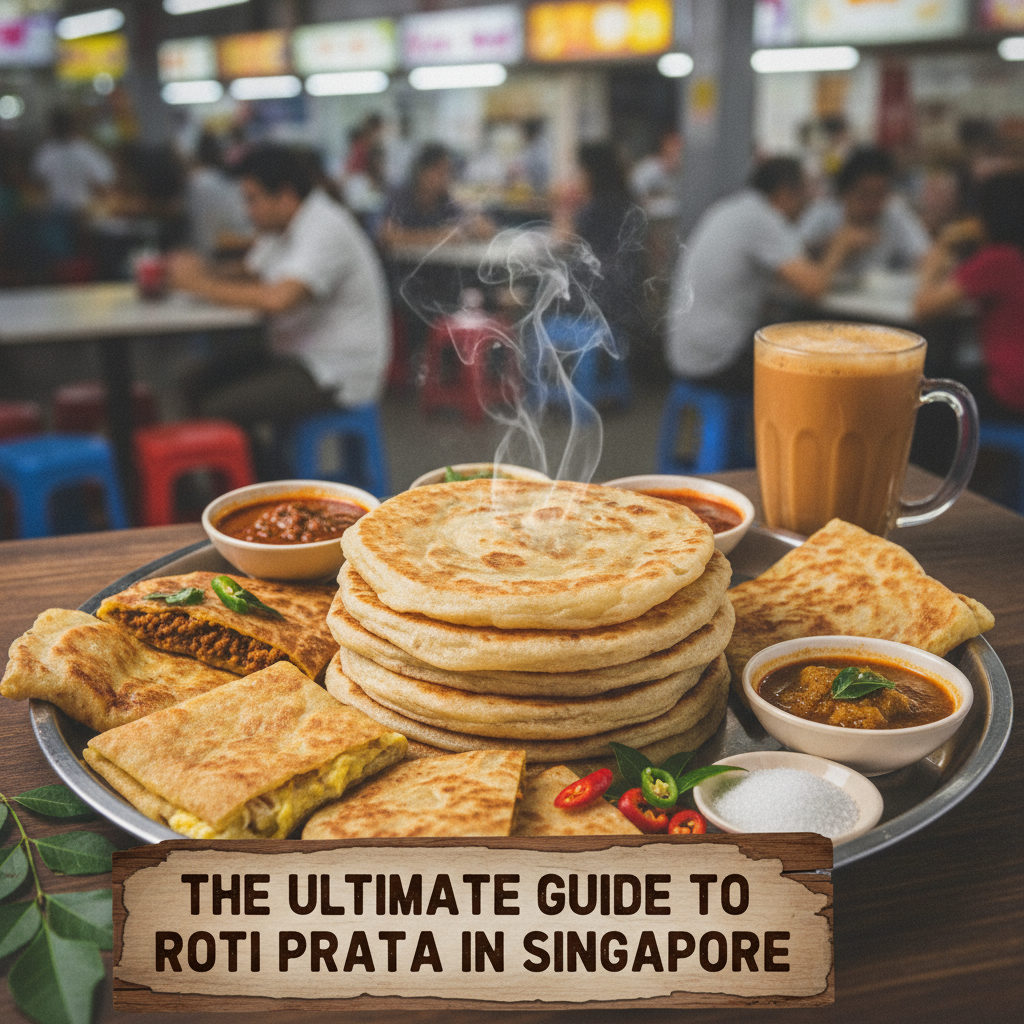
Introduction: The Crispy, Flaky Heart of Singapore's Culinary Scene
Welcome, fellow foodies, to a journey into the heart of one of Singapore's most beloved and iconic dishes: Roti Prata! More than just a simple flatbread, Prata is a culinary institution, a versatile delight savoured from dawn till dusk, and a true testament to the island's multicultural tapestry. Whether you're a seasoned local who's had countless Prata fixes or a curious tourist eager to dive into authentic Singaporean flavours, this ultimate guide will equip you with everything you need to know. We'll unravel its fascinating history, explore the myriad of irresistible variations, pinpoint the best places to get your fix, arm you with ordering etiquette, and share insider tips to elevate your Prata experience from good to absolutely legendary. Get ready to embark on a crispy, fluffy, curry-laden adventure!
A Brief History: From Indian Shores to Singaporean Stalls
The story of Roti Prata begins far from Singapore's bustling hawker centres, rooted deeply in the culinary traditions of South India. The name itself offers a clue: 'Roti' means 'bread' in Hindi and Urdu, while 'Prata' (or 'Paratha' in its original form) is derived from the Hindi word 'parat,' meaning 'layer,' referring to its characteristic flaky layers.
Migrants from the Indian subcontinent, primarily Tamils, brought this unleavened flatbread to the Malay Peninsula in the early 20th century. Over decades, it evolved, adapting to local tastes and ingredients. While its Indian cousin, the paratha, is often pan-fried with ghee and served with yoghurt or pickles, Singapore's Roti Prata found its perfect partner in the rich, aromatic curries of the region – fish curry, chicken curry, mutton curry, or the lighter dhal (lentil) curry.
What started as a simple, nourishing meal for labourers has transformed into a national obsession, enjoyed by all races and walks of life, embodying Singapore's harmonious blend of cultures through its distinctively crispy, yet chewy texture and flavourful accompaniments.
Key Dishes & Must-Try Variations: Beyond the Plain & Simple
While the classic Prata forms the foundation, the world of Roti Prata is surprisingly diverse and utterly delicious. Here are the essential variations you absolutely must try:
* **Roti Prata Kosong (Plain Prata):** The purist's choice. 'Kosong' means 'empty' in Malay. This is a simple, unadorned disc of pan-fried dough, celebrated for its crispy exterior and soft, fluffy interior. It's the best way to appreciate the Prata's texture and perfect for dipping into curry. * **Roti Prata Telur (Egg Prata):** A perennial favourite. An egg (sometimes beaten with onions) is folded into the dough before frying, adding a savoury richness and a more substantial bite. * **Roti Prata Telur Bawang (Egg Onion Prata):** Taking the Telur Prata up a notch with finely chopped onions mixed with the egg, providing a delightful crunch and pungent sweetness. * **Roti Prata Plaster:** A unique variation where a fried egg is 'plastered' on top of a plain prata. The runny yolk spills over the crispy Prata, creating a luxurious combination of textures and flavours. A breakfast delight! * **Roti Prata Cheese:** A modern classic. Melted cheese (often cheddar or mozzarella) is folded into the dough, creating a gooey, savoury treat that's particularly popular with kids and cheese-lovers. * **Roti Prata Bom:** A thicker, smaller, and often sweeter prata, typically served with condensed milk. It's doughier and more substantial, resembling a thick pancake. * **Tissue Prata:** A showstopper! This ultra-thin, almost transparent prata is stretched to an enormous size, usually shaped into a tall cone or a delicate swirl, and cooked until incredibly crispy. Often served dusted with sugar or drizzled with condensed milk or chocolate sauce. It's more of a dessert. * **Innovative Prata:** Many stalls, especially Springleaf Prata Place, offer creative gourmet pratas like 'Coin Prata', 'Prata Goreng' (fried prata noodles), 'Prata Bomb Alaska' (prata with ice cream and condensed milk), or Prata with fillings like mushroom, sardine, or even Maggi noodles!
**The Essential Accompaniments:** * **Fish Curry:** The most common accompaniment, typically a tangy and spicy gravy. * **Chicken Curry:** A richer, often creamier curry with tender chicken pieces. * **Mutton Curry:** A robust, flavourful curry with tender mutton, perfect for those who like a bolder taste. * **Dhal (Lentil) Curry:** A milder, often vegetarian-friendly option, offering a comforting, earthy flavour. * **Sugar:** Don't knock it till you try it! A surprisingly popular way to enjoy plain Prata, offering a delightful sweet-savoury contrast. * **Milo Dinosaur:** While not a Prata item, this iconic iced Milo topped with extra Milo powder is a favourite drink to pair with Prata for many locals.
Where to Find the Best Roti Prata in Singapore
Singapore is a haven for Prata lovers, with excellent stalls scattered across the island. Here are some legendary spots to start your culinary quest:
* **Springleaf Prata Place:** Known for its extensive menu and innovative Prata creations. With multiple outlets island-wide (e.g., 57B Jln Tua Kong, Singapore 468965), they're a great place to experiment beyond the basics. Try their 'Murtabak' (a stuffed Prata dish). * **The Roti Prata House:** A hugely popular spot along Upper Thomson Road (246 Upper Thomson Rd, Singapore 574370) famous for its wide variety of Pratas, including sweet dessert options and savoury fillings. Expect crowds, especially late at night. * **Casuarina Curry:** A well-established name with a loyal following, offering consistently good, crispy Prata. Their main branch is at 136 Casuarina Rd, Singapore 579524, with other outlets available. * **Thasevi Food (Jalan Kayu Prata):** A historic institution in Jalan Kayu (79 Jalan Kayu, Singapore 799002), known for its traditional, authentic Prata and a classic supper spot. They've been around for generations. * **Mr and Mrs Mohgan's Super Crispy Roti Prata:** A true hawker gem, now located at Tin Yeang Restaurant (300 Joo Chiat Rd, Singapore 427551). They're renowned for their exceptionally crispy Prata, often selling out early. Prepare for a queue, but it's worth it! * **Al-Azhar Eating Restaurant:** A bustling 24-hour spot (e.g., 11 Cheong Chin Nam Rd, Singapore 599736) with an extensive menu beyond Prata, but their Prata is solid and it's a great option for late-night cravings.
Ordering Tips & Etiquette: Navigate Like a Pro
Ordering Prata is generally straightforward, but a few tips can enhance your experience:
1. **Be Specific:** Most stalls have queues. When it's your turn, state clearly what you want (e.g., 'Two Kosong, one Telur please'). Don't be shy to ask for specific curries if you have a preference (e.g., 'With fish curry'). 2. **Number of Pieces:** Always specify the number of Pratas you want. It's common to order 2-3 pieces per person, especially if you're trying different types. 3. **Choose Your Curry:** Curries are usually served communal-style on your plate or in small bowls. Most stalls offer fish and dhal curry by default, but you can request chicken or mutton curry if available. 4. **Hands or Utensils?:** Traditionally, Prata is eaten with your right hand (using your thumb and forefingers to tear pieces and scoop up curry). However, it's perfectly acceptable to use a fork and spoon, especially for tourists or if you prefer. 5. **Don't Hog Tables:** During peak hours, especially at popular stalls, be mindful of others waiting. Eat, chat, and then make space for the next hungry customers. 6. **Payment:** Most hawker stalls still operate primarily on cash, though cashless payments (PayLah!, PayNow, GrabPay, etc.) are becoming increasingly common. Have small denominations ready.
Price Expectations: A Deliciously Affordable Treat
One of the best things about Roti Prata is its incredible affordability, making it a staple for every budget:
* **Plain Prata (Kosong):** Expect to pay between S$1.20 to S$1.80 per piece. * **Egg Prata (Telur):** Usually S$1.80 to S$2.50 per piece. * **Specialty Prata (Cheese, Mushroom, Onion, etc.):** These variations typically range from S$3.00 to S$5.00+ per piece, depending on the ingredients and stall. * **Tissue Prata:** As a dessert item, it can be S$4.00 to S$8.00 due to its elaborate preparation and size. * **Curry:** Standard curries (fish, dhal) are generally free with your Prata order. Some stalls might charge a small fee (S$1-S$2) for an extra generous portion of curry or for premium curries like mutton. * **Drinks:** A Teh Tarik (pulled milk tea) or Kopi (coffee) usually costs S$1.50 - S$2.50. Specialty drinks like Milo Dinosaur can be S$3.00 - S$4.50.
For a satisfying meal of 2-3 Pratas and a drink, expect to spend anywhere from S$5 to S$10 per person, making it an incredibly good value for authentic, delicious food.
Common Mistakes to Avoid
To ensure you have the best Prata experience, steer clear of these common pitfalls:
1. **Only Ordering Plain Prata:** While Kosong is fantastic, you'll miss out on the incredible variety and creativity of Prata. Be adventurous! 2. **Not Trying Different Curries:** Don't stick to just one curry. Many stalls offer dhal, fish, and sometimes chicken or mutton. Each offers a different flavour profile that complements the Prata in its own way. 3. **Going During Peak Hours If You're in a Hurry:** Weekends, lunchtimes (12-2 PM), and dinner times (6-8 PM) can see long queues at popular stalls. If you're pressed for time, opt for off-peak hours. 4. **Assuming All Prata is the Same:** The texture (crispy, fluffy, chewy), oiliness, and flavour vary significantly between stalls. Part of the fun is finding your personal favourite! 5. **Not Asking for 'Crispy':** If you prefer your Prata extra crispy, don't hesitate to politely ask the chef for 'lebih garing' (more crispy/crunchy). 6. **Neglecting the Sweet Side:** While often savoury, remember the option of eating plain Prata with sugar or condensed milk. It's a delightful, unexpected treat for many.
Insider Tips for the Savvy Prata Lover
Elevate your Prata game with these insider secrets:
* **Follow the Crowd (Sometimes):** A long queue often signifies fresh, hot Prata and a high turnover. It's usually a good indicator of quality, but be prepared to wait. * **Observe the Flipping:** A truly skilled Prata chef ('Prata Man') performs a mesmerising dance, stretching and flipping the dough with incredible dexterity. It's part of the experience! * **Ask for Freshly Made:** While most stalls make Prata on demand, if you see a stack of pre-made ones, you can sometimes politely request a 'fresh one' (baru buat). * **Mix Your Curries:** Don't be afraid to mix the various curries on your plate. A blend of dhal and fish curry, for instance, can create a unique, more complex flavour. * **Prata for Supper:** Many Prata stalls operate till late or 24/7, making it a perfect spot for a late-night supper with friends after a night out. * **Don't Forget the Teh Tarik:** Pair your Prata with a freshly pulled Teh Tarik (milk tea). The frothy, sweet, and robust tea is the perfect counterpoint to the savoury Prata and curry. * **Explore Beyond Prata:** Many Indian-Muslim stalls also offer other delicious dishes like Murtabak (a thicker, stuffed Prata), Mee Goreng (fried noodles), or Nasi Goreng (fried rice). Keep an eye out for these!
Frequently Asked Questions (FAQ)
### Q: Is Roti Prata vegetarian? A: Yes, many options are vegetarian-friendly! Plain Prata (Kosong), Egg Prata, Cheese Prata, Onion Prata, Mushroom Prata, and Tissue Prata are all meat-free. The Dhal (lentil) curry is also vegetarian. Always double-check if any other curry contains meat.
### Q: How is Roti Prata made? A: The dough is typically made from flour, water, salt, and often condensed milk or evaporated milk, giving it its characteristic flavour and elasticity. It's kneaded, portioned, oiled, and left to rest. Then, individual dough balls are stretched, slapped, and flung into a thin, almost transparent sheet, folded, and pan-fried on a flat griddle (tava) until golden and crispy.
### Q: Is Prata only a breakfast dish? A: Absolutely not! While popular for breakfast, Roti Prata is enjoyed throughout the day in Singapore. Many stalls open early and close late, or even operate 24 hours, making it a favourite for lunch, dinner, or a late-night supper.
### Q: Can I eat Roti Prata with sugar? A: Yes, it's a very common and delicious way to eat plain Prata, especially among locals with a sweet tooth. The combination of the warm, crispy Prata with granular sugar creates a delightful sweet-savoury contrast.
### Q: What's the difference between Roti Prata and Naan bread? A: While both are flatbreads, they differ significantly. Roti Prata is pan-fried on a griddle, resulting in a thin, flaky, and crispy texture. Naan, on the other hand, is baked in a tandoor (clay oven), giving it a thicker, chewier texture and often a slightly charred flavour.
Conclusion: Your Prata Adventure Awaits!
There you have it – your comprehensive guide to navigating the wonderful world of Roti Prata in Singapore! From its humble origins to its status as a national treasure, Prata is more than just a meal; it's an experience, a cultural touchstone, and an absolute must-try for anyone seeking to taste the true flavours of the Lion City.
Armed with this guide, you're now ready to confidently order, explore different variations, discover hidden gems, and savour every crispy, fluffy bite. So, go forth, embrace the hawker culture, and find your perfect Prata. Whether you prefer it plain and simple, stuffed with cheese, or soaring high as a Tissue Prata, one thing is for sure: your taste buds are in for a treat.
Don't forget to share your Prata adventures with us in the comments below! What's your favourite Prata type? Which stall holds the key to your Prata-loving heart? Happy eating, fellow food explorers!