The Ultimate Guide to Rojak in Singapore: A Culinary Deep Dive
Introduction: The Zesty, Saucy World of Rojak
Singapore is a melting pot of cultures, and nowhere is this more deliciously evident than in our food. Among the myriad hawker delights, there’s one dish that stands out for its vibrant medley of flavours, textures, and cultural influences: Rojak. More than just a salad, Rojak is a culinary symphony, a testament to Singapore’s diverse heritage, and an absolute must-try for any food adventurer. Whether you’re a curious tourist or a local looking to deepen your appreciation, this ultimate guide will lead you through the zesty, spicy, and utterly 'shiok' world of Rojak, from its fascinating history to where to find the absolute best, and how to order like a pro. Prepare your taste buds – you're about to become a Rojak connoisseur!
A Taste of History: The Origins of Rojak
The name 'Rojak' itself tells a story – it means 'mixture' in Malay, perfectly encapsulating the dish's diverse ingredients. Its roots are deeply embedded in Southeast Asian culinary traditions, with variations found across Malaysia, Indonesia, and, of course, Singapore.
The concept of combining fresh fruits, vegetables, and fritters with a rich, flavourful sauce has existed for centuries. In Singapore, Rojak has evolved into two distinct, beloved forms:
1. **Chinese/Fruit Rojak**: This variant showcases a distinct Hokkien influence, particularly in its signature 'hae ko' (fermented prawn paste) sauce. It's believed to have originated from early Chinese immigrants adapting local ingredients and tastes to their culinary styles, resulting in the unique sweet, sour, spicy, and umami profile we know today. 2. **Indian Rojak (or Pasembur)**: Hailing from the Indian Muslim community, this version is a delightful assortment of deep-fried fritters and seafood, drenched in a thick, reddish-orange sweet potato gravy. Its origins are tied to the Indian subcontinent's rich tradition of fried snacks and spiced gravies, beautifully adapted to the local palate.
Both forms, though vastly different, embody the spirit of Rojak: a harmonious blend of seemingly disparate elements coming together to create something truly magical. It’s a dish that celebrates cultural fusion on a plate, evolving with Singapore’s own story.
Key Dishes & Ingredients to Savour
To truly appreciate Rojak, you need to understand the distinct personalities of its two main types:
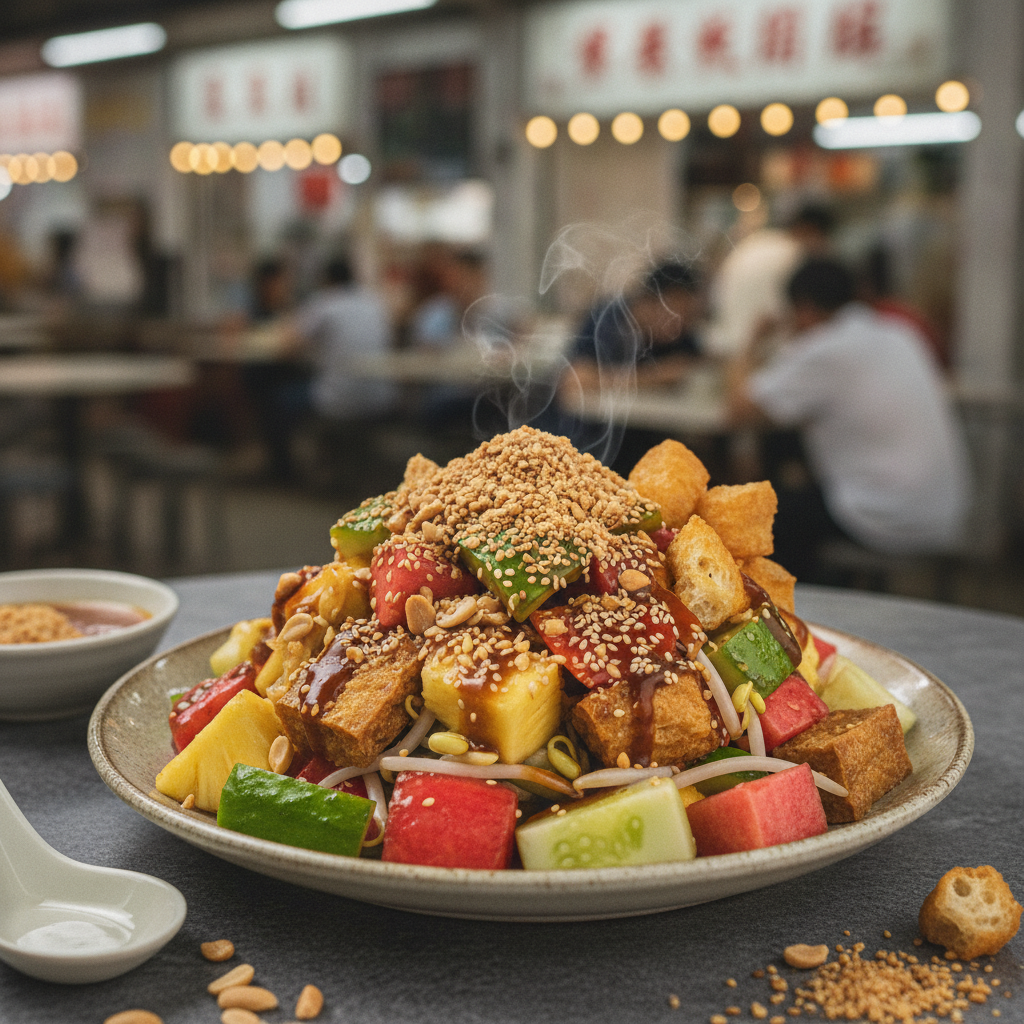
### 1. Chinese/Fruit Rojak This is the crunchy, tangy, and intensely flavourful 'salad' most Singaporeans think of first. It’s an art form in balancing sweet, sour, spicy, and savoury.
**Core Ingredients:** * **Pineapple**: Juicy, tangy sweetness. * **Jicama (Bangkuang)**: Crisp, refreshing, and slightly sweet. * **Cucumber**: Cooling and crunchy. * **Green Mango**: Adds a sharp, sour kick. * **Tau Pok (Puffed Tofu)**: Deep-fried, airy tofu puffs that soak up the sauce beautifully. * **You Tiao (Fried Dough Fritters)**: Crispy, chewy, and often lightly toasted over a grill for extra crunch and warmth. * **Bean Sprouts**: Freshness and a delicate crunch. * **Cuttlefish (optional)**: Tender, chewy slices of blanched cuttlefish for an added seafood dimension and texture.
**The Sauce (The Soul of the Dish):** A dark, thick, pungent concoction of fermented prawn paste (hae ko), sugar, lime juice, chilli, and tamarind, all pounded together and generously coated with crushed roasted peanuts. It’s sweet, savoury, tangy, and spicy – an explosion of umami.
### 2. Indian Rojak (Pasembur) Prepare for a different kind of flavour adventure here – a delightful array of fried snacks drenched in a rich, comforting gravy.
**Core Ingredients (Pick & Mix Style):** * **Potato Fritters**: Soft, starchy, and comforting. * **Hard-Boiled Egg**: Simple yet satisfying. * **Prawn Fritters (Cucur Udang)**: Crispy, savoury fritters studded with small prawns. * **Fish Cake/Fish Fritters**: Chewy, flavourful, and often spiced. * **Tau Kwa (Firm Tofu)**: Fried golden brown. * **Tempeh**: Fermented soybean cake, fried to a crisp. * **Flour Fritters (Cucur Tepung)**: Light, airy, and perfect for soaking up gravy. * **Squid/Cuttlefish**: Often deep-fried, providing a chewy, savoury element. * **Crabstick/Sausages**: Modern additions, often found in popular stalls.
**The Gravy:** A thick, reddish-orange, sweet potato-based gravy, often spiced with chilli, various herbs, and sometimes a hint of tamarind. It’s rich, sweet, mildly spicy, and incredibly moreish.
Where to Find Your Rojak Fix: Our Top Picks
Finding good Rojak is an essential Singaporean experience. Here are some legendary spots to get your fix:
### For Chinese/Fruit Rojak: * **Lau Pa Sat Rojak (Lau Pa Sat Market)**: A consistent favourite in the CBD, known for its well-balanced sauce and perfectly grilled you tiao. Great for tourists due to its central location. * **Toa Payoh Rojak (Toa Payoh West Market & Food Centre)**: Often touted as one of the best, their sauce has a deep, complex flavour, and their ingredients are always fresh. Expect a queue! * **Brothers Rojak (Clementi Ave 3, Block 449)**: Famous for its unique, super fragrant sauce and generous portions. A West-side gem that draws crowds. * **Old Airport Road Food Centre**: While there isn't one single 'famous' Rojak stall, several stalls here offer solid, dependable Chinese Rojak that hit all the right notes.
### For Indian Rojak (Pasembur): * **Habib's Rojak (Ayer Rajah Food Centre)**: A true institution. They offer a massive selection of fresh, crispy fritters and their legendary sweet potato gravy. A must-visit for Indian Rojak enthusiasts. * **Adam's Indian Rojak (Adam Road Food Centre)**: Another highly-regarded stall with a loyal following. Their gravy is rich and flavourful, and their fritters are always perfectly fried. * **Al Mahboob Rojak (various locations including Tampines and Springleaf)**: Known for their very generous portions and a gravy that leans a bit sweeter, great for those who prefer a less spicy kick.
Ordering Tips & Etiquette: Be a Rojak Pro
Navigating a hawker stall can be daunting for the uninitiated, but with these tips, you’ll order like a seasoned local:
### For Chinese/Fruit Rojak: 1. **Specify Your Spice Level**: Always state your preferred spiciness: 'no chilli', 'mild', 'medium', or 'extra spicy'. Don’t assume 'medium' is universal! 2. **Customise Your Mix**: Feel free to ask for 'less pineapple', 'more you tiao', or 'no bean sprouts'. The hawker will usually accommodate. 3. **Toasted or Not?**: Many stalls grill the *you tiao* and *tau pok* for extra crispiness and warmth. If they don’t automatically do it, ask if they can grill them for you. 4. **Consider Cuttlefish**: If you enjoy seafood, adding cuttlefish is a popular choice and adds a different texture.
### For Indian Rojak: 1. **Point and Choose**: This is the fun part! Most stalls display their vast array of fried items. Simply point to the items you want (e.g., 'one potato', 'two prawn fritters', 'one egg'). The hawker will assemble and cut them for you. 2. **Gravy Amount**: You can ask for 'more gravy' or 'less gravy' depending on your preference. Most will drench it generously. 3. **Don't Over-Order**: The items can be quite filling, and the cost adds up per item. Start with a few and add more if you’re still hungry.
### General Etiquette: * **Queue Up**: Hawkers are busy. Always join the queue and wait patiently for your turn. * **Have Cash Ready**: While some stalls accept e-payments, cash is king, especially at older hawker centres. * **Be Polite**: A simple 'thank you' goes a long way.
Price Expectations: What to Budget
Rojak remains one of Singapore’s affordable culinary treasures. Here’s a general guide:
### Chinese/Fruit Rojak: * **Small Portion**: S$3.00 - S$4.00 * **Medium Portion**: S$5.00 - S$6.00 * **Large Portion**: S$7.00 - S$8.00 * Adding extra ingredients like cuttlefish might incur an additional S$1.00 - S$2.00.
### Indian Rojak: * Prices are usually per item. Most fritters, eggs, or smaller items range from S$1.00 - S$2.50 each. * Larger items like big prawn fritters or special fish cakes might be S$3.00 - S$4.00. * A satisfying meal for one typically ranges from S$6.00 to S$10.00, depending on how many items you choose. It can go higher if you pick many premium items.
**Overall:** You can enjoy a delicious and filling Rojak experience for well under S$10, making it an excellent value for money in Singapore's vibrant food scene.
Common Mistakes to Avoid
Even seasoned foodies can sometimes stumble. Here's how to ensure your Rojak experience is always top-notch:
1. **Confusing the Two Types**: Don't walk up to an Indian Rojak stall asking for pineapple and hae ko sauce, or vice-versa! Know your Rojak and respect the distinct culinary traditions. 2. **Not Specifying Spice Level**: This is crucial. If you can't handle heat, 'no chilli' is a perfectly valid request. If you love a kick, say 'extra spicy'! Otherwise, you might get a default medium that's either too bland or too fiery for your liking. 3. **Over-Ordering Indian Rojak**: Those fried items look small individually, but they add up quickly in volume and cost. Start moderate and you can always go back for more. 4. **Ignoring the Quality of You Tiao/Tau Pok**: For Chinese Rojak, stale or soggy *you tiao* and *tau pok* can ruin the dish. Look for stalls that grill them fresh or have a quick turnover. 5. **Not Considering the Sauce**: The sauce is the heart of Rojak. If it looks watery or sparse, it might not be a good sign. For Chinese Rojak, look for a thick, glossy, and fragrant sauce. For Indian Rojak, the gravy should be substantial and coating. 6. **Visiting a Stall During Off-Peak Hours**: While sometimes necessary, some stalls might have less fresh ingredients or a less 'lively' atmosphere during very quiet periods.
Insider Tips for the Savvy Rojak Lover
Elevate your Rojak game with these insider secrets from a local food blogger:
* **Look for the Queue**: It’s a classic Singaporean hawker rule: a long queue often signifies good food. Locals are your best critics! * **Observe the Preparation**: A good Chinese Rojak hawker will meticulously mix and pound the sauce ingredients, ensuring every piece is coated. For Indian Rojak, see if the fritters look freshly fried and not sitting out too long. * **Ask for Extra Crushed Peanuts (Chinese Rojak)**: If you love that nutty crunch and aroma, don't be shy to ask for a bit more on top. Some stalls might charge a little extra, but it's often worth it. * **Try the Assam (Tamarind) Juice with Indian Rojak**: The tartness of a good tamarind drink cuts through the richness of the Indian Rojak gravy beautifully, cleansing your palate. * **Don't Be Afraid to Mix & Match (Chinese Rojak)**: If your chosen stall offers unique additions like crispy cuttlefish or unusual fruits, give them a go! That’s the 'mixture' spirit of Rojak. * **Pair with a Refreshing Drink**: A cold kopi-o (black coffee), teh-o (black tea), or a classic lime juice makes a perfect companion to the rich flavours of Rojak. * **Eat It Fresh**: Rojak, especially Chinese Rojak, is best eaten immediately after it’s prepared, while the *you tiao* and *tau pok* are still crispy.
Rojak FAQs: Your Questions Answered
### Q: Is Rojak a healthy dish? A: Rojak, particularly Chinese Rojak with its fresh fruits and vegetables, offers some nutritional benefits. However, the sauces (especially the sweet, rich Indian Rojak gravy and the sugar-heavy hae ko sauce) and deep-fried components mean it's best enjoyed in moderation as part of a balanced diet.
### Q: Can I customize my Rojak if I have dietary restrictions? A: For Chinese Rojak, you can generally ask to omit certain ingredients like bean sprouts or cuttlefish. For Indian Rojak, you have full control over what fritters you choose. However, both sauces contain allergens (prawn paste in Chinese Rojak, wheat in fritters) and are not typically vegan due to the sauces and fried items (eggs, seafood).
### Q: What's the best time to eat Rojak? A: Rojak makes a fantastic snack, appetiser, or even a light meal. It's popular for lunch or dinner, but its refreshing qualities also make it a great afternoon pick-me-up, especially in Singapore's humid weather.
### Q: Is there a vegetarian/vegan-friendly version of Rojak? A: Traditional Chinese Rojak sauce contains prawn paste ('hae ko'), making it unsuitable for vegetarians/vegans. Indian Rojak gravy might be vegetarian (if sweet potato based), but many fritters contain egg or seafood. It's difficult to find a truly vegan version at typical hawker stalls, though some might make a custom sauce upon request or offer only vegetable fritters.
### Q: How spicy is 'medium' Rojak? A: Spice levels can vary greatly from stall to stall. Generally, 'medium' for Chinese Rojak will have a noticeable but manageable kick. For Indian Rojak, the gravy is usually mildly spicy unless you request extra chilli.
Conclusion: A Symphony of Flavours
From the pungent, tangy kick of Chinese Rojak to the comforting, savoury embrace of Indian Rojak, this humble hawker dish is a powerful emblem of Singapore’s multicultural identity and culinary ingenuity. It’s a dish that tantalises every taste bud, offering a delightful interplay of textures and temperatures in every bite.
As you've learned, Rojak is more than just a quick snack; it's a journey through history, a celebration of fusion, and a testament to the vibrant spirit of our hawker culture. So go forth, armed with your newfound knowledge, and dive headfirst into the magnificent world of Rojak. Explore the stalls, savour the flavours, and discover your own favourite version of this truly unforgettable Singaporean delight. Happy eating, and remember to share your 'shiok' moments!