The Ultimate Guide to Rojak in Singapore: A Culinary Journey Through Sweet, Sour & Spicy Delights
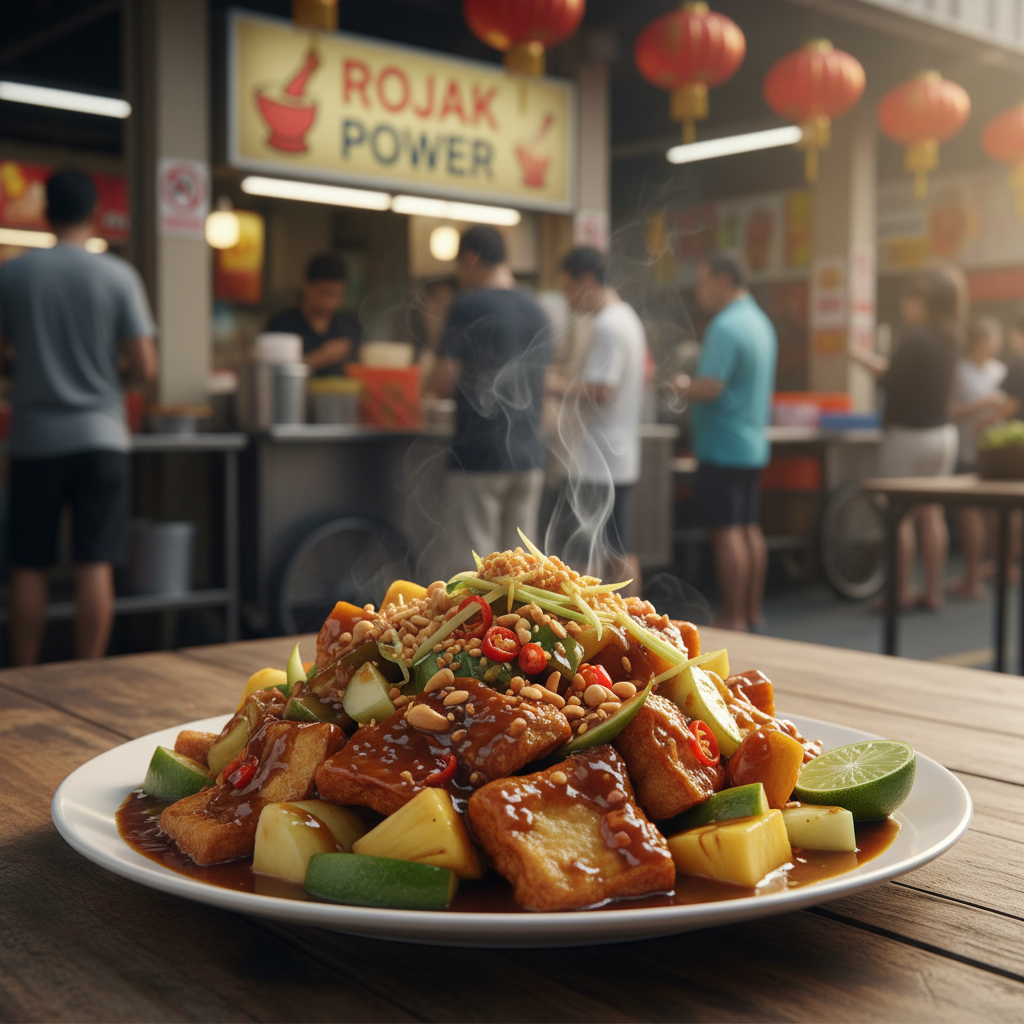
Introduction: What is Rojak?
Ever wondered what a salad looks like when it truly reflects Singapore's melting pot of cultures? Look no further than Rojak. Meaning 'mixture' in Malay, Rojak is exactly that – a glorious mishmash of fruits, vegetables, and sometimes dough fritters, all tossed in a unique, piquant sauce. It’s a dish that tantalises every taste bud, offering a symphony of sweet, sour, spicy, and sometimes savoury notes in a single bite. This ultimate guide will take you deep into the world of Rojak, covering its fascinating history, the distinct types you must try, where to find the best renditions, crucial ordering tips, and insider secrets to elevate your Rojak experience. Prepare to embark on a truly Singaporean culinary adventure!
A Taste of History: The Origins of Rojak
Rojak has its roots deeply embedded in the culinary traditions of the Malay Archipelago, with variations found across Malaysia, Indonesia (where it’s known as *rujak*), and of course, Singapore. In Singapore, Rojak has evolved into two primary, distinct forms: the Chinese/Malay style and the Indian style, each a testament to the island's multicultural culinary tapestry and immigrant influences.
The **Chinese/Malay Rojak** is believed to have adapted from indigenous Malay fruit salads, incorporating Chinese fried dough fritters and a distinctive dark, sticky sauce based on *hae ko* (fermented prawn paste). This blend perfectly showcases the fusion cuisine that Singapore is renowned for.
Conversely, **Indian Rojak** is a completely different beast, evolving from Indian Muslim influences. It foregoes the fruit and *hae ko* in favour of a vibrant orange-red sweet potato-based gravy, served with an assortment of deep-fried dough items, potatoes, and other savoury fritters. Each style, while sharing the name 'Rojak,' offers a unique culinary journey, reflecting the diverse communities that have shaped Singapore’s food identity.
Key Rojak Dishes & Ingredients to Try
To truly appreciate Rojak, you must understand its two distinct personalities:
### 1. Chinese/Malay Rojak This is arguably the most common and recognisable form for many visitors. It’s all about the sauce and the harmonious blend of textures.
* **The Sauce (Hae Ko Sauce):** The soul of the dish. It's a thick, dark, sweet, sour, and spicy concoction made from *hae ko* (fermented prawn paste), tamarind, sugar, chilli, and lime juice. It’s pungent, complex, and utterly addictive. * **You Tiao (Fried Dough Fritters):** Crispy on the outside, chewy on the inside, these absorb the sauce beautifully. * **Tau Pok (Fried Bean Curd Puffs):** Spongy and airy, they soak up the rich sauce like a dream. * **Pineapple:** Adds a burst of sweet and tangy freshness. * **Cucumber:** Provides a cool, refreshing crunch. * **Jicama (Bangkuang):** Mildly sweet, with a crisp, watery texture. * **Bean Sprouts & Kangkong (Water Spinach):** Lightly blanched for a fresh, slightly crunchy element. * **Green Mango (Optional):** Some stalls add unripe mango for an extra tangy kick. * **Garnish:** Generous sprinkle of crushed roasted peanuts, adding crunch and nuttiness.
### 2. Indian Rojak This version is a build-your-own-adventure style meal, where you choose from a colourful array of fried items, all drenched in a unique gravy.
* **The Sauce (Sweet Potato Gravy):** A thick, vibrant orange-red gravy made from sweet potatoes, chilli, peanuts, and various spices. It's sweet, mildly spicy, and savoury, with a velvety texture. * **Cucur (Flour Fritters):** Simple, plain fritters that are soft and absorbent. * **Potato Fritters:** Soft, starchy, and comforting. * **Prawn Fritters (Cucur Udang):** Savoury, crispy fritters often studded with tiny prawns. * **Fish Cakes:** Soft, seasoned, and flavourful. * **Hard-boiled Eggs:** Creamy yolk, a delightful contrast. * **Tofu (Tauhu Goreng):** Fried until golden and spongy. * **Green Chilli:** Often added for a sharp, fresh spicy note. * **Sotong (Cuttlefish):** A popular, chewy, and flavourful add-on, often grilled or fried. * **Cucumber & Pineapple:** Often served alongside, providing freshness against the fried items.
Where to Find the Best Rojak in Singapore
To truly experience Rojak, you need to visit the hawker centres where these culinary gems thrive. Here are some renowned spots:
### For Chinese/Malay Rojak: * **Toa Payoh Rojak** (Toa Payoh Lorong 8 Market & Food Centre, #01-14, 22 Lorong 7 Toa Payoh, Singapore 310022) * *Why:* Famous for its long queues, a testament to its perfectly balanced, rich *hae ko* sauce and fresh ingredients. Consistently rated among the best. * **Balestier Road Hoover Rojak** (Whampoa Makan Place, #01-06, 90 Whampoa Dr, Singapore 320090) * *Why:* A Michelin Bib Gourmand recipient, known for its consistent quality, generous portions, and a slightly tangier sauce profile that many adore. * **Lim Bo Seng Rojak** (Maxwell Food Centre, #01-70, 1 Kadayanallur St, Singapore 069184) * *Why:* A convenient option in a popular food centre, offering a classic rendition loved by locals and tourists alike.
### For Indian Rojak: * **Haji M. H. Hussian Rojak** (Adam Road Food Centre, #01-01, 2 Adam Rd, Singapore 289876) * *Why:* An institution in Singapore, consistently serving up a fantastic array of freshly fried items and a flavourful, comforting sweet potato gravy. Expect a crowd. * **P. S. Mohan Amusements** (Tekka Market & Food Centre, #01-254, 665 Buffalo Rd, Singapore 210665) * *Why:* Located in the heart of Little India, this stall offers an authentic experience with a wide variety of items to choose from, perfect after exploring the market. * **Habib's Rojak** (Ayer Rajah Food Centre, #01-68, 503 West Coast Dr, Singapore 120503) * *Why:* A beloved spot in the western part of Singapore, praised for its fresh items and rich, aromatic gravy.
Ordering Tips & Etiquette
Navigating a hawker stall can be an experience in itself. Here's how to order Rojak like a pro:
### For Chinese/Malay Rojak: 1. **Queue Patiently:** Good Rojak stalls often have queues. Wait your turn. 2. **State Your Order:** Clearly indicate your desired portion size (small, medium, large) and any specific requests. 3. **Spice Level:** Be sure to specify your preferred spice level: 'no chilli' (bu la), 'mild' (xiao la), 'medium' (zhong la), or 'spicy' (da la). Singaporean 'spicy' can be quite potent! 4. **Customisation:** Feel free to ask for 'more peanuts' or 'less *tau pok*'. Some stalls allow you to add extras like century eggs. 5. **Payment:** Usually cash payment upon ordering. Some stalls now accept QR code payments.
### For Indian Rojak: 1. **Point & Choose:** This is typically a 'point-point' system. Approach the counter and point to the specific fried items you wish to have. Don't be shy – mix and match a variety! 2. **Wait for Freshness:** The vendor will usually re-fry your selected items briefly for warmth and crispness before cutting them. 3. **Sauce:** The glorious sweet potato gravy is usually poured generously over your selection. If you want it on the side or 'more sauce,' just ask. 4. **Add-ons:** If you want *sotong* (cuttlefish), confirm the price as it's often more expensive. 5. **Payment:** Similar to Chinese Rojak, cash is king, but QR payments are becoming more common.
Price Expectations
Rojak is generally an affordable and hearty snack or light meal. Prices can vary slightly depending on the stall and location.
### Chinese/Malay Rojak: * **Small:** S$3.00 - S$5.00 * **Medium:** S$5.00 - S$7.00 * **Large:** S$7.00 - S$10.00+ (depending on customisation and extra ingredients)
### Indian Rojak: * **Individual Items:** S$0.50 - S$2.00 per piece (for fritters, potatoes, tofu, etc.). * **Typical Plate:** A satisfying plate with 5-7 items will generally cost S$5.00 - S$8.00. * **Sotong (Cuttlefish):** This can be a pricier add-on, typically S$3.00 - S$5.00 per piece, significantly increasing the total cost of your plate.
Common Mistakes to Avoid
Don't let these missteps detract from your Rojak experience:
* **Only trying one type:** Both Chinese/Malay and Indian Rojak are unique culinary experiences. Trying just one means missing out on half the story! * **Underestimating the spice:** If you're sensitive to spice, always start with 'mild' or 'no chilli' for Chinese Rojak, and be cautious with the fresh green chillies in Indian Rojak. Singaporean spice levels can pack a punch! * **Not customising:** Don't be afraid to ask for what you want (more peanuts, less *tau pok*, specific fritters). Vendors are usually happy to oblige. * **Going to an empty stall:** While not always true, long queues at hawker centres often indicate quality and popularity. The busiest stalls usually mean fresher ingredients and better flavour. * **Forgetting cash:** Many hawker stalls, especially the more traditional ones, still operate on a cash-only basis. Always carry small denominations.
Insider Tips for the Best Rojak Experience
Elevate your Rojak quest with these local secrets:
* **Off-peak Perfection:** Visit popular stalls during off-peak hours (mid-morning or late afternoon) to avoid long queues and enjoy a more relaxed experience. * **Observe the Freshness:** For Indian Rojak, look for stalls where the fried items are being replenished frequently or are still warm from frying. For Chinese Rojak, notice if fruits are cut fresh to order. * **The Hae Ko's Secret:** A truly great Chinese Rojak stall often boasts about its homemade *hae ko* sauce, which is meticulously prepared and aged. Ask around or look for signs indicating this dedication. * **Pair Your Rojak:** Chinese Rojak pairs wonderfully with a refreshing local beverage like lime juice (*limau*). Indian Rojak, with its hearty nature, can be a meal in itself or shared. * **Don't Ignore the Side Options:** Some Chinese Rojak stalls might also sell other complementary dishes like century egg porridge, offering a broader taste of their culinary prowess. * **The Charred Difference:** Some Chinese Rojak stalls lightly toast or char the *you tiao* and *tau pok* before adding them to the sauce, enhancing their texture and flavour. Keep an eye out for this detail!
Frequently Asked Questions (FAQ)
### Q: Is Rojak vegetarian-friendly? A: Indian Rojak can easily be made vegetarian by selecting only plant-based fritters (potato, tofu, flour fritters) and ensuring the sauce doesn't contain animal products (which it typically doesn't, being sweet potato-based). Chinese Rojak is generally *not* vegetarian due to the *hae ko* (fermented prawn paste) in its signature sauce. While rare, some tourist-focused stalls might offer a vegetarian sauce, but it won't be the traditional flavour.
### Q: Is it gluten-free? A: Unfortunately, no. Both types of Rojak heavily feature fried dough fritters (*you tiao*, *tau pok*, various *cucur*), which contain gluten. The sauces might also contain gluten-based thickeners or soy sauce.
### Q: What exactly is *hae ko*? A: *Hae ko* is a crucial ingredient in Chinese/Malay Rojak sauce. It's a dark, thick, pungent, and sweet fermented prawn paste. It's what gives the sauce its distinctive deep umami flavour and characteristic aroma. Don't be deterred by the description – it's delicious!
### Q: How fresh are the ingredients? A: At reputable stalls, the fruits and vegetables for Chinese Rojak are typically cut fresh throughout the day. For Indian Rojak, the fried items are often pre-fried but good stalls will quickly re-fry or warm them to order, ensuring they are served crispy and hot. A quick turnover rate at a stall is usually a good indicator of freshness.
### Q: Can I take Rojak away? A: Yes, takeaways are very common. For Chinese Rojak, the sauce is usually packed separately to prevent the fritters from getting soggy. For Indian Rojak, the sauce is typically mixed in with your chosen items before packing.
Conclusion: A Symphony of Flavours
Rojak is more than just a dish; it's a vibrant expression of Singapore's multicultural heritage, a symphony of textures and tastes that tantalises the palate and tells a story of harmonious culinary fusion. From the sweet, sour, and pungent complexity of Chinese/Malay Rojak to the comforting, savoury-sweet delight of its Indian counterpart, embarking on a Rojak hunt is an essential Singaporean culinary adventure. Each mouthful is a delightful surprise, reflecting the island's ability to blend diverse ingredients and traditions into something truly unique and unforgettable. So, next time you're in a hawker centre, don't just walk past – stop, order, and dive headfirst into the glorious mixture that is Rojak! Your taste buds will thank you.