The Ultimate Guide to Popiah in Singapore: Unwrap This Fresh Spring Roll Delight!
Introduction: Your Journey into the World of Popiah Begins Here
Ah, Popiah! For many Singaporeans, just hearing the name conjures images of a perfectly rolled, bursting-with-flavour fresh spring roll. It's more than just a snack; it's a culinary hug, a staple at family gatherings, and a testament to Singapore's vibrant hawker culture. If you've ever walked past a stall watching skilled hands meticulously craft these edible parcels and wondered what all the fuss is about, you've come to the right place! As your trusty Singapore food blogger, I'm here to take you on a deep dive into the wonderful world of Popiah. In this ultimate guide, we'll uncover its rich history, identify the must-try variations, reveal the best places to find them, arm you with ordering tips, and share some insider secrets to elevate your Popiah experience. Get ready to roll!
A Taste of History: The Origins and Evolution of Popiah
The story of Popiah is as rich and layered as the dish itself, tracing its roots back to the Fujian and Teochew provinces of China. Legend has it that Popiah was invented during the Qing Dynasty when a scholar, too engrossed in his studies to sit for proper meals, requested a dish that could be eaten by hand. His wife ingeniously wrapped leftovers in thin flour crepes, creating the ancestor of what we know today.
When Hokkien and Teochew immigrants arrived in Southeast Asia centuries ago, they brought this beloved tradition with them. In Singapore, Popiah truly flourished, incorporating local ingredients and tastes, becoming a quintessential part of our culinary landscape. It's a dish that embodies fusion and adaptation, a testament to Singapore's diverse heritage and the ingenuity of our ancestors in making a 'portable meal' into an iconic culinary experience.
What Makes a Perfect Popiah: Key Ingredients & Variations to Savour
At its heart, Popiah is a symphony of textures and flavours, all encased in a delicate, paper-thin skin. Understanding its components is key to appreciating its brilliance:
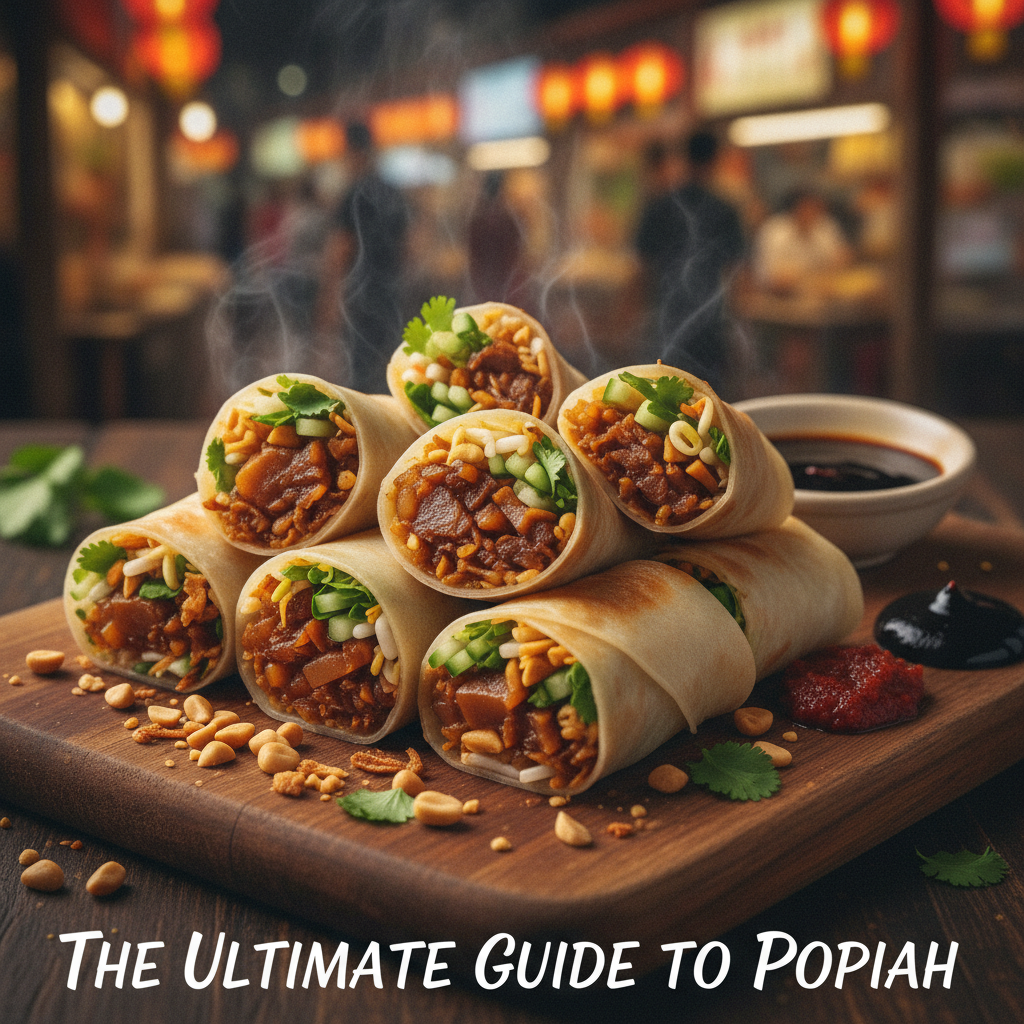
1. **The Wrapper (Popiah Skin)**: This is the foundation – a soft, translucent crepe made from wheat flour, often stretched by hand by skilled artisans on a hot griddle. The best ones are thin yet resilient, holding all the fillings without tearing. 2. **Stewed Turnip (Jicama / Sengkuang)**: The undisputed star of the filling. This slow-cooked jicama, often braised in a savoury stock with prawns, dried shrimp, and sometimes pork belly, provides the moist, earthy, and subtly sweet core. 3. **Crunchy Bits**: Essential for texture! These typically include crushed roasted peanuts, crispy fried shallots, and sometimes crunchy bits (often deep-fried flour crisps or pork lard for non-halal versions). 4. **Protein & Garnish**: Hard-boiled egg strips, cooked fresh prawns (optional, but a common premium addition), fresh shredded cucumber, blanched bean sprouts, and occasionally Chinese sausage or crab meat. 5. **Sauces**: A generous smear of sweet dark sauce (often hoisin or a specially brewed sweet bean paste) and a dollop of spicy chilli paste are crucial for that iconic sweet-spicy-savoury kick. Some stalls also add a touch of garlic paste.
While the classic Popiah is ubiquitous, some stalls offer slight variations in their turnip stew recipe or by allowing premium add-ons. Look out for options like 'wet' Popiah (more sauce) or 'dry' Popiah (less sauce and drier filling) depending on your preference.
Where to Find Your Popiah Fix: Top Stalls & Locations Across Singapore
Singapore is replete with fantastic Popiah stalls, each with its loyal following. Here are a few must-visit spots, from heritage hawker stalls to modern interpretations:
* **Kway Guan Huat Popiah (Guan Huat Popiah)**: One of Singapore's oldest and most renowned Popiah establishments, operating since the 1930s. Famous for its handmade wrappers and generous, flavourful fillings. Expect a queue, especially on weekends. * *Location*: 95 Joo Chiat Road, Singapore 427833 (East Coast) * **Jubilee Popiah**: Another heritage gem, celebrated for its well-balanced, savoury turnip filling and fresh ingredients. They've been around for decades, perfecting their craft and serving consistently delicious rolls. * *Location*: 505 Beach Road, #B1-02 Golden Mile Food Centre, Singapore 199583 (City Hall/Beach Road) * **Qing Huang Dao Popiah**: Known for its distinctively sweet and savoury turnip stew, often with a hint of dried shrimp. A popular choice for those residing in the West. * *Location*: 347 Bukit Batok Street 34, #01-229, Singapore 650347 (West) * **Rojak & Popiah**: While the name implies rojak, their popiah is a strong contender. Found in various hawker centres (e.g., Maxwell Food Centre, Amoy Street Food Centre often have stalls offering both), look for their vibrant setup. A reliable option for consistently good, fuss-free popiah. * **Encik Popiah (Halal Option)**: For our Muslim friends, Encik Popiah offers delicious, halal-certified Popiah with a great balance of flavours and fresh ingredients. * *Various Locations*: Check their social media; often found in kopitiams and major food courts (e.g., Northpoint City, VivoCity food courts). * **Good Chance Popiah Eating House**: If you're looking for a group dining experience, this place offers a fantastic 'DIY' Popiah option where all the ingredients are laid out, and you roll your own at the table – a truly interactive and fun meal! * *Location*: 10 Jalan Berseh, #01-19, Singapore 200010 (Jalan Besar)
Ordering Like a Local: Essential Tips & Etiquette
Don't be shy – ordering Popiah is straightforward once you know the drill!
1. **State Your Quantity**: Most stalls sell them by the roll. Just say "Two Popiah, please!" or indicate with your fingers. 2. **Customisation is Key**: This is where you make it yours. Don't be afraid to ask! * **Chilli**: "No chilli," "less chilli," or "extra chilli" (add "more spicy" if you dare!). * **Peanuts**: "No peanuts" if you have allergies or just don't like them. * **Prawns**: Some stalls offer prawns as an add-on for a small extra charge. Ask "add prawn?" * **Crispy Bits**: If you prefer to avoid pork lard (for religious or health reasons), you can request "no lard" or "vegetarian crispy bits" if available. 3. **Eat Immediately**: Popiah is best enjoyed fresh. The wrapper can get soggy if left for too long, compromising the texture. 4. **Use Your Hands**: Traditionally, Popiah is a hand-held snack. Don't be afraid to dig in – it's part of the authentic experience! 5. **Be Patient**: During peak hours, especially at popular stalls, there might be a wait. Good things (and good Popiah) come to those who wait!
Price Expectations: What to Budget for Your Popiah Delight
Popiah remains one of Singapore's most affordable and satisfying snacks, offering excellent value for its flavour and freshness.
* **Hawker Stalls**: Expect to pay around **S$1.80 to S$2.50** per roll. Some premium rolls with extra ingredients (like fresh prawns) might go up to S$3.00-S$3.50. * **Food Courts/Cafes**: Prices might be slightly higher due to overheads, typically in the range of **S$2.50 to S$4.00** per roll. * **Restaurant DIY Popiah**: For the DIY experience, you're usually ordering a platter of ingredients meant for sharing, which can range from **S$20 to S$40** or more depending on the size of the platter and the variety of ingredients included.
Common Mistakes to Avoid for a Perfect Popiah Experience
To ensure a stellar Popiah experience every time, steer clear of these common pitfalls:
1. **Letting It Sit Too Long**: Don't order Popiah as an afterthought and leave it on the table while you eat other dishes. Eat it while the wrapper is fresh and the ingredients are at their prime to prevent sogginess. 2. **Being Afraid of Chilli (Unless You Can't Handle It)**: Unless you genuinely can't handle spice, a touch of chilli adds a crucial layer of flavour and elevates the entire dish. Start with "less chilli" if you're unsure. 3. **Skipping Customisation**: Don't just take what's given if you have preferences. Speak up! Most vendors are happy to accommodate your requests. 4. **Comparing to Fried Spring Rolls**: Popiah is a *fresh* spring roll. It's a completely different flavour and texture profile from its fried cousins. Appreciate it for what it is – a cool, refreshing, and flavourful snack. 5. **Overstuffing (if DIY)**: If you're enjoying a DIY Popiah experience, resist the urge to pile everything in. A balanced amount ensures the wrapper doesn't tear and each bite is a harmonious blend of flavours.
Insider Tips for the Ultimate Popiah Experience
Ready to level up your Popiah game? Here are some secrets from a true Singapore food enthusiast:
* **Look for Handmade Wrappers**: The truly authentic stalls often hand-stretch their wrappers on a hot plate, a mesmerising process to watch. This dedication makes a huge difference in texture and flavour. Ask or observe! * **Pair with Laksa or Rojak**: Popiah makes an excellent companion to other local delights like a spicy Laksa or a tangy Rojak. It helps balance out the stronger flavours and textures. * **Go Early**: The best stalls often sell out or have long queues during lunch and dinner peaks. Aim for off-peak hours (mid-morning or late afternoon) for a more relaxed experience and to see the intricate rolling process. * **Observe the Locals**: Unsure how to eat it or what to ask for? Take a cue from the seasoned Singaporeans around you – they know best! * **Don't Dismiss Humble Stalls**: Sometimes, the most unassuming stalls tucked away in older hawker centres hide the best Popiah gems. Explore and trust your instincts (and queues!)
Frequently Asked Questions (FAQ) About Popiah
Here are some common questions I often get about Popiah:
* **Q: Is Popiah healthy?** * A: Generally, yes! It's packed with fresh vegetables and lean protein. While it contains some carbs from the wrapper and a bit of sugar in the sweet sauce, it's often considered a healthier hawker option. You can make it even healthier by asking for less sauce and no crispy lard bits. * **Q: Is Popiah vegetarian-friendly?** * A: Most Popiah stalls can make it vegetarian by omitting prawns and ensuring the crispy bits are not pork lard. Always confirm with the vendor. The main filling (turnip) is usually vegetarian, but some stock bases may contain meat. Inquire to be sure. * **Q: What's the difference between Popiah and a Vietnamese spring roll?** * A: While both are fresh, non-fried rolls, Popiah uses a wheat flour wrapper and a primary filling of stewed turnip, often with peanuts and sweet/chilli sauce. Vietnamese spring rolls (Gỏi cuốn) typically use translucent rice paper wrappers and are filled with rice vermicelli, prawns, herbs, and served with a peanut or fish sauce dip. Distinctly different flavour profiles and textures! * **Q: Can I make Popiah at home?** * A: Absolutely! While making the wrappers is a skilled art, you can buy ready-made Popiah wrappers from most supermarkets. The stewed turnip filling is time-consuming but rewarding to make, allowing you to customise to your heart's content. * **Q: Is Popiah spicy?** * A: It depends on the chilli paste used and your spice tolerance. You can always request "no chilli" or "less chilli." The standard preparation includes a moderate amount of chilli paste, which gives it a pleasant kick rather than an overpowering burn for most palates.
Conclusion: Your Next Popiah Adventure Awaits!
There you have it – your comprehensive guide to navigating the delicious world of Popiah in Singapore! This humble fresh spring roll, with its delicate wrapper and explosion of sweet, savoury, and spicy flavours, is truly an integral part of our culinary fabric. Whether you're a first-time visitor or a seasoned local looking to rediscover a classic, I hope this guide empowers you to seek out and savour this iconic dish. So go forth, find your favourite stall, don't be afraid to customise, and take that first glorious bite. Happy rolling, and enjoy the taste of Singapore!