The Ultimate Guide to Mee Goreng in Singapore: A Culinary Journey
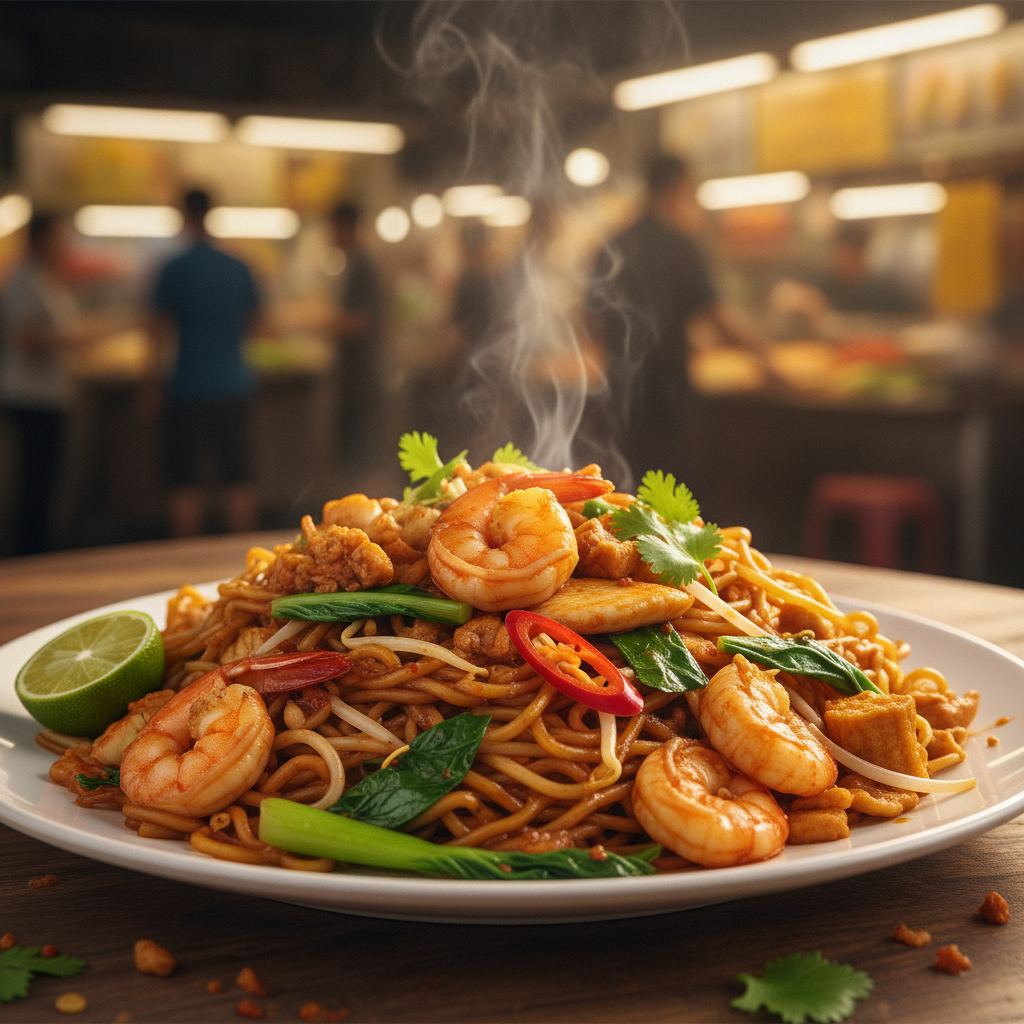
Singapore's culinary scene is a vibrant tapestry, and among its most colourful threads is Mee Goreng. This fiery, flavourful fried noodle dish, though seemingly simple, holds a special place in the hearts of locals and the palates of intrepid foodies. From its humble origins to its countless renditions across the island, Mee Goreng offers a delightful symphony of sweet, savoury, and spicy notes. This ultimate guide will take you on a deep dive into everything Mee Goreng, from its fascinating history and diverse styles to where to find the best plates, how to order like a pro, and insider tips to elevate your gastronomic adventure. Get ready to slurp your way through Singapore's most beloved stir-fried noodles!
Mee Goreng, literally translating to 'fried noodles,' traces its roots back to the Indian Muslim (Mamak) communities of Southeast Asia. Originating from Indonesia and Malaysia, it found its way to Singapore, where it was enthusiastically adopted and adapted. The early versions were typically prepared by Indian Muslim hawkers, who introduced their unique blend of spices, sweet soy sauce (kicap manis), and tomato or chilli paste, creating the iconic reddish-orange hue. Over the decades, Chinese hawkers also began offering their own interpretations, often incorporating darker soy sauce, more seafood, and a pronounced 'wok hei' (breath of the wok) flavour. This cross-cultural evolution has resulted in the rich diversity of Mee Goreng we enjoy today, a testament to Singapore's multicultural food heritage.
While the name 'Mee Goreng' might suggest one dish, Singapore offers a delicious spectrum. Don't limit yourself to just one type!
* **Indian Muslim Mee Goreng**: The classic. Characterized by its vibrant reddish-orange colour, sweet-spicy flavour profile, and generous use of yellow noodles stir-fried with potatoes, bean sprouts, firm tofu, tomato, and often a choice of mutton or chicken. Sometimes includes a hint of curry powder and a fried egg. * **Chinese Mee Goreng**: A darker, often less sweet, and more savoury version. Features yellow noodles stir-fried with dark soy sauce, often seafood (prawns, squid), fish cake, bean sprouts, and occasionally lap cheong (Chinese sausage). The focus is often on achieving a smoky 'wok hei'. * **Mee Kuah**: The lesser-known, soupy cousin of Mee Goreng. The same core ingredients (noodles, potatoes, meat) are simmered in a rich, savoury-sweet broth, often with a hint of tomato and spices. Perfect for those who prefer something less dry and more comforting. * **Mee Goreng Ayam/Daging**: 'Ayam' means chicken, 'Daging' means beef/mutton. These are common add-ons to the standard Mee Goreng, offering a heartier, more protein-packed meal. Simply ask to add your preferred protein. * **Maggi Mee Goreng**: A popular, albeit non-traditional, rendition using instant Maggi noodles. Often found at supper spots (prata shops), it’s celebrated for its springy texture and intense, salty-spicy flavour. A true guilty pleasure for many!
Singapore boasts numerous gems for Mee Goreng. Here are a few renowned spots to kickstart your culinary quest:
* **Abdullah Taufik (Geylang Serai Market & Food Centre, #02-132)**: Famous for its traditional Indian Muslim Mee Goreng with a good balance of sweet, savoury, and spicy. Expect queues, a testament to its popularity. * **Haji M. Abdul Rajak (Old Airport Road Food Centre, #01-149)**: Another stalwart known for its flavourful, classic Mee Goreng, often lauded for its robust spice blend and generous portions. * **Haron Satay & Mee Goreng (East Coast Lagoon Food Village, Stall No. 55)**: A favourite for its seaside ambiance and consistently good Mee Goreng, perfect after a bike ride. Their Satay is also an excellent pairing. * **Al-Tasneem Restaurant (100 Jalan Sultan, #01-08 Sultan Plaza)**: A popular Indian Muslim eatery that serves an excellent Maggi Mee Goreng, alongside other supper staples. A must-try for instant noodle fans. * **Al-Azhar Eating Restaurant (Various locations, e.g., Beauty World Centre, Clementi)**: Reliable chain for a good, consistent Indian Muslim Mee Goreng and a wide range of other prata shop favourites, great for late-night cravings. * **Mr. Teh Tarik Express (Various hawker centres/food courts)**: A convenient option for a decent, budget-friendly plate of Mee Goreng when you're looking for a quick fix across the island. * *For Chinese style Mee Goreng*: While less commonly a standalone specialty, many Zi Char stalls or hawkers specializing in fried Hokkien Mee might offer a version. Keep an eye out for darker-hued plates with seafood!
Navigating a bustling hawker centre can be daunting, but ordering Mee Goreng is straightforward with these tips:
* **Spice Level is Key**: Most stalls will ask 'pedas?' (spicy?) or 'kurang pedas?' (less spicy?). Don't be shy to ask for 'tak pedas' (not spicy) if you're sensitive to heat, or 'lebih pedas' (more spicy) for an extra kick. * **Customise with Add-ons**: Common additions include a fried egg ('telur goreng'), chicken ('ayam'), or mutton ('daging'). Just ask! Some stalls even offer squid or prawns. * **Queue Etiquette**: Always queue patiently. When it's your turn, be ready with your order. Cutting queues is a definite no-no. * **Language**: Most hawkers understand basic English or Malay. Pointing at the menu or dish also works effectively. * **Payment**: Have small notes or coins ready. Cash is still king at many stalls, though an increasing number accept e-payment (PayNow, GrabPay). * **Return Your Tray**: After eating, return your tray and dishes to designated collection points. It's a hawker culture norm and helps keep the centres clean.
Mee Goreng remains one of Singapore's most affordable and satisfying meals, offering incredible value for its flavour.
* **Basic Plate**: Expect to pay **S$4.00 - S$6.00** for a standard plate with just noodles, potatoes, and vegetables. * **With Add-ons**: If you choose to add chicken, mutton, a fried egg, or other proteins, the price usually ranges from **S$6.00 - S$8.00**. * **Specialised Stalls/Cafes**: Some slightly more upscale Indian Muslim restaurants or cafes might charge up to S$10 for a gourmet version or larger portion, but generally, it's a very budget-friendly option.
Steer clear of these common pitfalls to ensure a perfect Mee Goreng experience:
* **Assuming all Mee Goreng tastes the same**: Flavour profiles vary wildly between Indian Muslim and Chinese styles, and even from stall to stall. Be open to different interpretations and don't expect consistency. * **Not specifying spice level**: If you can't handle heat, make sure to ask for 'tak pedas.' Conversely, if you love a kick, ask for 'lebih pedas' early on. * **Ignoring the queue**: Jumping the queue is a definite no-no and will earn you glares from seasoned locals. Patience is a virtue here. * **Comparing it directly to Indonesian/Malaysian versions**: While related, Singaporean Mee Goreng has evolved with its own distinct character. Enjoy it for what it is, a unique local dish. * **Forgetting to try Mee Kuah**: Many first-timers stick to the dry version. Don't miss out on the comforting, flavourful Mee Kuah – it's a hidden gem!
Want to truly enjoy Mee Goreng like a local expert? Here are some pro-tips:
* **Look for the Wok Hei**: For Chinese-style Mee Goreng, a good indicator of quality is a hawker who fries in small batches with an intensely hot wok, creating that elusive smoky aroma known as 'wok hei'. * **Ask for a Limau**: A squeeze of calamansi lime juice ('limau') over your Mee Goreng can cut through the richness and add a refreshing zing. Many stalls offer it either on the side or will squeeze it for you. * **Pair with Teh Tarik**: The sweet, frothy pulled tea ('Teh Tarik') is the perfect accompaniment to balance the spiciness and richness of Mee Goreng. It's a classic pairing. * **Go During Off-Peak Hours**: To avoid long queues at popular stalls, try visiting before lunch (11-12 PM) or after the main lunch rush (2-3 PM). Supper spots for Maggi Mee Goreng are best late at night. * **Observe the Ingredients**: A good Mee Goreng usually features fresh, vibrant ingredients. Look for stalls with plenty of crunchy bean sprouts, well-cooked, soft potatoes, and tender meat (if added).
* **Q: Is Mee Goreng always spicy?** A: While traditionally spicy, you can almost always request for a less spicy ('kurang pedas') or non-spicy ('tak pedas') version. Don't hesitate to ask! * **Q: Can I find a vegetarian Mee Goreng?** A: Yes, many Indian Muslim stalls can prepare a vegetarian version, omitting meat and sometimes egg. Just ask for 'vegetarian Mee Goreng' or 'tak pakai daging/ayam' (no meat/chicken). * **Q: What's the difference between Mee Goreng and Mee Siam?** A: Both are noodle dishes, but Mee Goreng uses yellow noodles and is stir-fried with a sweet-spicy tomato/chilli base. Mee Siam typically uses thinner rice vermicelli, has a more sour-spicy tamarind-based gravy, and is often garnished with tau pok (fried beancurd) and chives. * **Q: Is Mee Goreng considered healthy?** A: As a fried noodle dish, it's not typically considered a 'healthy' option due to its oil content, carbohydrates, and sometimes sugar. Enjoy it in moderation as a delicious treat! * **Q: What drink pairs best with Mee Goreng?** A: Teh Tarik (pulled tea), Milo dinosaur, or a refreshing lime juice ('limau') are popular choices that complement the dish well, especially to cut through the spice.
Mee Goreng is more than just a plate of fried noodles; it's a testament to Singapore's diverse culinary landscape and its ability to transform simple ingredients into an explosion of flavours. Whether you prefer the classic Indian Muslim rendition, a smoky Chinese stir-fry, or a comforting soupy Mee Kuah, there's a Mee Goreng experience waiting for you to discover. So next time you're in a hawker centre, be adventurous, try a new stall, and savour every spicy, savoury, and slightly sweet slurp. Happy eating, foodies – your ultimate Mee Goreng adventure begins now!