The Ultimate Guide to Laksa in Singapore: A Culinary Journey Through Spice and Coconut
Introduction: Your Passport to Laksa Paradise
Ahoj, fellow foodies! Your trusted Singapore food blogger here, ready to take you on a mouth-watering journey through one of our nation's most beloved dishes: Laksa. Forget your preconceived notions; Laksa isn't just a dish, it's a vibrant tapestry of flavours, a symbol of Singapore's diverse heritage, and a culinary experience you simply *must* master. Whether you're a first-time visitor or a seasoned local looking to deepen your Laksa knowledge, this ultimate guide will arm you with everything you need to navigate the creamy, spicy, and utterly addictive world of Singaporean Laksa. From its intriguing history to the best hawker stalls and insider tips, get ready to slurp your way to Laksa enlightenment!
A Taste of History: The Roots of Laksa in Singapore
Laksa's story is as rich and complex as its broth, deeply intertwined with the Peranakan (Straits Chinese) culture that flourished in Singapore and Malaysia. Originating from the fusion of Chinese and Malay culinary traditions, Laksa embodies the spirit of cultural exchange. The word 'Laksa' itself is believed to come from Sanskrit 'laksha' (meaning 'a hundred thousand', referring to the myriad ingredients), or from the Chinese 'la sa' (spicy sand), hinting at its gritty texture and fiery kick.
In Singapore, the most iconic variant, Katong Laksa, emerged from the Katong and Joo Chiat areas – once Peranakan enclaves. Over generations, different families and hawkers have put their unique spin on the dish, leading to the diverse Laksa landscape we enjoy today. It's a dish that has evolved, yet consistently maintained its soul-warming essence.
Key Laksa Varieties to Conquer
While Laksa has many cousins across Southeast Asia, here are the quintessential Singaporean styles you absolutely must try:
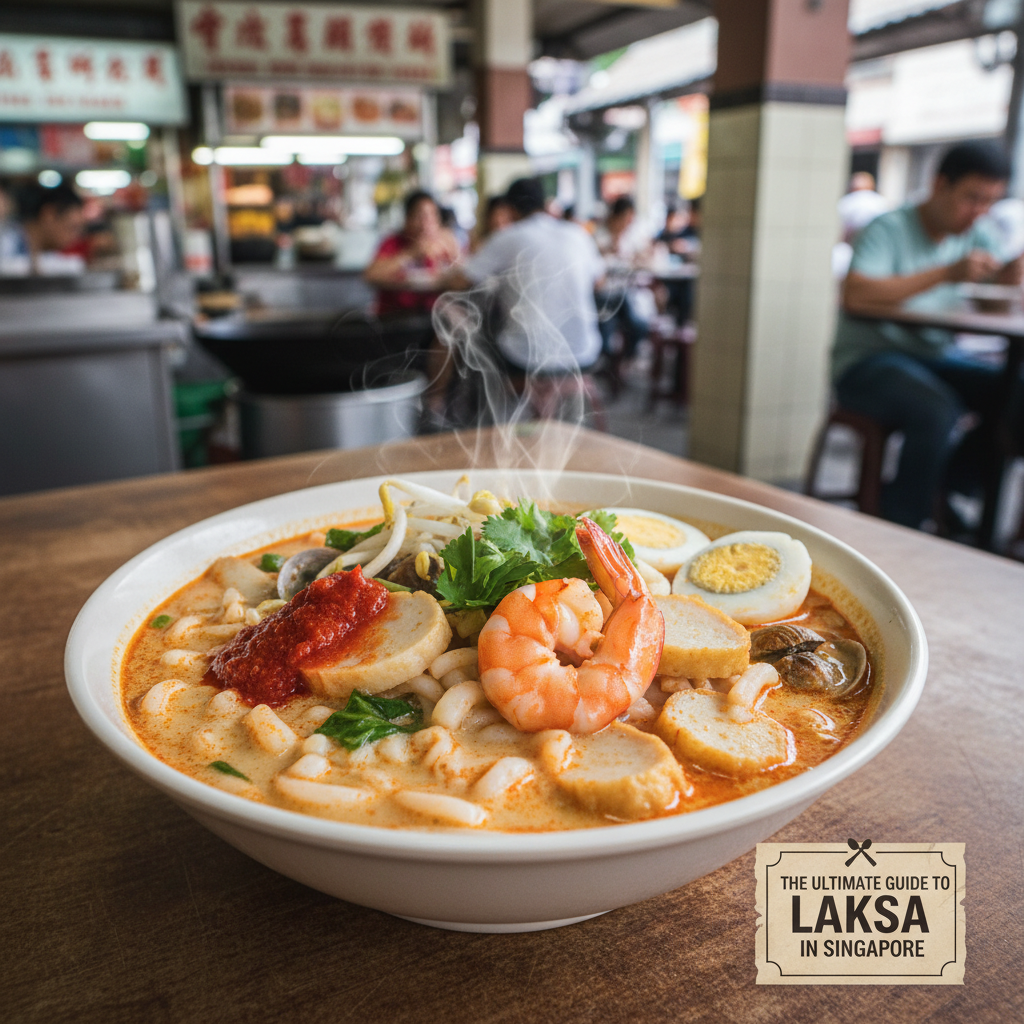
* **Katong Laksa (Singapore Laksa):** This is *the* superstar. Characterized by its incredibly rich, fragrant, and slightly sweet coconut milk-based curry broth, infused with galangal, turmeric, belacan (shrimp paste), and dried shrimp. What sets it apart are the thick bee hoon (rice vermicelli) noodles, cut into short strands, making it easy to eat with just a spoon – no chopsticks required! Generous toppings usually include succulent prawns, tender fish cakes, cockles (hum), and a dollop of fiery sambal belacan for that extra kick. The epitome of creamy comfort.
* **Traditional Hawker Laksa (Curry Laksa):** Found in almost every hawker centre, this is a broader category that shares many similarities with Katong Laksa but often features a slightly less concentrated or varied broth. You might find a mix of yellow noodles and bee hoon, or just one type. Toppings can vary, often including bean sprouts, fish balls, tofu puffs (tau pok) soaking up all that delicious broth, and sometimes chicken or char siew. It's a hearty, everyday Laksa for the masses.
* **Sungei Road Laksa:** A true heritage gem! This stall, famously still cooking over a charcoal fire, offers a distinct, lighter yet incredibly aromatic coconut broth. It’s less creamy than Katong Laksa, with a unique depth of flavour that some purists swear by. Like Katong Laksa, the noodles are cut short, and it's served with cockles and a potent chilli paste. It offers a glimpse into a bygone era of Laksa making.
* **Claypot Laksa:** A modern, yet deeply satisfying twist. This style serves the Laksa bubbling hot in a claypot, ensuring every spoonful stays piping hot till the end. The broth is typically rich and robust, often featuring a wider array of ingredients like chicken, prawns, cockles, and sometimes even a whole boiled egg. The claypot helps to infuse the flavours even deeper, creating an incredibly comforting and hearty meal.
Where to Find Your Laksa Fix: Top Stalls & Locations
Ready to hunt down the best bowls? Here are some legendary spots and reliable haunts:
* **328 Katong Laksa (Katong Area):** Arguably the most famous, even beating Gordon Ramsay in a cook-off! Expect a consistently rich and flavourful broth. * *Locations:* 51/53 East Coast Road, Singapore 428770 (main branch) & multiple other outlets across Singapore.
* **Jiak Song Mee Hoon Kway (ex-328 Katong Laksa Chef):** Run by the former head chef of 328, this stall focuses on Fishball Mee Hoon Kway, but the Laksa (when available or at specific branches) carries a similar legacy. Check their outlets for Laksa offerings. * *Locations:* Multiple outlets, e.g., Bedok Reservoir, Jurong, etc. (check their social media for current Laksa availability).
* **Roxy Laksa (East Coast Lagoon Food Village):** A historical name with roots tracing back to the 1950s. Their Laksa is famed for its authentic, slightly less creamy, and very aromatic broth. Perfect with a sea breeze. * *Location:* 1220 East Coast Parkway, #01-15 East Coast Lagoon Food Village, Singapore 449876.
* **Sungei Road Laksa (Jalan Besar):** The charcoal-fired legend. Prepare for queues, but the unique, lighter broth is worth it. They only offer one size – small but mighty! * *Location:* Blk 27 Jalan Berseh, #01-100 Jin Shui Kopitiam, Singapore 200027.
* **Depot Road Zhen Shan Mei Claypot Laksa (Bukit Merah):** For those who love their Laksa piping hot and packed with ingredients. The claypot adds a wonderful rustic touch. * *Location:* Blk 120 Bukit Merah Lane 1, #01-75 Alexandra Village Food Centre, Singapore 150120.
* **Various Hawker Centres:** Don't limit yourself! Many hawker centres like **Old Airport Road Food Centre**, **Amoy Street Food Centre**, and **Tiong Bahru Market** will have popular Laksa stalls, often with their own loyal following. Just look for the queues!
Ordering Tips and Etiquette
Ordering Laksa is straightforward, but a few pointers will enhance your experience:
1. **Queue Up:** At popular stalls, simply join the queue. It moves fast, so be ready to order. 2. **Size Matters (Sometimes):** Most stalls offer small or large. At places like Sungei Road Laksa, there's often only one size. 3. **Cockles (Hum):** A defining ingredient for many. The question is usually, 'With or without hum?' (加蛤蜊 / 不要蛤蜊). If you're adventurous and don't have shellfish allergies, definitely try it with! It adds a briny, metallic depth that Laksa lovers crave. 4. **Chilli (Sambal):** Most Laksa comes with a dollop of sambal on the side. Mix it in gradually to control the spice level. Some stalls might ask if you want extra chilli. 5. **Noodles:** While Katong Laksa traditionally uses chopped thick bee hoon, other hawker Laksas might offer a choice of thick bee hoon, thin bee hoon, yellow noodles, or a mix (混合 - hun he). 6. **Spoon Power:** For Katong-style Laksa with chopped noodles, a spoon is your primary utensil. Embrace it! 7. **Cash or Card:** Most hawker stalls are cash-preferred, though many now accept QR payments (PayNow/GrabPay). Always have some small notes ready.
Price Expectations: A Delicious Bargain
One of the best things about Singapore's food scene is the affordability of incredible dishes like Laksa. Here's what you can expect:
* **Hawker Centres:** S$4.00 - S$7.00 for a satisfying bowl. Famous stalls might charge slightly more (e.g., S$6-S$8 for a large). * **Food Courts:** S$6.00 - S$9.00, often a slightly larger portion or in a more comfortable, air-conditioned setting. * **Cafes/Restaurants:** S$9.00 - S$15.00+, where Laksa might be elevated with premium ingredients or served in a more upscale environment. Some Peranakan restaurants offer their own refined versions.
Common Mistakes to Avoid
Steer clear of these pitfalls to ensure a perfect Laksa experience:
* **Skipping the Cockles (Hum):** Unless you have an allergy or aversion, trying Laksa with cockles is essential to fully appreciate its traditional flavour profile. It's truly a game-changer! * **Underestimating the Chilli:** While delicious, the sambal can pack a punch. Mix it in gradually to find your perfect spice level. Don't dump it all in at once! * **Comparing All Laksas:** Remember, there are different styles. A Katong Laksa is meant to be creamy and rich, while a Sungei Road Laksa is lighter. Appreciate each for its unique characteristics. * **Going During Peak Lunch/Dinner:** Famous stalls, especially 328 Katong Laksa or Sungei Road Laksa, can have long queues during peak hours (12 PM-2 PM and 6 PM-8 PM). Go slightly before or after to avoid the rush. * **Not Exploring:** While the famous stalls are great, don't be afraid to try a random Laksa stall in a lesser-known hawker centre. You might discover a hidden gem!
Insider Tips for the Savvy Laksa Lover
Want to eat Laksa like a local pro? Here are my top insider secrets:
* **Off-Peak Perfection:** For the best experience at popular stalls, visit between 10 AM-11:30 AM or 2 PM-4 PM. Shorter queues, happier hawkers. * **The Sambal Secret:** Always, *always* ensure you get the sambal on the side. It's not just heat; it adds incredible depth, umami, and a crucial aromatic complexity to the broth once stirred in. Some stalls have exceptionally good homemade sambal. * **Look for the 'Tau Pok' (Tofu Puffs):** Good tau pok in Laksa acts like a sponge, soaking up all that glorious broth. It's a sign of a well-made bowl. * **Pair with a Cool Drink:** The heat and richness of Laksa call for a refreshing beverage. Iced Milo, teh peng (iced milk tea), or a calamansi lime juice are perfect companions. * **Observe the Broth:** A good Laksa broth should be opaque, creamy, and have a beautiful reddish-orange hue from the chilli oil and spices, with visible bits of dried shrimp and aromatics. Trust your eyes (and nose!). * **Don't Be Afraid to Dabao (Takeaway):** If you're bringing it home, ask for the broth and noodles/toppings to be packed separately. This prevents the noodles from getting soggy and ensures freshness.
Frequently Asked Questions (FAQ)
* **Is Laksa very spicy?** Laksa typically has a mild to medium spice level, but the intensity can be adjusted by how much sambal chilli you mix in. Many stalls provide it on the side for this reason.
* **Can I get Laksa without cockles (hum)?** Yes, absolutely! Just inform the stallholder '不要蛤蜊' (bú yào gé lí) which means 'no cockles'.
* **Is Laksa vegetarian-friendly?** Generally, traditional Laksa is not vegetarian due to the use of belacan (shrimp paste) in the broth and often dried shrimp. While some eateries might offer a vegetarian version, it's not common in hawker centres.
* **What's the difference between Katong Laksa and Curry Laksa?** Katong Laksa is a specific, iconic style known for its rich, creamy broth, chopped thick bee hoon, and specific blend of spices/ingredients. 'Curry Laksa' is a broader term often used interchangeably or to describe a more generalized hawker centre version that can vary more in noodle type and broth richness.
* **Is Laksa halal?** Some Laksa stalls are halal-certified, particularly in food courts or Malay hawker stalls. However, many traditional Chinese Laksa stalls are not, especially if they use belacan or other non-halal ingredients. Always look for a halal certification or enquire with the stallholder if in doubt.
Conclusion: Your Laksa Adventure Awaits!
And there you have it, folks – your comprehensive guide to conquering the magnificent world of Laksa in Singapore! From the heritage-rich Peranakan roots to the bustling hawker centres, Laksa is more than just a meal; it's a sensory explosion, a cultural icon, and a true testament to Singapore's diverse culinary landscape.
So, whether you’re delving into a creamy bowl of Katong Laksa, savouring the charcoal-kissed broth of Sungei Road, or discovering your own hidden Laksa gem, remember to eat with an open mind and a happy heart. Each bowl tells a story, and every slurp brings you closer to the heart of Singapore. Go forth, explore, and let the Laksa magic ignite your taste buds! Happy slurping, and don't forget to share your favourite Laksa finds with me!