The Ultimate Guide to Laksa in Singapore: Your Definitive Journey into a Shiok Bowl
Introduction: Embarking on Your Laksa Journey
Aloha, fellow food adventurers! If you're stepping foot onto our sunny island, or even if you're a seasoned local looking to deepen your culinary appreciation, there's one iconic dish that simply demands your attention: Laksa. More than just a noodle soup, Laksa is a creamy, spicy, fragrant masterpiece – a true reflection of Singapore's multicultural heritage in a single, slurp-worthy bowl. But with so many variations and stalls promising the 'best,' where do you even begin? Fret not! Your friendly neighbourhood Singapore food blogger is here to be your ultimate guide. In this comprehensive article, we'll dive deep into the fascinating history of Laksa, dissect its key styles, reveal the legendary spots to find them, arm you with essential ordering tips, and share insider secrets to truly savour this beloved local favourite. Get ready to embark on your definitive Laksa journey!
A Taste of Heritage: The History and Background of Laksa
To truly appreciate Laksa, we must first understand its roots. Laksa is a prime example of Peranakan (or Straits Chinese) cuisine, a vibrant fusion of Chinese ingredients and cooking techniques with Malay spices and flavours. The Peranakans, descendants of early Chinese migrants who settled in the Malay Archipelago, masterfully blended these culinary traditions to create dishes that are uniquely theirs – and Laksa is arguably their most famous export. While there are numerous regional Laksa variations across Southeast Asia (like Penang's sour Assam Laksa or Sarawak Laksa), the version most synonymous with Singapore, particularly 'Katong Laksa,' is characterised by its rich, coconut milk-based curry broth, infused with a complex blend of chillies, turmeric, galangal, and lemongrass. It's a testament to centuries of cultural exchange, evolving from humble beginnings to become the comforting, flavour-packed bowl we adore today.
The Stars of the Bowl: Key Laksa Dishes to Try
When we talk about Laksa in Singapore, we're primarily referring to the coconut milk-based variants. Here are the stars of our show:
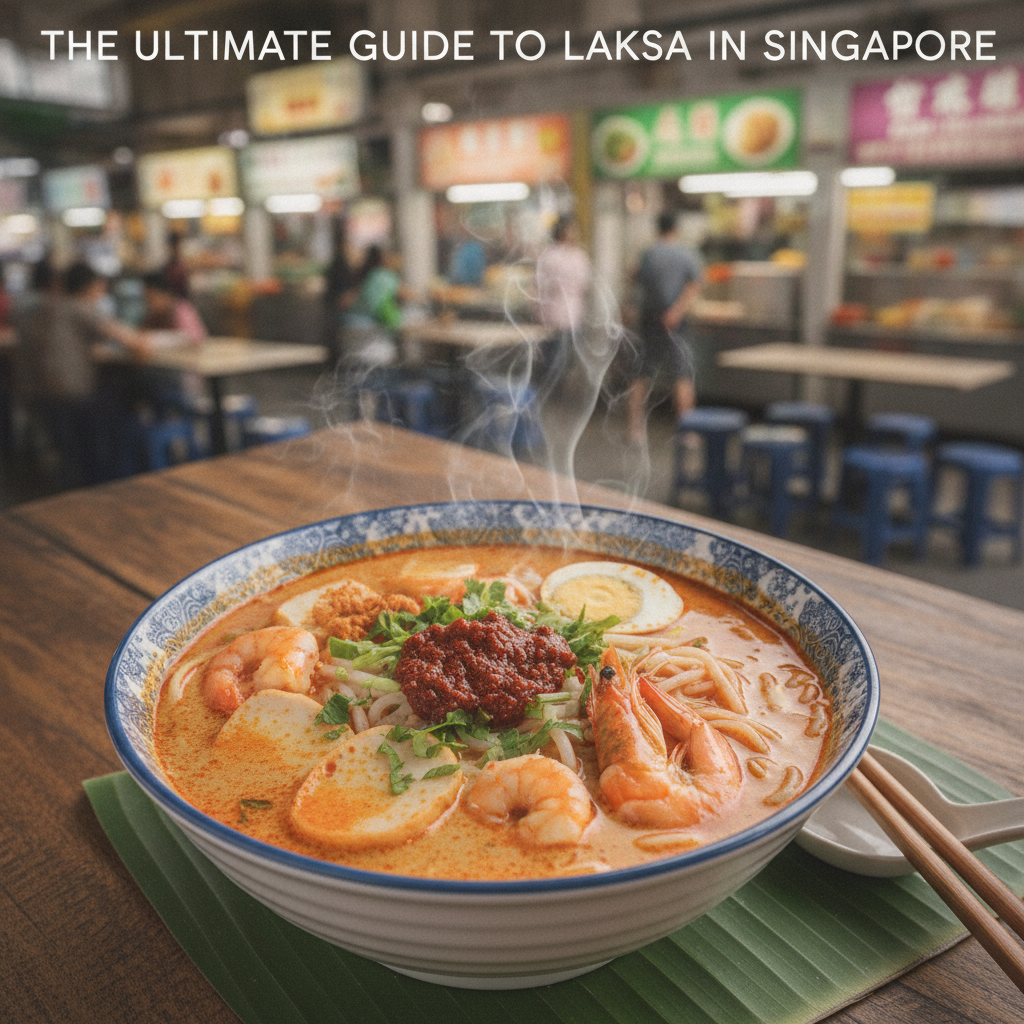
* **Katong Laksa (Singapore Laksa):** This is *the* quintessential Singaporean Laksa. Imagine a thick, creamy, fragrant coconut curry broth, brimming with flavour from dried shrimp, galangal, turmeric, and a generous dollop of sambal (chilli paste). What makes it uniquely Katong is the **bee hoon (rice vermicelli) cut into short pieces**, designed to be eaten entirely with a spoon – no chopsticks needed! It's typically loaded with juicy prawns, fish cake slices, bean sprouts, and most importantly, **cockles (hum)**, which add a distinct brininess. A sprinkle of finely chopped **laksa leaves (Daun Kesum)** seals the deal with its aromatic freshness. * **Curry Laksa:** Often used interchangeably with Katong Laksa, or referring to a broader category of coconut-based Laksa that might use thicker yellow noodles or a mix of noodles. The essence is similar: a rich, spicy, and savoury curry broth. Some stalls might offer different toppings or a slightly less 'cut-up' noodle style. * **Claypot Laksa:** A modern twist that adds another dimension of warmth and flavour. Served bubbling hot in a claypot, this version often features a robust, slightly thicker gravy that retains heat longer, allowing the flavours to meld beautifully. You might find extra ingredients like braised chicken or more varied seafood.
While delicious, be mindful that **Assam Laksa** (the sour, fish-based, tamarind-infused clear broth) is a Penang specialty and rarely found as a local staple in Singapore. If you see it, it's usually an imported concept rather than a traditional local offering.
The Hunt for Hawkers: Where to Find Singapore's Best Laksa
Alright, time to get serious. These are the legendary spots where you can get your Laksa fix:
* **328 Katong Laksa (East Coast Road/Queensway Shopping Centre):** Perhaps the most famous name, known for its rich, fragrant gravy and a legacy that even saw a certain celebrity chef grace its doors. The East Coast Road outlet is iconic. * **Janggut Laksa (Roxy Square):** Often considered the 'original' Katong Laksa, Janggut (meaning 'beard' in Malay, referring to its founder) offers a slightly sweeter, milder, and very traditional rendition. A must-try for historical context. * **Sungei Road Laksa (Jalan Berseh Food Centre):** A truly unique experience! This stall prides itself on cooking its broth over a traditional **charcoal fire**, imparting an unparalleled smoky depth. Expect queues, and a slightly clearer, less creamy, but incredibly flavourful broth. They don't include cockles by default, so ask for 'hum' if you want them. * **Depot Road Zhen Shan Mei Claypot Laksa (Alexandra Village Food Centre):** For those seeking a unique experience, their bubbling claypot Laksa with its generous toppings and extra-thick gravy is a revelation. Voted Michelin Bib Gourmand, it's worth the trek. * **Various Hawker Centres:** Keep an eye out for Laksa stalls in major hawker centres like **Old Airport Road Food Centre**, **Tiong Bahru Market**, and **Maxwell Food Centre**. While not always 'famous' names, many offer solid, delicious bowls that locals frequent.
Order Like a Local: Tips and Etiquette
Navigating a hawker centre can be a thrilling experience! Here’s how to order your Laksa like a pro:
1. **Queue Up:** Patience is a virtue, especially for popular stalls. Join the queue! 2. **Size Matters:** Most stalls offer "small" (xiao) or "big" (da) portions. 3. **To Cockles or Not To Cockles:** Cockles (known as 'hum' in Hokkien) are a crucial component for many, adding a briny kick. If you love them, say "add hum" or "with hum." If you're squeamish or allergic, confidently say "no hum." 4. **Spice Level:** Laksa naturally has a kick. If you're sensitive, ask for "less chilli" (shao la). If you crave the heat, "more chilli" (duo la) might be an option, or just mix in the sambal provided. 5. **The Spoon Rule:** For Katong Laksa specifically, you'll be given a spoon, not chopsticks. Embrace it! The noodles are pre-cut, making it a spoon-only affair. 6. **Hawker Etiquette:** Reserve your table with a packet of tissues or a small item. Don't hog tables. Return your tray and crockery to the designated return points if available (increasingly common).
Laksa on a Budget: Price Expectations
One of the best things about Singapore's hawker scene is its affordability. For a satisfying bowl of Laksa:
* **Hawker Centres/Food Courts:** Expect to pay **SGD 3.50 to SGD 7.00** for a standard small or large bowl. Stalls with Michelin Bib Gourmand status or very generous portions might be slightly higher. * **Cafes/Restaurants:** Some cafes or more upscale eateries might offer Laksa, where prices could range from **SGD 8.00 to SGD 15.00+**, often with more refined ingredients or a larger setting.
Overall, Laksa remains one of the most value-for-money, flavour-packed meals you can find in Singapore.
Rookie Mistakes to Avoid on Your Laksa Quest
Don't let these common errors spoil your Laksa adventure:
1. **Calling all Laksa 'Assam Laksa':** Singapore's dominant Laksa is the coconut-based Katong style. Assam Laksa is distinctly different and from Malaysia. 2. **Skipping the Cockles (Hum) unnecessarily:** If you're not allergic or genuinely repulsed, give them a try! They truly elevate the authentic Laksa experience. 3. **Using chopsticks for Katong Laksa:** You'll look like a tourist! The noodles are meant to be spooned. 4. **Not adjusting your chilli:** If you can't handle spice, speak up (shao la!). If you love it, don't be shy with the sambal. 5. **Only trying one stall:** Each Laksa stall has its own unique nuances. Try a few to find your personal favourite. 6. **Visiting during peak lunch/dinner hours:** Unless you love long queues and a battle for seats, aim for off-peak times (e.g., 11 am-12 pm or 2 pm-4 pm). 7. **Forgetting your tissues:** Always carry tissue packets; they're essential for reserving seats at hawker centres.
Insider Secrets: Level Up Your Laksa Experience
Want to truly level up your Laksa game? Here are some pro tips:
* **Seek out Charcoal-Cooked Broth:** Stalls like Sungei Road Laksa that use traditional charcoal fire impart a unique smoky aroma and depth to the broth. It's a dying art and truly worth seeking out. * **The Power of Laksa Leaves (Daun Kesum):** Don't underestimate this herb! If your Laksa comes with a garnish of these finely shredded leaves, mix them in. Their pungent, minty, slightly peppery flavour is crucial to the authentic Laksa experience. * **Pair it Right:** A refreshing drink is a must to cut through the richness. Think **Kopi O Kosong Peng** (iced black coffee without sugar), **Teh O Peng** (iced tea without milk), or a fresh **lime juice (limau peng)**. * **Observe the Locals:** Watch how Singaporeans order and eat. It's the quickest way to learn the ropes and spot hidden gems (long queues often indicate good food!). * **Don't Be Afraid to Dabao (Takeaway):** If a stall is too crowded, consider taking your Laksa to-go. It travels surprisingly well, and you can enjoy it in a quieter spot. * **Explore Beyond Katong:** While Katong is famous, remember that great Laksa can be found all over the island, from neighbourhood hawker centres to industrial parks. Don't limit your search!
Frequently Asked Questions About Laksa
Let's clear up some common queries about our beloved Laksa:
* **Q: What's the difference between Singapore Laksa and Assam Laksa?** * **A:** Singapore Laksa (specifically Katong Laksa) is coconut-milk based, rich, creamy, and spicy, with a flavour profile leaning towards curry. Assam Laksa (a Malaysian specialty) is tamarind-based, resulting in a distinctly sour, spicy, and fishy broth, usually clear and without coconut milk. They are worlds apart! * **Q: Is Laksa very spicy?** * **A:** Singapore Laksa has an inherent moderate spice level due to the chilli paste used in its base. However, most stalls allow you to adjust the heat by adding less or more sambal chilli on the side. Don't be afraid to ask for "less chilli" if you're sensitive. * **Q: Can I get Laksa without seafood?** * **A:** While traditionally seafood (prawns, cockles) is a staple, some stalls might offer chicken or fish cake as alternatives, or simply omit the seafood if requested. However, the broth itself often contains dried shrimp, so it may not be suitable for those with severe seafood allergies. Always inform the hawker. * **Q: Is Laksa a healthy dish?** * **A:** With its rich coconut milk base, Laksa is a flavourful and satisfying dish, but not typically considered 'light' or 'low-calorie.' It's best enjoyed as an occasional treat rather than an everyday meal. Focus on enjoying the authentic flavours! * **Q: What are 'cockles' (hum)?** * **A:** Cockles are small, edible saltwater clams, often lightly blanched and added to Laksa. They have a distinct briny, slightly metallic taste and a chewy texture. They are a polarizing ingredient – loved by many, avoided by some – but considered essential for an authentic experience by purists. * **Q: Where can I find the 'best' Laksa in Singapore?** * **A:** Ah, the million-dollar question! "Best" is subjective. My recommendation is to try a few of the renowned stalls mentioned in this guide (328 Katong Laksa, Janggut Laksa, Sungei Road Laksa, Depot Road Zhen Shan Mei) to discover your own personal favourite based on your preference for creaminess, spice, or unique flavour profiles.
Conclusion: Your Laksa Adventure Awaits!
And there you have it, my fellow food enthusiasts – your comprehensive guide to navigating the vibrant, flavourful world of Laksa in Singapore! From its Peranakan origins to the legendary stalls, you're now equipped with all the knowledge to embark on your own delicious Laksa journey. Each spoonful is a symphony of rich, spicy, and aromatic flavours, a testament to Singapore's diverse culinary tapestry. So, go forth, explore the hawker centres, brave the queues, and dive headfirst into a bowl of this truly iconic local delight. Don't forget to share your favourite Laksa finds and experiences in the comments below – because in Singapore, food is always better when shared! Selamat Makan!