The Ultimate Guide to Chwee Kueh in Singapore: A Culinary Journey into Steamed Rice Cakes
Introduction: A Humble Plate, A Grand Flavour
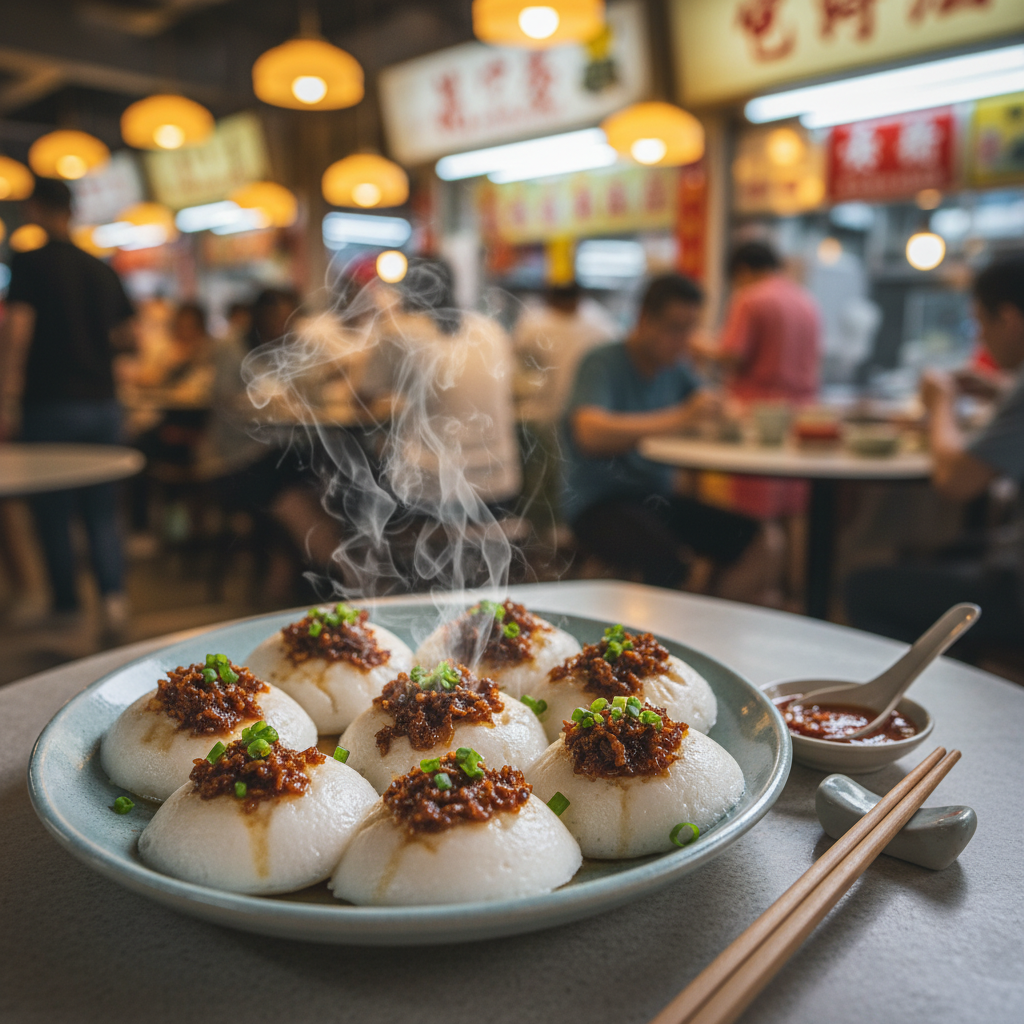
Ah, Chwee Kueh! For many Singaporeans, just the mention of these wobbly, white steamed rice cakes conjures up nostalgic memories of bustling hawker centres and hearty breakfasts. It’s a dish that embodies the very soul of Singaporean hawker fare – simple ingredients transformed into something profoundly satisfying. At first glance, it might seem unassuming, but beneath its smooth surface lies a symphony of textures and flavours, largely thanks to its savoury, fragrant topping.
As your resident Singapore food expert, I’m here to take you on a deep dive into the world of Chwee Kueh. In this ultimate guide, you'll discover its fascinating history, learn what makes a perfect plate, pinpoint the legendary stalls, master the art of ordering, understand pricing, avoid common pitfalls, and unlock insider tips to truly savour this beloved local delicacy. Get ready to embark on a delicious journey that will transform you from a Chwee Kueh novice to a connoisseur!
A Taste of Tradition: The History and Background of Chwee Kueh
Chwee Kueh, literally meaning 'water cake' in Teochew, traces its roots back to the culinary traditions of the Teochew people in Southern China. Like many beloved hawker dishes, it arrived on Singaporean shores with early immigrants, evolving over generations to become the iconic breakfast staple we know today.
Historically, it was a humble street food, prepared by vendors on pushcarts or at simple roadside stalls. The beauty of Chwee Kueh lies in its simplicity – just rice flour and water, steamed to perfection in small, saucer-shaped moulds. The magic truly happens with its star accompaniment: 'chai poh', or preserved radish. This savoury, umami-rich topping, stir-fried with garlic and often pork lard, was a brilliant way to add flavour and texture to the otherwise plain rice cakes. Over the decades, Chwee Kueh has remained a testament to resilient culinary heritage, a beloved comfort food passed down through generations, now an integral part of Singapore's UNESCO-recognised hawker culture.
The Anatomy of Perfection: Key Components of Chwee Kueh
While Chwee Kueh is a 'dish' in itself, its brilliance comes from the interplay of its core components. There are no 'variations' in the typical sense, but rather a focus on perfecting these essential elements:
* **The Chwee Kueh (Steamed Rice Cake):** These are the foundations – small, disc-shaped, jiggly, and white. A good Chwee Kueh should be incredibly soft, almost melting in your mouth, yet possess a subtle chewiness. Its flavour is mild, serving as the perfect canvas for its vibrant toppings.
* **Chai Poh (Preserved Radish Topping):** This is the heart and soul of the dish. Finely diced preserved radish is stir-fried until fragrant and deeply savoury, often with garlic, soy sauce, and crucially, pork lard (for that irresistible aroma and flavour). A truly great chai poh is glistening, deeply caramelised, packed with umami, and offers a delightful crunch and chew. It strikes a balance between sweet and salty, savoury and slightly pungent.
* **Chilli:** No plate of Chwee Kueh is complete without a dollop of chilli. This isn't just any chilli; it's typically a dark, sweet-spicy sambal that perfectly complements the savoury chai poh. It adds a crucial layer of heat and tang, cutting through the richness and elevating the entire experience.
Where to Find the Best Chwee Kueh in Singapore
Singapore is blessed with numerous excellent Chwee Kueh stalls, many run by families who have perfected their craft over decades. Here are some of the legendary spots you absolutely must try:
* **Jian Bo Shui Kueh (Tiong Bahru Market & Food Centre):** Arguably the most famous, Jian Bo has been a household name for generations. Their Chwee Kueh are consistently soft, and their chai poh is legendary – fragrant, savoury, and perfectly balanced. Expect queues, especially in the mornings. * _Address:_ 30 Seng Poh Rd, #02-05 Tiong Bahru Market, Singapore 168898
* **Ghim Moh Chwee Kueh (Ghim Moh Market & Food Centre):** Another stalwart, this stall is renowned for its excellent chilli and beautifully executed chai poh. Their rice cakes are consistently smooth and soft, making for a delightful bite. * _Address:_ 20 Ghim Moh Rd, #01-31 Ghim Moh Market & Food Centre, Singapore 270020
* **Bedok Chwee Kueh (Bedok Interchange Hawker Centre):** A favourite among Eastsiders, Bedok Chwee Kueh offers a hearty portion with a flavourful, slightly sweeter chai poh. They consistently draw long queues for a reason! * _Address:_ 208B New Upper Changi Rd, #01-19 Bedok Interchange Hawker Centre, Singapore 462208
* **Shui Kueh (Toa Payoh Lorong 1 Food Centre):** An old-school gem, this stall in Toa Payoh is known for its authentic, no-frills Chwee Kueh. Their chai poh is exceptionally aromatic and rich, a true taste of tradition. * _Address:_ 127 Lor 1 Toa Payoh, #02-31 Toa Payoh Lorong 1 Food Centre, Singapore 310127
* **Alexandra Village Chwee Kueh (Alexandra Village Food Centre):** While perhaps lesser-known to tourists, this stall is a local favourite. Their chai poh is robust and generously ladled, offering a deeply satisfying experience. * _Address:_ 120 Bukit Merah Lane 1, #01-19 Alexandra Village Food Centre, Singapore 150120
Ordering Like a Local: Tips & Etiquette
Navigating a bustling hawker stall can be daunting, but ordering Chwee Kueh is relatively straightforward. Here's how to do it like a pro:
1. **Queue Patiently:** Hawkers appreciate orderly queues. Wait your turn, even if it feels long – it's a sign of quality! 2. **Decide Your Quantity:** Chwee Kueh is usually sold in sets of 4, 6, 8, or more pieces. Be ready with your order: "4 pieces, please!" or "6 Chwee Kueh!" 3. **Specify Chilli Preference:** The default is usually to include chilli. If you prefer it without, say "no chilli" (不要辣 - bù yào là). If you want more, sometimes you can ask for "more chilli" (多点辣 - duō diǎn là) or "extra chilli" (加辣 - jiā là). 4. **"More Chai Poh?"**: Some stalls might offer extra chai poh for a small additional charge. If you're a fan, it's worth asking! 5. **Cash is King (Mostly):** While some hawker stalls now accept digital payments (PayNow/SGQR), cash is still the most reliable form of payment. Have small denominations ready. 6. **Takeaway or Dine-in:** If you're dining in, they'll serve it on a plate. For takeaway, it's typically packed in traditional brown paper, which helps absorb excess oil and keeps the cakes warm.
What to Expect: Price Expectations
Chwee Kueh remains one of Singapore's most affordable and satisfying meals. You can expect to pay:
* **S$2.00 - S$3.00** for a standard plate of 4 pieces. * **S$3.00 - S$4.50** for a plate of 6-8 pieces.
Prices may vary slightly depending on the stall and hawker centre, but it’s consistently great value for a delicious, filling snack or light meal.
Don't Make These Mistakes: Common Pitfalls to Avoid
To ensure an optimal Chwee Kueh experience, steer clear of these common blunders:
* **Going Too Late:** Many popular Chwee Kueh stalls sell out by late morning or early afternoon, especially on weekends. Aim for breakfast or early lunch to avoid disappointment. * **Ignoring the Chilli:** Unless you have a strict aversion to spice, don't skip the chilli! It’s an integral part of the flavour profile, providing a crucial zing and balance to the savoury chai poh. * **Not Mixing:** While not a strict rule, gently mixing the chai poh and chilli with the Chwee Kueh allows the flavours to meld beautifully in every bite. Don't eat them completely separately! * **Asking for a Fork:** Traditionally, Chwee Kueh is eaten with toothpicks (usually provided) or chopsticks. Using a fork might raise an eyebrow or two – embrace the local way! * **Rushing the Hawker:** Hawkers work incredibly hard and efficiently. Be ready with your order and payment, and don't linger too long if there's a queue behind you.
Unlocking the Secrets: Insider Tips from a Foodie
Want to truly elevate your Chwee Kueh experience? Here are some pro tips:
* **Follow the Locals (and the Queues):** A long queue, especially with many elderly locals, is almost always a sign of a fantastic stall. They know where the good stuff is! * **Observe the Chai Poh:** A top-notch chai poh should look inviting – glistening with oil (often pork lard), deeply caramelised, and emitting a wonderful aroma. Avoid pale, dry, or sparse toppings. * **Morning Glory:** Chwee Kueh is primarily a breakfast item. Eating it fresh in the morning, right after it's steamed, is when it's at its absolute best – softest rice cakes, freshest chai poh. * **Pair with Kopi-O:** The perfect accompaniment to Chwee Kueh is a traditional cup of Kopi-O (black coffee, no sugar) or Kopi-C (coffee with evaporated milk and sugar). The robust coffee cuts through the richness and enhances the flavours. * **The Toothpick Technique:** Master the art of picking up a piece of Chwee Kueh with a toothpick, ensuring a generous scoop of chai poh and chilli with each bite. It's surprisingly satisfying! * **Don't Be Afraid to Dab:** If you find the chai poh a little too oily (a sign of a good, flavourful one!), gently dab off some excess oil with a tissue before eating. But remember, a little oil is essential for flavour!
❓ Frequently Asked Questions
🎯 Final Thoughts
Chwee Kueh is more than just a dish; it's a testament to Singapore's rich culinary tapestry, a comforting embrace of tradition, and an affordable luxury that consistently delights. Its unassuming appearance belies a depth of flavour and texture that truly encapsulates the magic of hawker food.
Whether you're a first-time visitor to Singapore or a lifelong resident, I urge you to seek out a plate of Chwee Kueh. Arm yourself with this guide, head to one of the recommended stalls, and prepare to fall in love with these wobbly, savoury wonders. Each bite is a little piece of Singaporean heritage, a flavour you won't soon forget. Happy eating, my fellow food adventurers!