The Ultimate Guide to Char Kway Teow in Singapore: From Hawker Stalls to Culinary Heights
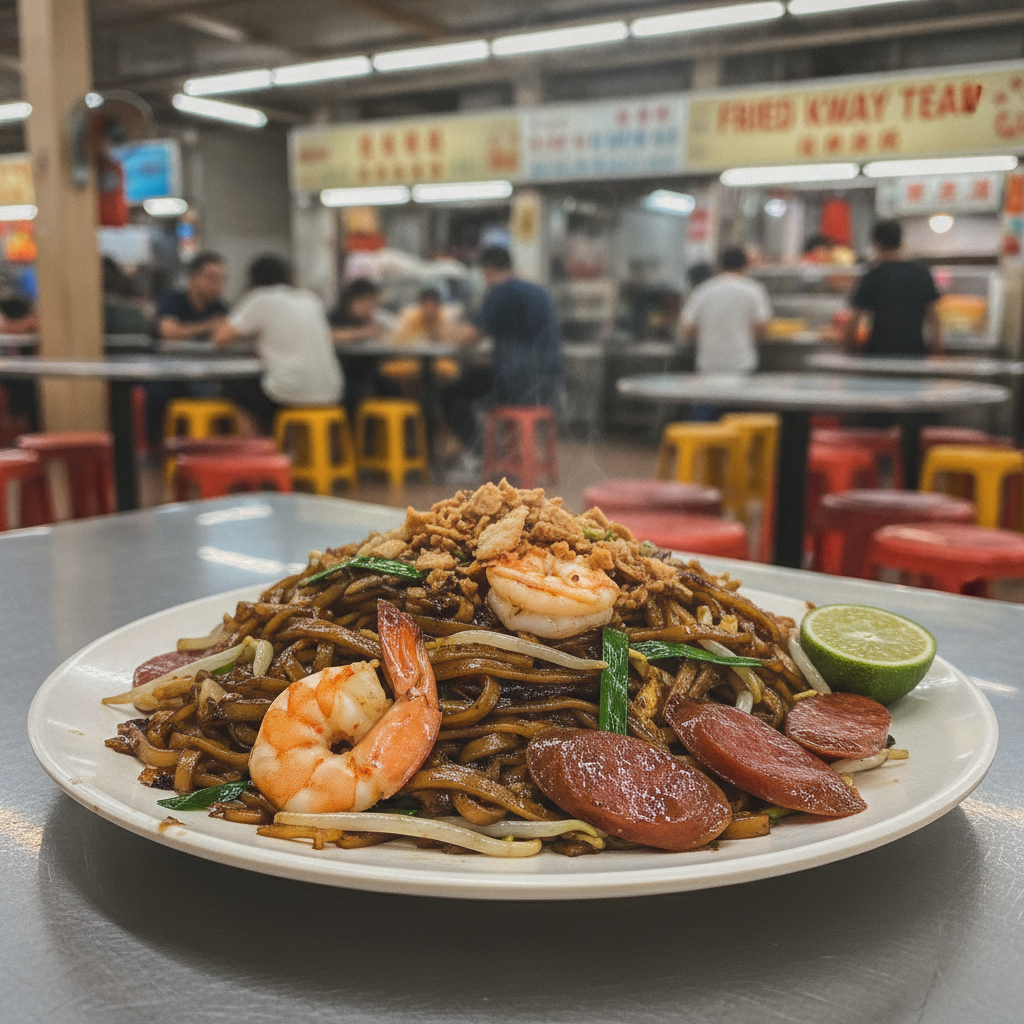
Konnichiwa, foodies! Your favourite Singaporean makan kaki (food buddy) is back, and today, we're diving fork-first into one of Singapore's most beloved and iconic hawker dishes: Char Kway Teow. For many, it's more than just a plate of stir-fried noodles; it's a symphony of smoky 'wok hei', savoury-sweet flavours, and a comforting taste of home. Whether you're a curious tourist eager to sample authentic local fare or a seasoned local looking to deepen your appreciation, this ultimate guide is your comprehensive manual to understanding, finding, ordering, and truly savouring the legendary Char Kway Teow. Get ready to embark on a flavour journey that will ignite your taste buds and leave you craving more!
Char Kway Teow (CKT) quite literally translates to 'stir-fried ricecake strips' in Hokkien, but its origins are deeply rooted in the Teochew community. Born out of necessity, this humble dish was once a cheap, high-calorie meal for labourers, fishermen, and farmers. It was a resourceful way to use leftover ingredients – flat rice noodles (kway teow) and yellow Hokkien noodles, stir-fried with pig's lard, dark soy sauce, cockles, Chinese sausage (lap cheong), beansprouts, and chives.
Over the decades, CKT evolved from a street-side sustenance into the culinary icon it is today. While the core ingredients remain, the magic lies in the skilled hand of the hawker, who masterfully balances the heat, the sauces, and the timing to imbue each strand with the elusive 'wok hei' – the breath of the wok. This smoky char, coupled with the rich flavour of pork lard and the sweetness of the dark soy sauce, is what truly defines a stellar plate of Char Kway Teow and elevates it beyond a simple noodle dish.
At its heart, Char Kway Teow is a simple dish, but the interplay of its components is what creates its complex flavour profile. Here's what you can expect and appreciate:
* **The Noodles:** A harmonious blend of flat, wide rice noodles (kway teow) and springy yellow Hokkien noodles. The contrast in texture is crucial. * **The Sauce:** A savoury-sweet concoction primarily of dark soy sauce, light soy sauce, and sometimes a hint of sugar or belacan (shrimp paste) for an added kick. * **The Proteins:** Fresh, plump cockles (hum) are non-negotiable for many, adding a briny pop. Slices of Chinese sausage (lap cheong) provide a sweet, fatty richness, while a scrambled egg binds everything together. * **The Veggies & Garnish:** Crunchy beansprouts and aromatic chives add freshness and texture. Crispy bits of fried pork lard are often sprinkled generously, contributing an unparalleled depth of flavour and crunch. * **The 'Wok Hei':** This is the soul of CKT. It's the indescribable smoky aroma and slightly charred flavour imparted by frying ingredients over intense heat in a well-seasoned wok. A good CKT should have this elusive 'breath of the wok' present in every bite.
**Common Variations to Customise Your Experience:** * **'No Hum' / 'Extra Hum':** Ask for no cockles if you're not a fan, or pay a little more for an extra generous portion. * **'Less Spicy' / 'No Chilli':** Most stalls add chilli. Always specify if you prefer it milder or completely without. * **'More Gao' / 'Lighter':** Some prefer their CKT with more dark soy sauce for a richer, sweeter, and darker finish ('gao' meaning thick/dark), while others like a lighter, less saucy version. * **Duck Egg vs. Chicken Egg:** Some traditional stalls might offer duck egg for a creamier, richer texture, though chicken egg is standard.
Singapore is a treasure trove of CKT stalls, each with its loyal following. While almost every hawker centre will have a CKT stall, these are some legendary names renowned for their mastery of the wok:
* **Outram Park Fried Kway Teow Mee (Hong Lim Market & Food Centre, #02-17):** Often cited as a benchmark, famous for its slightly wetter, wonderfully smoky rendition with a generous amount of cockles. Be prepared for a queue, especially during peak lunch hours. * **Hill Street Char Kway Teow (Bedok South Market & Food Centre, #01-41; also an outlet at Chinatown Complex Food Centre):** Known for its fragrant, slightly drier style, brimming with 'wok hei'. Another queue magnet, but worth the wait. * **No. 18 Zion Road Fried Kway Teow (Zion Riverside Food Centre, Stall 18):** This stall delivers a consistently good, flavourful plate with a distinct 'wok hei'. Slightly oily, but in the best possible way. * **Lao Fu Zi Fried Kway Teow (Old Airport Road Food Centre, #01-12):** A popular choice for its classic, well-balanced CKT with good char and a decent portion of cockles. * **Meng Kee Char Kway Teow (Newton Food Centre, #01-14):** A long-standing favourite, particularly popular with tourists due to Newton's fame. Expect a slightly sweeter profile with ample wok hei. * **Ang Mo Kio 881 Fried Kway Teow (Blk 881, Ang Mo Kio Ave 4):** A neighbourhood gem known for its savoury, well-fried plates that are consistently satisfying. * **Simei Char Kway Teow (Simei Market, Blk 248 Simei Street 3):** A more off-the-beaten-path find, favoured by locals for its old-school taste and generous portions.
**Pro-Tip:** While these are iconic, don't be afraid to explore. Sometimes the best CKT is the one at your neighbourhood hawker centre, fried by an unassuming 'uncle' or 'auntie' who has perfected their craft over decades.
Navigating a busy hawker centre can be daunting, but a little preparation goes a long way. Here's how to order your CKT like a local:
* **The Queue is King:** At popular stalls, expect to queue. Join the line patiently. Don't cut! It's considered rude and will earn you dirty stares. * **Know Your Order:** Have your order ready when you reach the front. The hawker is often frying furiously and doesn't have time for indecision. State your preferred portion size (e.g., 'small', 'medium', 'large') and any customisations (e.g., 'no hum', 'less spicy'). * **Cash is (Still) King, Sometimes:** While many stalls now accept e-payments (PayNow, GrabPay, FavePay), it's always wise to have some small denominations of cash on hand, especially at older, more traditional stalls. * **Listen for Your Order:** Some stalls use queue numbers, others will remember your face, and some will simply shout out your order. Pay attention! * **'Chope-ing' (Reserving Tables):** In busy hawker centres, it's common practice to reserve a table by placing a packet of tissue paper or an umbrella on it before ordering. Ensure someone is with the table, especially if you're ordering from a stall with a very long queue, or be prepared to share your table with others.
One of the beautiful things about hawker food in Singapore is its affordability. Char Kway Teow is no exception:
* **Standard Portion:** Expect to pay between S$3.50 to S$6.00 for a standard, satisfying plate at most hawker centres. * **Larger Portions / Extra Ingredients:** If you opt for a larger plate or request extra cockles, lap cheong, or eggs, the price can range from S$6.00 to S$9.00 or slightly more. * **Restaurant Versions:** While CKT is predominantly a hawker dish, some cafes or restaurants might offer a 'gourmet' version at S$10 - S$18, often with premium ingredients like prawns or fancier presentation. However, for true authenticity, the hawker stall is king.
Don't let these common missteps diminish your CKT quest:
* **Assuming All CKT is the Same:** Every stall has its unique signature – some are drier, some wetter, some sweeter, some spicier. Part of the fun is finding your personal favourite. * **Ignoring the Queue:** A long queue (especially during off-peak hours) is often a good indicator of quality. Don't just pick the empty stall unless you've done your research. * **Not Specifying Your Preferences:** If you don't like cockles, or can't handle spice, make sure you tell the hawker. Don't suffer in silence! * **Expecting a Health Food:** Char Kway Teow is a delicious indulgence, not a diet meal. Embrace the lard and the rich flavours; it's meant to be a treat! * **Being Impatient:** Good CKT takes time. The best hawkers fry each plate individually to ensure maximum wok hei. Patience is a virtue here. * **Forgetting Cash:** While e-payments are rising, some traditional stalls are still cash-only. Always carry small notes.
Want to truly elevate your Char Kway Teow experience? Heed these insider secrets:
* **Look for the 'Wok Hei' Master:** A true CKT master will be frying each plate with intense heat, often with flames leaping from the wok. This is the visual cue for good wok hei. * **Embrace the Lard (if you can!):** Pork lard is integral to the authentic flavour and texture of CKT. Those crispy lard bits (chee yau char) are little nuggets of pure umami. If you can't have pork, some stalls use vegetable oil, but it won't be quite the same. * **Go During Off-Peak Hours:** To avoid the longest queues, try visiting hawker centres mid-morning (around 10-11 am) or mid-afternoon (2-4 pm). * **Observe the Cockles:** Fresh, plump, and lightly cooked cockles are a sign of a good CKT. They should still be slightly pink inside. * **Pair it Right:** A refreshing cup of iced kopi-o (black coffee) or barley water perfectly complements the richness of CKT. * **Ask for 'No Beansprouts' if you're not a fan:** While they add crunch, some prefer their CKT without. * **The Sauce is Key:** A well-balanced sauce is crucial – not too sweet, not too salty, and perfectly coating every noodle strand without making it overly wet or dry.
Here are some common questions newcomers (and even some locals!) have about CKT:
* **Is Char Kway Teow Halal?** Generally no, due to the use of pork lard and Chinese sausage. Some very rare stalls might offer a halal version, often substituting chicken or beef for pork, but it won't be the traditional flavour profile. * **Can I get a vegetarian version?** Authentic Char Kway Teow is not vegetarian. While some vegetarian eateries might offer a 'fried kway teow' dish, it will lack the pork lard, cockles, and Chinese sausage, fundamentally altering the taste. * **What exactly is 'wok hei'?** 'Wok hei' (鑊氣) literally translates to 'the breath of the wok'. It's the unique smoky, charred aroma and flavour imparted to food when stir-fried quickly over extremely high heat in a seasoned wok. It's the hallmark of expertly cooked Chinese stir-fries. * **Is it spicy?** Traditional CKT can be moderately spicy due to the chilli added. However, you can always request 'no chilli' (不要辣 - bù yào là) or 'less spicy' (少辣 - shǎo là). * **What are cockles?** Cockles (hum or kerang) are small, edible saltwater clams, often served lightly cooked and slightly bloody in CKT. They add a distinctive briny, metallic flavour that many CKT lovers adore. * **Is Char Kway Teow healthy?** Let's be honest: CKT is a delicious indulgence. It's high in carbohydrates, fat (from the lard), and sodium. It's best enjoyed as an occasional treat rather than a daily staple.
And there you have it, fellow food adventurers! Your comprehensive guide to Singapore's legendary Char Kway Teow. From its humble beginnings as a labourer's meal to its status as a national culinary treasure, CKT embodies the rich tapestry of Singapore's hawker culture. It's a dish that demands appreciation for its nuanced flavours, the skill of its creators, and the history it carries in every smoky, savoury, and slightly sweet bite.
So, armed with this knowledge, go forth! Explore the hawker centres, brave the queues, and embark on your own personal quest for the ultimate plate of Char Kway Teow. Don't be afraid to try different stalls, experiment with customisations, and most importantly, savour every single mouthful. Trust me, once you've experienced the true magic of 'wok hei', you'll understand why this humble plate of noodles holds such a special place in the hearts (and stomachs!) of Singaporeans. Happy eating, and may your CKT always be perfectly charred!