The Ultimate Guide to Wanton Mee in Singapore: A Hawker's Heaven & Beyond
Introduction: Your Culinary Journey into Singapore's Beloved Wanton Mee
Ah, Wanton Mee! A dish that holds a special place in the hearts (and stomachs) of Singaporeans. More than just a simple plate of noodles, it's a symphony of textures and flavours – springy egg noodles, succulent char siew (barbecued pork), tender wantons (dumplings), and a secret sauce that ties it all together. Whether you're a seasoned local foodie or a curious tourist looking to dive deep into Singapore's hawker culture, this ultimate guide is your passport to understanding, finding, and savouring the very best Wanton Mee our island has to offer. Prepare to learn about its fascinating history, uncover hidden gems, master the art of ordering, and pick up insider tips that will elevate your Wanton Mee experience from good to absolutely legendary!
A Taste of History: From Guangzhou to Singapore's Hawkers
The story of Wanton Mee begins far from our sunny shores, tracing its roots back to Guangzhou, China. Originally a Cantonese noodle dish, it made its way to Hong Kong, where it evolved into the iconic 'cloud swallow' noodles known for their delicate shrimp-filled wantons and light, clear soup. But as with many dishes that migrate across borders, Wanton Mee underwent a delightful transformation upon arriving in Singapore and Malaysia.
Here, it took on a distinct identity. While Hong Kong Wanton Mee is predominantly served in a clear, flavourful broth, the Singaporean version largely favours the 'dry' style. This evolution saw the introduction of a robust dark sauce blend – typically a mix of dark soy sauce, sesame oil, and other secret concoctions – generously coating the noodles. Crucially, the Singaporean palate also embraced a fiery chilli sauce, often served on the side or mixed directly into the noodles, adding that characteristic 'kick'. Our char siew also differs; while HK versions lean towards a leaner, bright red char siew, Singaporean Wanton Mee often features a more caramelised, sometimes fattier, and sweeter barbecued pork. This journey from a simple soup noodle to a complex, dry, and often spicy sensation is what makes Singaporean Wanton Mee truly unique.
Key Dishes & Items to Slay Your Wanton Mee Cravings
To truly appreciate Wanton Mee, you need to understand its components. Here's what you'll typically find and what makes each element shine:
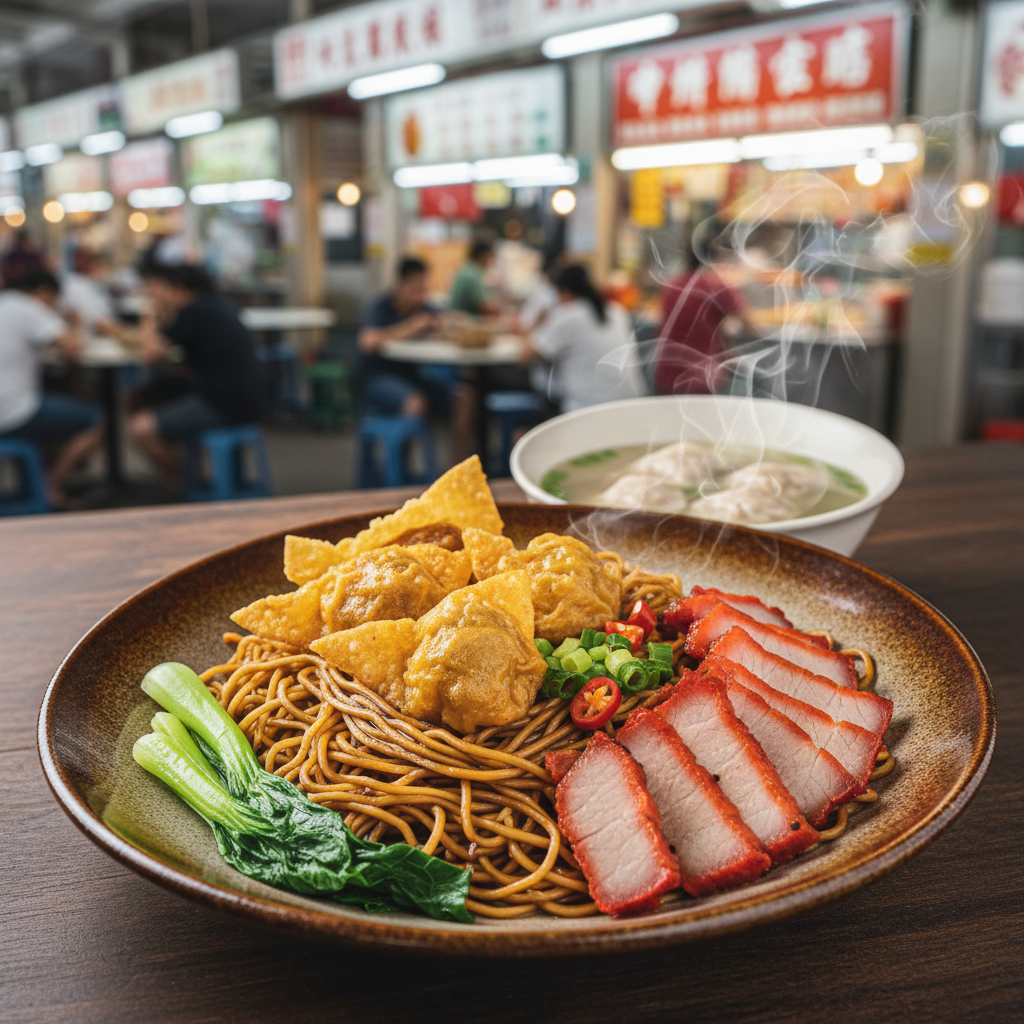
* **Dry Wanton Mee (干捞云吞面):** This is the quintessential Singaporean experience. Springy, al dente egg noodles (often tossed with lard and a proprietary sauce blend) form the base. They're typically topped with slices of tender, caramelised char siew, a handful of blanched leafy greens (usually chye sim), and a small bowl of clear wanton soup on the side. The magic is in the sauce – a rich, savoury-sweet dark soy sauce blend often combined with a potent chilli paste. It's a flavour explosion!
* **Soup Wanton Mee (云吞面汤):** While less common in Singapore compared to its dry counterpart, the soup version offers a comforting alternative. The same delicious egg noodles and wantons are submerged in a light, savoury broth, often made from pork bones and dried sole fish. It's a gentler experience, allowing the delicate flavours of the wantons and broth to come through.
* **Wantons (云吞):** The star of the show! These delicate dumplings are typically filled with seasoned minced pork, sometimes with a hint of shrimp. They are usually boiled until tender and served both in the accompanying soup and often a few on the dry noodles themselves. Some stalls also offer 'fried wantons' (炸云吞) as an extra – crispy, golden pockets of flavour that offer a delightful textural contrast.
* **Char Siew (叉烧):** The barbecued pork is a crucial partner to the noodles. Singaporean char siew often boasts a beautiful caramelised glaze, a slightly sweet flavour, and can range from lean to beautifully fatty cuts. The quality of char siew can make or break a plate of Wanton Mee.
* **Chilli Sauce (辣椒):** For many, the chilli is non-negotiable for the dry version. Singaporean Wanton Mee chilli is usually a vibrant, oil-based concoction, ranging from mildly spicy to incendiary. It adds a crucial layer of heat and complexity to the rich sauce.
* **Sides & Add-ons:** Many stalls offer tempting extras. Look out for additional servings of wantons (soup or fried), extra char siew, braised chicken feet (凤爪) for the adventurous, or even roasted pork belly (烧肉) at stalls that specialise in roast meats.
Where to Find Your Wanton Mee Nirvana: Specific Stalls & Locations
Singapore is brimming with fantastic Wanton Mee stalls, each with its own loyal following and unique twist. Here are some legendary and highly-regarded spots to kickstart your journey:
* **Eng's Wantan Noodle (忠邦云吞面):** Famous for its incredibly spicy chilli! If you love heat, this is your pilgrimage. You'll find their main outlet at 287 Tanjong Katong Rd, and other branches in hawker centres like Dunman Food Centre. Be warned, their chilli is not for the faint of heart!
* **Kok Kee Wanton Mee (国记云吞面):** A true heritage brand, often hailed for its traditional flavour profile. Originating from the now-defunct Lavender Food Square, they've since expanded. Look for them at various hawker centres like Golden Mile Food Centre or even dedicated outlets. Their noodles are springy, and the sauce is classic.
* **Fei Fei Wanton Mee (肥肥云吞面):** A popular haunt on Joo Chiat Road, known for its consistent quality and late operating hours. Great for a supper fix, with generous portions and a satisfying sauce.
* **Nam Seng Wanton Noodle (南星云吞面):** An old-school gem located at Far East Square. They are famous for their Hainanese-style char siew (which is less sweet and redder) and a distinctive sauce that many regulars swear by. It’s a taste of nostalgia.
* **Pontian Wanton Mee (笨珍云吞面):** While a chain with many outlets across Singapore (often found in food courts), Pontian has a very distinct, almost sweet-savoury sauce profile that many grew up with. It's a reliable option for a quick, consistent fix.
* **Da Jie Famous Wanton Mee (大姐云吞面):** Located at 209 Jalan Besar, this stall is known for its delicious crispy fried wantons and a well-balanced sauce that's less intense than Eng's, but still flavourful.
* **Huat Kee Wanton Mee (发记云吞面):** Nestled in a coffee shop at 848 Sims Avenue, they are praised for their handmade wantons and flavourful char siew. A neighbourhood favourite worth seeking out.
**General Hawker Centre Hotspots:** Many larger hawker centres like **Old Airport Road Food Centre**, **Tiong Bahru Market**, and **Maxwell Food Centre** often house multiple reputable Wanton Mee stalls, allowing you to sample and compare within one visit.
Ordering Tips & Etiquette: Navigating the Hawker Scene Like a Pro
Ordering Wanton Mee at a bustling hawker centre can seem daunting, but armed with these tips, you'll blend right in:
1. **Queue Patiently:** Hawkers are busy! Join the queue (if any) and wait your turn. Don't try to cut. 2. **Know Your Order:** Have your order ready when you reach the front. The basic choices are: * **Dry (干捞) or Soup (汤):** Most opt for dry. * **Chilli (加辣) or No Chilli (不要辣):** Crucial for the dry version. If you love spice, say '加辣' (jia la). If you prefer it mild, '不要辣' (bu yao la). You can also ask for chilli on the side ('辣椒放旁边', la jiao fang pang bian). * **Portion Size:** Small (小), Medium (中), or Large (大). Sometimes just 'normal' or 'big'. 3. **Add-ons:** If you want extra wantons ('加云吞', jia yun tun) or char siew ('加叉烧', jia cha shao), state it clearly. 4. **Payment:** Most hawker stalls still prefer cash, though e-payment options (PayNow, QR codes) are becoming more common. Have small notes ready. 5. **Be Polite:** A simple 'thank you' goes a long way. 6. **Find a Seat:** Especially during peak hours, secure a table first (perhaps by placing a tissue packet 'chope-ing' your spot) before queuing. Remember to return your tray and clear your table after eating in most modern hawker centres.
Price Expectations: What to Budget for Your Wanton Mee Fix
One of the joys of hawker food is its affordability! Here's a general guide to pricing:
* **Hawker Centres/Coffee Shops:** Expect to pay **S$4.00 - S$6.00** for a standard small to medium plate of Wanton Mee. Larger portions or extra ingredients (like more char siew or additional wantons) might bump the price up to **S$6.50 - S$8.00**. * **Food Courts (in shopping malls):** Prices here are usually slightly higher due to overheads, ranging from **S$5.00 - S$8.00** for a standard plate. * **Specialised Eateries/Restaurants:** Some higher-end or more modern takes on Wanton Mee, often found in dedicated eateries rather than hawker stalls, might cost **S$8.00 - S$15.00+**, especially if they use premium ingredients or offer a more refined dining experience.
Overall, Wanton Mee remains one of Singapore's most delicious and wallet-friendly meals.
Common Mistakes to Avoid: Maximising Your Wanton Mee Experience
Don't fall into these common traps that can diminish your Wanton Mee enjoyment:
* **Mistaking Singaporean for Hong Kong Style:** While both share roots, they are distinct. Don't expect a clear soup and delicate shrimp wantons if you order a dry plate in Singapore. Embrace the local flavour profile! * **Skipping the Chilli (for dry version):** If you can handle even a little spice, you're missing out on a core element of the Singaporean dry Wanton Mee experience by not adding chilli. It balances the richness of the dark sauce beautifully. Start with a little if unsure. * **Not Exploring Different Stalls:** Each stall has its own unique recipe for the sauce, char siew, and even noodles. Sticking to just one means you're missing out on a spectrum of delicious variations. Be adventurous! * **Going at Peak Hours Unprepared:** Lunch (12 PM - 2 PM) and dinner (6 PM - 8 PM) can see long queues, especially at popular stalls. If you're short on time or patience, aim for off-peak timings. * **Overlooking the Fried Wantons:** Seriously, try them! The crispy texture and savoury filling are a fantastic complement to the soft noodles and char siew.
Insider Tips: Eating Wanton Mee Like a True Singaporean
Elevate your Wanton Mee game with these insider secrets:
* **Observe the Char Siew:** A good indicator of a promising stall is the char siew. Look for a glossy, caramelised exterior and good marbling. If it looks dry or uniformly red (without a good sear), it might not be the best. * **Mix It Well!** For dry Wanton Mee, don't just eat the top layer. Take the time to properly toss and mix the noodles with the sauce and chilli. This ensures every strand is coated in that glorious flavour. * **Customise Your Chilli:** Many stalls have a self-service chilli station. Don't be shy to add more (or less) to your bowl according to your preference. Some might even offer different types of chilli. * **Order a Kopi or Teh:** Nothing pairs better with a plate of hawker noodles than a traditional Singaporean coffee (kopi) or tea (teh). The strong, sweet beverage cuts through the richness of the noodles perfectly. * **Ask for 'Pok' (Thin Noodles):** Some stalls offer different noodle types, though often without explicitly advertising it. If you prefer thinner, springier noodles, try asking if they have 'pok' (thin, sometimes called 'mei xian' or 'mee kia') noodles. *Note: Not all stalls offer this.* * **The Power of Lard:** Many traditional stalls use crispy pork lard (炸猪油渣) for extra fragrance and crunch. If you see it, don't shy away! It's a flavour bomb. * **Go with a Local:** The absolute best way to discover truly hidden gems is to go with a Singaporean friend who knows their neighbourhood hawker centre inside out. They'll often have a favourite stall that hasn't made it into the mainstream guides.
Frequently Asked Questions (FAQ) about Singapore Wanton Mee
Here are some common questions you might have about this beloved dish:
* **Q: What's the main difference between Singaporean and Hong Kong wanton mee?** * A: Singaporean Wanton Mee is predominantly served dry with a dark sauce and chilli, featuring sweeter, more caramelised char siew. Hong Kong Wanton Mee is typically a soup dish with a clear broth, delicate shrimp-filled wantons, and leaner char siew.
* **Q: Can I find vegetarian wanton mee?** * A: It's extremely rare, almost impossible, to find a truly vegetarian Wanton Mee. The dish's core components (pork wantons, char siew, and usually pork/lard in the sauce/noodles) are meat-based. You might find stalls offering plain egg noodles with vegetables, but it won't be authentic Wanton Mee.
* **Q: Is wanton mee spicy?** * A: The dry version can be very spicy if you opt for chilli, which is a key component. However, you can always request 'no chilli' or 'chilli on the side' to control the heat. The soup version is generally not spicy.
* **Q: What are the best drinks to pair with wanton mee?** * A: Traditional hawker drinks like Kopi (local coffee), Teh (local tea), or barley water are popular choices. Sugarcane juice or lime juice also provide a refreshing counterpoint to the savoury and spicy flavours.
* **Q: Is it healthy?** * A: Like most hawker fare, Wanton Mee is a delicious indulgence. It can be high in carbohydrates (noodles), fat (char siew, lard, oil in sauce), and sodium. Enjoy it in moderation as part of a balanced diet. You can opt for less sauce or lean char siew if available.
Conclusion: Your Wanton Mee Adventure Awaits!
From its humble Cantonese origins to its distinct Singaporean identity, Wanton Mee is a culinary journey wrapped in a single plate of noodles. It's a testament to Singapore's vibrant hawker culture and our ability to adapt and perfect dishes to suit our unique palate. With this ultimate guide in hand, you're now equipped to confidently navigate the bustling hawker centres, seek out the most lauded stalls, and savour every delicious mouthful. So go forth, embrace the springy noodles, the smoky char siew, the tender wantons, and that unforgettable sauce. Your ultimate Wanton Mee adventure in Singapore has just begun – happy slurping, and don't forget to share your favourite finds!