The Ultimate Guide to Laksa in Singapore: A Culinary Journey
Introduction: Your Spoonful of Singaporean Heritage
Ah, Laksa! Just the mention of it conjures images of rich, creamy, spicy broth, slippery rice noodles, and a medley of fresh ingredients. It's a dish that embodies Singapore's multicultural tapestry, a beloved hawker classic that has captured the hearts (and stomachs) of locals and tourists alike.
As your trusted Singapore food blogger, I'm here to take you on a deep dive into the wondrous world of Laksa. This isn't just about finding a good bowl; it's about understanding its soul. In this ultimate guide, we'll uncover:
* The fascinating origins and evolution of Laksa. * The distinct varieties you absolutely must try in Singapore. * My top picks for where to find the most authentic and delicious bowls. * Essential tips for ordering like a pro and navigating hawker etiquette. * Common pitfalls to avoid and insider secrets to elevate your Laksa experience.
Get ready to slurp your way through one of Singapore's most iconic dishes. Let's begin our Laksa adventure!
The Rich History and Background of Laksa
Laksa’s roots are as intricate and flavourful as its broth. It's a true testament to the fusion of cultures in Southeast Asia, particularly the intermarriage between Chinese traders and local Malay women, giving rise to the unique Peranakan or Nyonya heritage.
The word 'Laksa' itself is believed to have several possible origins – from the Sanskrit word 'laksha' (meaning 'a hundred thousand,' referring to the myriad ingredients used), to a Hokkien term for 'spicy sand,' or even a corrupted form of the Malay word 'lakus' (meaning 'spicy'). Regardless of its etymology, its essence lies in its rich blend of influences.
While Laksa exists in various forms across Southeast Asia (think Penang Assam Laksa, Sarawak Laksa, Curry Laksa in Malaysia), Singapore's most celebrated version is undoubtedly **Katong Laksa**. This particular style evolved from the Peranakan communities in the East Coast area of Singapore, specifically around the Katong neighbourhood. It’s characterized by a thick, coconut milk-rich gravy, distinct from the sourer, fish-based Assam Laksa. The ingenuity of the early Katong Laksa sellers to cut the thick rice vermicelli (laksa noodles) into short strands, allowing diners to eat it solely with a spoon, became its signature hallmark and a mark of convenience and tradition.
Key Laksa Dishes and Variants to Experience in Singapore
When we talk about 'Laksa in Singapore,' we're primarily referring to one star, but it's good to know the nuances!
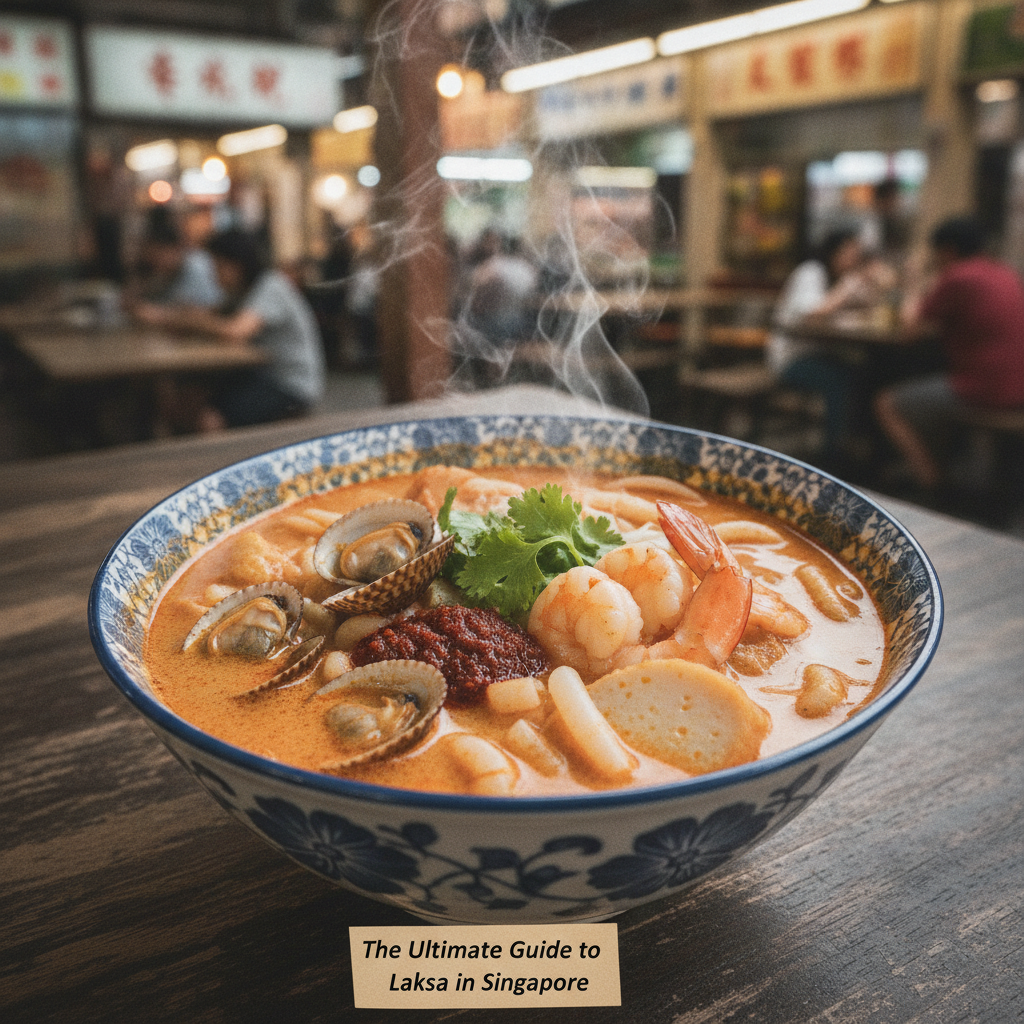
**1. Katong Laksa (The Singaporean Icon)** This is the quintessential Singaporean Laksa and what most locals mean when they say 'Laksa.' It's a harmonious symphony of flavours and textures. * **The Broth:** The heart of Katong Laksa is its incredibly rich, aromatic, and spicy coconut milk-based curry broth. It's meticulously simmered with a blend of *rempah* (spice paste) – typically containing galangal, turmeric, lemongrass, belacan (shrimp paste), chillies, and candlenuts – along with dried prawns for an umami kick. * **The Noodles:** Distinctively, the thick white rice vermicelli noodles are cut into short, manageable strands. This unique feature means you don't need chopsticks; a spoon is all you require to scoop up every delicious bit. * **The Toppings:** A standard bowl comes adorned with cockles (*hum*), fish cake slices, bean sprouts, and often a sprinkle of *daun kesum* (laksa leaves or Vietnamese mint) for a fresh, herbaceous aroma. Some stalls also add a dollop of *sambal* (chilli paste) on the side for an extra fiery kick, and sometimes a piece of *tau pok* (fried tofu puff) soaked in the rich gravy.
**Other Notable Laksa Styles Available in Singapore (for context):** While Katong Laksa reigns supreme, you might encounter other styles. It's good to know the difference! * **Assam Laksa (Penang Style):** Originating from Malaysia, this is a much tangier and sourer fish-based broth, typically using mackerel. It's clear, not creamy, and gets its tartness from tamarind (*assam*). Toppings include shredded fish, pineapple, cucumber, and mint. It's a completely different flavour profile. * **Claypot Laksa:** A modern, popular twist where the Laksa is served bubbling hot in a traditional claypot, keeping it warm throughout your meal. Often features additional ingredients like prawns or chicken chunks, offering an extra comforting warmth. * **Sungei Road Laksa:** A lighter, more traditional Teochew-style laksa found in Singapore, famed for its generous fresh cockles and slightly less heavy broth, typically cooked over charcoal fire for a subtle smoky aroma.
Where to Find the Best Laksa in Singapore (Specific Locations)
Alright, the moment you've been waiting for! Here are my top recommendations for where to get your Laksa fix in Singapore, ranging from heritage stalls to modern favourites:
1. **328 Katong Laksa** * **Why it's famous:** Arguably the most internationally recognized Katong Laksa, especially after famously beating Gordon Ramsay in a hawker challenge! Their broth is consistently rich, fragrant, and perfectly balanced, with a good kick of spice. * **Locations:** Multiple outlets, but the most famous are at **51/53 East Coast Road** and **216 East Coast Road** (both in the heart of Katong).
2. **Janggut Laksa (The Original Katong Laksa)** * **Why it's famous:** Claiming to be the original creator of Katong Laksa's distinct style, Janggut Laksa offers a wonderfully fragrant broth with generous amounts of fresh ingredients. Many swear by their authentic recipe. * **Location:** **Queensway Shopping Centre, 1 Queensway, #01-59**, and other outlets like **Roxy Square I, 50 East Coast Road, #01-64**.
3. **Roxy Laksa (Hup Lim) at East Coast Lagoon Food Village** * **Why it's famous:** A heritage stall (over 60 years old) known for its deeply flavourful broth, cooked over charcoal for an added smoky dimension. The beachfront setting makes it perfect for a relaxed, post-beach meal. * **Location:** **East Coast Lagoon Food Village, Stall 48, 1220 East Coast Parkway**.
4. **Sungei Road Laksa** * **Why it's famous:** A truly unique and lighter-broth Laksa, reminiscent of an older, less creamy Teochew style. Known for its generous fresh cockles and the charcoal-fired cooking method that imparts a subtle smokiness. A must-try for a different Laksa experience. * **Location:** **Hong Lim Market & Food Centre, #02-66, 531A Upper Cross Street**. (Note: This is a different style from Katong Laksa, but equally iconic in SG).
5. **Depot Road Zhen Shan Mei Claypot Laksa** * **Why it's famous:** A popular modern take, serving Laksa simmering in a traditional claypot. Their broth is incredibly thick, spicy, and satisfying, often coming with extra premium toppings like large prawns or chicken chunks, ensuring every spoonful is piping hot. * **Location:** **Alexandra Village Food Centre, #01-75, 120 Bukit Merah Lane 1**.
6. **Amy's Laksa (at Old Airport Road Food Centre)** * **Why it's famous:** A relatively newer gem that has quickly gained a strong following for its rich, fragrant, and slightly sweeter Laksa broth. A strong contender nestled within one of Singapore's most famous hawker centres. * **Location:** **Old Airport Road Food Centre, #01-111, 51 Old Airport Road**.
Ordering Tips and Hawker Etiquette for Laksa
Navigating a bustling Singaporean hawker centre can be daunting for first-timers, but with these tips, you'll be ordering your Laksa like a seasoned local:
1. **Size Matters:** Most stalls offer small, medium, and large portions. Small (S$3.50-S$4.50) is often enough for a light snack, but if you're hungry, go for medium (S$5-S$6.50) or large (S$7+) for a more satisfying meal. 2. **Toppings Customization:** * **Cockles (*Hum*):** A defining ingredient for many. If you love them, ask for 'more hum' (pronounced 'hoom'). If you prefer without, politely ask for 'no hum'. * **Tau Pok:** Fried tofu puffs are excellent for soaking up the gravy. Some stalls include them, others might offer as an add-on. * **Sambal:** Most stalls provide a dollop of fiery chilli paste on the side. Mix it in gradually to control your spice level. You can also ask for 'less chilli' or 'no chilli' if you're sensitive to heat. 3. **The Spoon Rule for Katong Laksa:** Remember, Katong Laksa noodles are pre-cut into short strands. Leave the chopsticks on the side and enjoy your meal with just a spoon. It's part of the authentic experience! 4. **"Chope" Your Table:** In crowded hawker centres, locals 'chope' (reserve) tables by placing a packet of tissues or a small item on them. Do the same before ordering, especially during peak hours, to secure your spot. 5. **Cash is King (Still):** While many stalls now accept digital payments (like PayLah!/PayNow), it's always wise to carry small denominations of cash, especially at older hawker centres or if you encounter a stall that only accepts cash. 6. **Return Your Tray:** After you're done, clear your tray and utensils to the designated collection points. This helps keep the hawker centre clean and tidy for the next diner.
Laksa Price Expectations in Singapore
Laksa remains one of Singapore's most affordable and satisfying meals, offering incredible value for its rich flavours and generous portions. Here's a general pricing guide:
* **Hawker Centres:** Expect to pay between **S$3.50 to S$7.00** for a regular bowl. Premium stalls, larger portions, or additional toppings might nudge the price up slightly. * **Food Courts (Shopping Malls):** Prices are typically a bit higher, usually ranging from **S$6.00 to S$10.00**. * **Cafes/Restaurants:** Can range from **S$10.00 to S$18.00+**, often with more elaborate presentation, a more comfortable dining environment, or additional premium ingredients like large prawns or chicken.
Common Mistakes to Avoid for a Perfect Laksa Experience
Don't let these common pitfalls spoil your Laksa experience. A little knowledge goes a long way!
1. **Using Chopsticks for Katong Laksa:** As mentioned, the noodles are cut short precisely so you don't need chopsticks. Struggling with them is an immediate giveaway you're new to the game – embrace the spoon! 2. **Expecting Assam Laksa:** If you're used to the sour, clear fish broth of Penang Assam Laksa, remember that Singapore's Katong Laksa is a rich, creamy, coconut-based curry. Appreciate it for its distinct flavour profile rather than comparing it directly. 3. **Skipping the Cockles (If You Dare):** Fresh cockles (*hum*) are integral to the authentic Katong Laksa experience, adding a distinct briny sweetness. While some might be squeamish, giving them a try, if you're not allergic, is highly recommended. You can always ask for 'no hum' if you genuinely can't stomach them. 4. **Ignoring the Sambal:** The side dollop of chilli paste isn't just for decoration. Mix a little in at a time to find your perfect spice level. It adds another layer of depth and intensity that truly completes the dish for many. 5. **Going During Peak Lunch/Dinner Hours Without a "Chope":** You'll struggle to find a seat and face longer queues. Plan to go slightly before (e.g., 11:30 AM or 5:30 PM) or after the main rush, or make sure you've reserved a table with your trusty tissue packet!
Insider Tips for the Ultimate Laksa Hunt
Here's how to elevate your Laksa hunt from a simple meal to a true culinary adventure, packed with local wisdom:
1. **"More Hum, Please!"**: If you're a cockle enthusiast, don't be shy. A polite 'more hum, please' (pronounced 'hoom') usually works wonders, though some stalls might charge a small extra fee. 2. **Pair it Right:** A cold, refreshing drink cuts through the richness beautifully. Consider a fresh lime juice (*limau peng*), barley water (*yi mai shui*), or even a good old *kopi-o* (black coffee). Many locals also enjoy Laksa with a side of *otah* (spicy grilled fish paste wrapped in banana leaf) for an extra flavour boost. 3. **Explore Beyond the Obvious:** While 328 Katong Laksa is globally famous, don't limit yourself. Each Laksa stall has its unique nuances, from the spice blend to the richness of the coconut milk. Try Janggut, Roxy, Sungei Road, and even the newer Claypot Laksa to discover your personal favourite. The "best" Laksa is ultimately subjective! 4. **Go Early for the Freshest Batch:** Hawker stalls often sell out of popular items or have the freshest batches right when they open. Beat the crowds and get the best ingredients by arriving slightly earlier than the main lunch or dinner rush. 5. **Don't Be Afraid to Ask:** If you're unsure about ingredients, spice levels, or local customs, most hawkers are friendly enough to guide you, especially if you're polite. A simple 'is this very spicy?' can save you a sweating forehead!
Laksa FAQs: Your Questions Answered
Got more questions about Laksa? I've got answers!
* **Q: Is Laksa very spicy?** * **A:** Katong Laksa has a definite spicy kick, but it's usually manageable for most palates. Many stalls provide a separate dollop of *sambal* (chilli paste) on the side, allowing you to control the heat. You can always ask for 'less chilli' or 'no chilli' when ordering if you're sensitive to spice. * **Q: Is Singapore Laksa halal?** * **A:** Many Laksa stalls, particularly in hawker centres, are halal-certified or use halal ingredients (e.g., chicken and seafood broth, no pork or lard). However, it's always best to look for the official halal certification displayed at the stall or politely ask the vendor if you have strict dietary requirements. Sungei Road Laksa, for example, is not halal due to the inclusion of cockles which some halal certifications do not cover, or other ingredients. * **Q: Can I get a vegetarian Laksa?** * **A:** This is challenging for traditional Laksa. The broths are heavily reliant on dried prawns, *belacan* (shrimp paste), and often chicken or seafood stock for their deep umami flavour. While some modern cafes or fusion restaurants *might* offer a vegetarian version, it's not commonly found at traditional hawker stalls and will taste quite different from the authentic experience. * **Q: What are the main ingredients in Laksa broth?** * **A:** A rich blend of spices (*rempah*) like galangal, turmeric, lemongrass, candlenuts, *belacan* (shrimp paste), chillies, dried prawns, and coconut milk form the flavour base. * **Q: What's the difference between Katong Laksa and Curry Laksa?** * **A:** 'Curry Laksa' is a broader term for a coconut-milk-based, curry-flavoured noodle soup found across the region. Katong Laksa is a *specific style* of Curry Laksa, distinct for its unique *rempah*, rich broth, and famously, the cut-up thick rice vermicelli noodles meant to be eaten with a spoon. It's often considered the pinnacle of Singaporean Curry Laksa.
Conclusion: Your Laksa Journey Awaits!
And there you have it – your ultimate guide to conquering the wonderful world of Laksa in Singapore! From its rich Peranakan heritage to the bustling hawker centres serving up steaming bowls, Laksa is more than just a meal; it's a vibrant expression of Singapore's diverse food culture.
Whether you're a first-time visitor or a seasoned local looking to deepen your appreciation, I hope this guide empowers you to explore, savour, and truly understand the nuances of this iconic dish. So go forth, wield your spoon, and embark on your own delicious Laksa journey. Don't forget to share your favourite Laksa finds and experiences in the comments below – I'd love to hear them! Happy slurping!