The Ultimate Guide to Kaya Toast: Singapore's Beloved Breakfast Icon
Introduction: A Taste of Singaporean Heritage
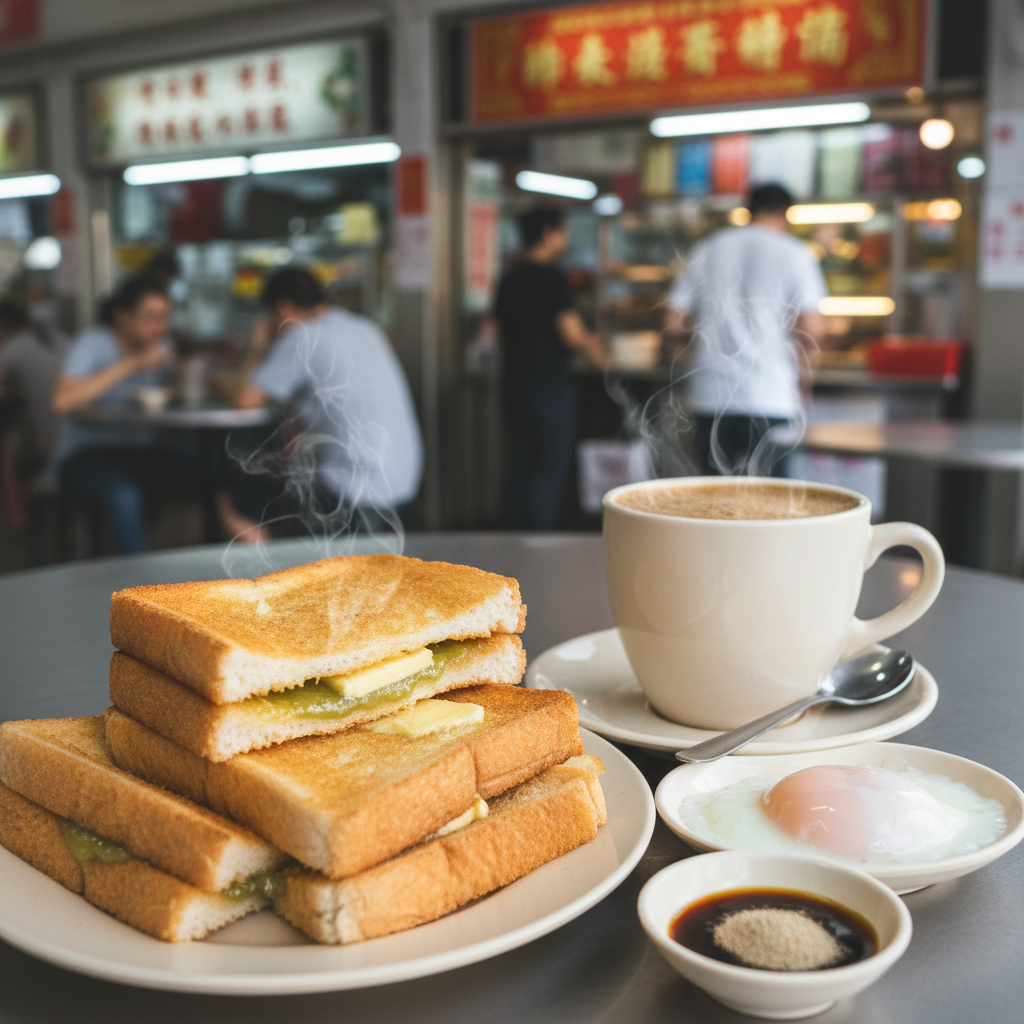
Ah, kaya toast. Just the name conjures up images of crisp, golden-brown toast slathered with fragrant coconut jam and a generous slab of butter, best enjoyed with a side of perfectly soft-boiled eggs and a robust cup of kopi. It’s more than just a breakfast; it's a quintessential Singaporean experience, a comforting ritual deeply embedded in our culinary soul. Simple, humble, yet utterly irresistible, kaya toast is a testament to the magic that can happen with just a few quality ingredients.
Whether you're a first-time visitor eager to sample local delights or a seasoned local looking to deepen your appreciation, this ultimate guide will equip you with everything you need to know. We’ll delve into its fascinating history, explore the different varieties, reveal where to find the best spots, share ordering secrets, and arm you with insider tips to fully savour this beloved breakfast icon.
A Slice of History: The Origins of Kaya Toast
The story of kaya toast begins with Singapore's rich immigrant history, particularly the Hainanese community. Many Hainanese immigrants, who arrived in Singapore in the early 20th century, found work as cooks on British ships or in colonial bungalows. When they later opened their own coffee shops (kopitiams), they adapted Western breakfast items – bread, coffee, eggs – to local tastes.
Instead of marmalade or butter alone, they created 'kaya' – a rich, creamy jam made from coconut milk, eggs, sugar, and pandan leaves. This sweet, fragrant spread was paired with thinly sliced bread, grilled over charcoal fires until perfectly crisp, and served with a thick slab of cold butter. The combination was an instant hit, quickly becoming a staple breakfast across the island. The accompanying soft-boiled eggs and local 'kopi' (coffee) cemented the full, iconic kaya toast set we know and love today.
The Irresistible Trio: Key Dishes & Items to Try
While kaya toast is the star, it's the ensemble cast that completes the perfect Singaporean breakfast experience. Here are the must-try items:
* **Kaya Toast (Traditional):** The classic. Thin slices of white bread, grilled until golden and crisp, then slathered with a layer of aromatic kaya (coconut jam) and a cold slab of butter that melts delightfully upon contact. It’s a symphony of sweet, salty, and crunchy. * **Steamed Bread with Kaya & Butter:** For those who prefer a softer bite, this variation uses fluffy, often thicker, white bread that is steamed instead of toasted. It offers a wonderfully pillowy texture, allowing the kaya and butter to shine through with a melt-in-your-mouth sensation. * **Kaya Crackers:** A less common but equally delicious option. Saltine crackers are spread with kaya and butter, offering a unique savory-sweet crunch that's surprisingly addictive. Perfect for a lighter snack or a textural contrast. * **Soft-Boiled Eggs (Half-Boiled Eggs):** Crucial for the full experience. These are served runny, often two per set. Crack them into a bowl, add a dash of dark soy sauce and a sprinkle of white pepper. This mixture serves as a delicious dipping sauce for your toast, adding a savoury, umami depth. * **Kopi (Local Coffee):** The perfect companion. Singaporean kopi is traditionally brewed with robusta beans, roasted with butter and sugar, giving it a distinct aroma and strong flavour. Learn the lingo (see 'Ordering Tips') to customise your perfect cup. * *Kopi-O:* Black coffee with sugar. * *Kopi-C:* Coffee with evaporated milk and sugar. * *Kopi-C Kosong:* Coffee with evaporated milk, no sugar. * *Kopi Peng:* Iced coffee with condensed milk. * *Kopi Gao:* Extra strong coffee. * *Kopi Siew Dai:* Less sugar. * **Teh (Local Tea):** For tea lovers, 'Teh' is just as popular and comes with similar customisation options as kopi. * *Teh-O:* Black tea with sugar. * *Teh-C:* Tea with evaporated milk and sugar. * *Teh Peng:* Iced tea with condensed milk.
Where to Find Your Perfect Kaya Toast Fix
From venerable chains to hidden kopitiams, Singapore offers a plethora of places to enjoy kaya toast. Each has its unique charm and loyal following.
**The Iconic Chains (Great for First-Timers & Consistency):**
* **Ya Kun Kaya Toast:** Arguably the most famous, known for its extra-thin, crispy charcoal-grilled toast and rich, dark brown kaya. They have numerous outlets island-wide, including major shopping malls and tourist spots. Their set meals are a popular choice. * *Must-Try Outlet:* Far East Square (original vibe, though not the very first location). * **Killiney Kopitiam:** Established in 1919, Killiney boasts a more traditional Hainanese kopitiam feel, with slightly thicker, softer toast and a lighter, greener kaya. Their coffee is also highly regarded. * *Must-Try Outlet:* Killiney Road (their flagship, authentic experience). * **Toast Box:** A more modern and contemporary take on the kopitiam, part of the BreadTalk Group. They offer a wider variety of bread options and a consistent, crowd-pleasing kaya toast. Great for air-conditioned comfort. * *Must-Try Outlet:* ION Orchard (convenient, good atmosphere).
**Independent Gems & Traditional Kopitiams (For the Adventurous & Authentic):**
* **Tong Ah Eating House:** A heritage institution in Keong Saik Road, famous for its 'traditional kaya toast' and 'crispy thin toast with kaya'. Their traditional Hainanese cooking is also a draw. * *Location:* 35 Keong Saik Road, Singapore 089142. * **Heap Seng Leong:** Step back in time at this incredibly charming, old-school kopitiam in Lavender. They still make their toast over a charcoal grill and serve kopi with a pat of butter (a traditional method). Cash only! * *Location:* 10 North Bridge Road, #01-5109, Singapore 190010. * **Good Morning Nanyang Cafe:** Known for its unique 'orange ciabatta kaya toast', offering a tangier, chewier bread experience. A popular spot in the CBD. * *Location:* Telok Ayer Street (several outlets including Far East Square, and Pagoda Street).
Ordering Like a Local: Tips & Etiquette
Navigating a local kopitiam might seem daunting, but these tips will make you an expert:
* **Order a 'Set':** Most places offer breakfast sets which include kaya toast, two soft-boiled eggs, and a choice of kopi or teh. This is usually the best value. * **Master the Kopi/Teh Lingo:** This is crucial for customising your drink. Remember: * *Kosong:* No sugar. * *Siew Dai:* Less sugar. * *Gao:* Extra strong. * *Po:* Weaker. * *C:* With evaporated milk. * *O:* Black (no milk). * *Peng:* Iced. * *Example: 'Kopi-C Siew Dai' = Coffee with evaporated milk, less sugar.* * **Eating the Eggs:** Don't be shy! Crack the soft-boiled eggs into a bowl, add a dash of dark soy sauce and a sprinkle of white pepper. Stir it gently. This is your dipping sauce for the toast. Some locals even drink the egg mixture directly! * **Self-Service (Often):** In many traditional kopitiams, you order at the counter, pay, and collect your food and drinks yourself. Find a seat first to 'chope' (reserve) your spot. * **Cash is King (Sometimes):** While chains accept cards, many older kopitiams and hawker stalls are cash-only. Always carry small denominations.
Price Expectations: Affordable Delights
One of the joys of kaya toast is its affordability. It’s a delicious, filling meal that won't break the bank.
* **Chain Cafes (e.g., Ya Kun, Killiney, Toast Box):** Expect to pay **S$4 - S$7** for a complete breakfast set (toast, eggs, coffee/tea). * **Traditional Kopitiams/Hawker Stalls:** These usually offer even better value, with sets ranging from **S$3 - S$5**. * **Individual Items:** * Kaya Toast: S$1.50 - S$3.00 * Soft-Boiled Eggs (2pcs): S$1.50 - S$2.50 * Kopi/Teh: S$1.50 - S$3.00
Considering the quality and the experience, kaya toast offers excellent value for money.
Common Mistakes to Avoid for a Perfect Kaya Toast Experience
Even a simple pleasure like kaya toast has its nuances. Steer clear of these common pitfalls:
* **Skipping the Eggs:** The soft-boiled eggs are integral! They add a crucial savoury element and dipping experience that elevates the entire meal. * **Ordering 'Western' Coffee:** While cafes do offer lattes and cappuccinos, part of the kaya toast experience is pairing it with a traditional local kopi. Embrace the robust, unique flavours! * **Being Impatient:** At popular spots, especially during peak hours, queues can form. Be patient, soak in the atmosphere, and know that your delicious breakfast is worth the wait. * **Not Trying Different Types:** Don't limit yourself to just one type of toast. Experiment with steamed bread or even kaya crackers to find your favourite. * **Ignoring the Soy Sauce & Pepper:** For the soft-boiled eggs, these condiments aren't optional. They transform plain eggs into a flavourful dipping sauce. * **Assuming All Kaya is the Same:** Every establishment has its own kaya recipe, varying in sweetness, texture, and pandan intensity. Explore a few places to find your preferred blend.
Insider Tips for the Savvy Kaya Toast Lover
Elevate your kaya toast game with these pro tips:
* **Go Early:** For the freshest toast, hottest kopi, and to beat the crowds, aim for an early morning visit (before 9 AM). This is when many locals have their daily fix. * **Observe the Locals:** If unsure about the eating ritual, discreetly observe how locals crack their eggs, stir their kopi, and dip their toast. It’s the best way to learn. * **Look for Charcoal Toast:** Some traditional places like Heap Seng Leong still use charcoal grills, which impart a subtle smokiness and unparalleled crispness to the bread. It's a dying art and a must-try! * **Ask for Extra Butter:** Feeling indulgent? Some places might offer an extra slab of butter if you ask nicely. The contrast of cold, salty butter with warm, sweet kaya is divine. * **Explore Beyond the Chains:** While the big names are great, venturing into a smaller, lesser-known kopitiam or hawker centre can sometimes unearth unexpected gems and a more authentic, local atmosphere. * **Buy Kaya to Take Home:** Many popular spots, especially Ya Kun and Killiney, sell their kaya in jars. It makes for an excellent souvenir or a way to recreate the magic at home.
Frequently Asked Questions (FAQ)
**Q: What exactly is kaya?** A: Kaya is a traditional coconut jam made from coconut milk, eggs, sugar, and pandan leaves. It has a rich, sweet, and aromatic flavour, often with a smooth, custard-like texture.
**Q: Is kaya always green?** A: Not always! Kaya can range from a vibrant jade green (from more pandan extract) to a caramel-brown colour (from caramelised sugar). Both are delicious, just slightly different in flavour and appearance.
**Q: Can I make kaya toast at home?** A: Absolutely! You can buy ready-made kaya from supermarkets or specialty stores in Singapore, or even try making your own from scratch. Just toast your preferred bread, spread kaya, add a slice of butter, and pair with soft-boiled eggs and your favourite brew.
**Q: Is kaya toast suitable for vegetarians?** A: Kaya toast with kaya is generally suitable for vegetarians, as kaya is made from plant-based ingredients (coconut milk, pandan) and eggs. However, do note that the kaya itself contains eggs, so it's not vegan. The butter is also dairy-based.
**Q: What's the main difference between Ya Kun and Killiney?** A: Ya Kun is known for its thin, cracker-like crispy toast and a slightly darker, sweeter kaya. Killiney offers a thicker, softer toast and a lighter, often greener kaya, with a more traditional Hainanese kopitiam ambience. Their coffee profiles also differ slightly, with Killiney often having a stronger brew.
Conclusion: A Simple Pleasure, A Lasting Impression
Kaya toast is more than just a dish; it’s a culinary embrace, a warm welcome to the heart of Singaporean culture. Its unassuming simplicity belies a profound depth of flavour and a rich history that resonates with generations of Singaporeans.
From the first crispy bite of toast slathered with fragrant kaya and melting butter, to the comforting slurp of soft-boiled eggs and the invigorating jolt of kopi, every element comes together in perfect harmony. It's an affordable luxury, a shared tradition, and a truly unforgettable taste of our island nation.
So, go forth and explore! Seek out your favourite kopitiam, master the kopi lingo, and immerse yourself in this delightful ritual. Whether you prefer your toast crispy or steamed, your kopi strong or sweet, the ultimate guide to kaya toast promises an experience that will leave you craving for more.