The Ultimate Guide to Kaya Toast in Singapore: A Culinary Journey Through Singapore's Beloved Breakfast
Introduction: The Heart of Singaporean Breakfast
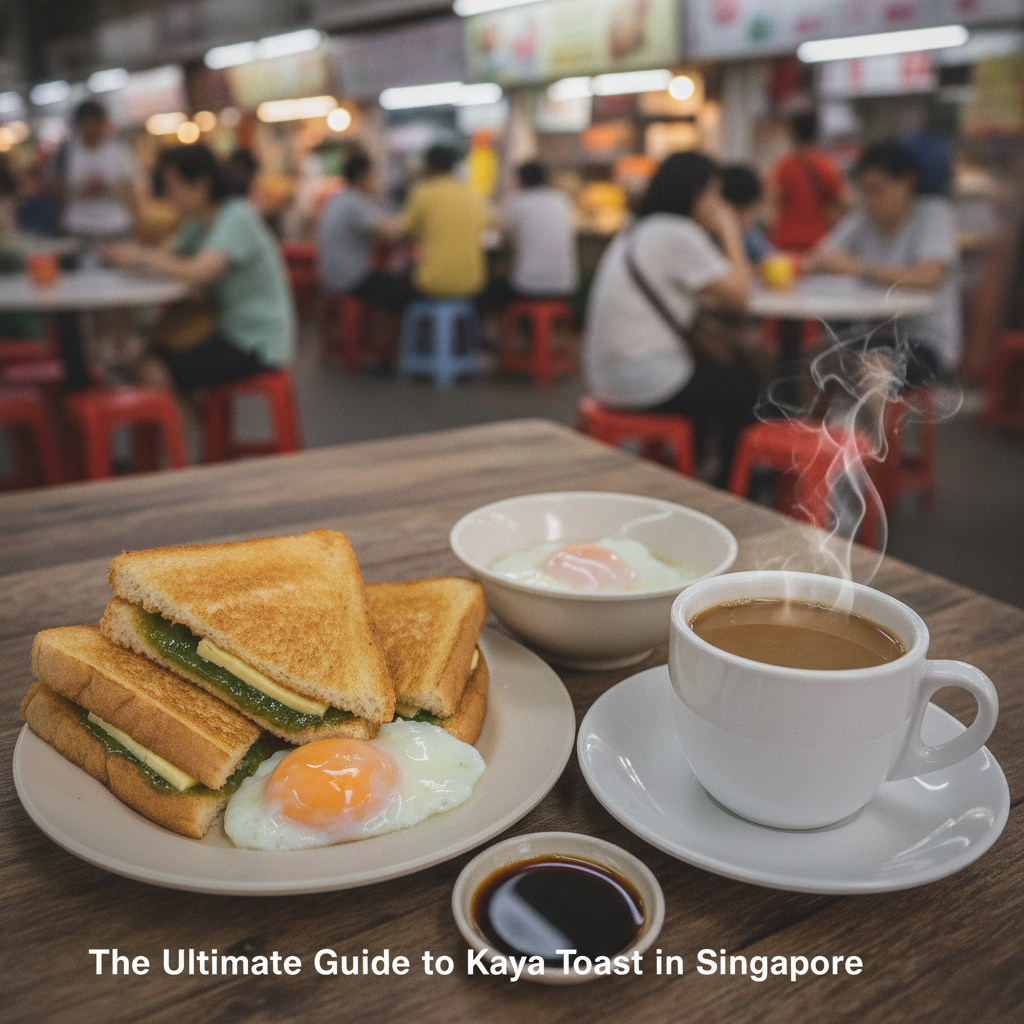
Step into any traditional Singaporean coffee shop (kopitiam) in the early morning, and you'll be greeted by an symphony of senses: the comforting aroma of freshly brewed kopi, the gentle clinking of porcelain, and the unmistakable scent of toast crisping on a grill. At the heart of this quintessential Singaporean experience lies the humble yet extraordinary Kaya Toast. More than just a breakfast item, it's a cultural institution, a symbol of heritage, and a simple pleasure that unites locals and fascinates visitors.
But what exactly makes Kaya Toast so special? And how do you navigate the vibrant world of Singapore's kopitiams to find your perfect set? As your expert Singapore food blogger, I'm here to guide you through everything you need to know. In this ultimate guide, you'll discover the rich history behind this iconic dish, learn about the key variations to try, uncover the best places to find authentic Kaya Toast, master ordering etiquette, understand price expectations, avoid common mistakes, and unlock insider tips to truly savour this beloved local delicacy. Get ready to embark on a delicious journey into the heart of Singaporean breakfast!
A Taste of History: The Origins of Kaya Toast
The story of Kaya Toast is a fascinating blend of colonial influence and local ingenuity, reflecting Singapore's multicultural tapestry. Its roots can be traced back to the early 20th century, particularly to Hainanese immigrants who arrived in Singapore. Many Hainanese found work as chefs and domestic helpers in British households, where they were exposed to Western breakfast staples like toast with butter and jam.
When these Hainanese ventured out to open their own coffee shops, or kopi tiams, they adapted these foreign concepts with local ingredients. Strawberry jam was swapped for 'kaya' – a rich, fragrant coconut jam made from coconut milk, eggs, sugar, and pandan leaves. Butter remained, often in generous, cold slabs, providing a delightful contrast to the warm toast and sweet kaya. The coffee itself, 'kopi', was also brewed with a unique Nanyang (Southern Seas) style, incorporating robusta beans roasted with butter or margarine and sugar.
What began as a simple, affordable meal for dockworkers and labourers quickly evolved into a national culinary icon. Over decades, kopi tiams became community hubs, and the Kaya Toast set – comprising toast, half-boiled eggs, and kopi – solidified its place as the definitive Singaporean breakfast, enjoyed by all walks of life from bustling hawker centres to modern air-conditioned cafes.
The Essential Ensemble: Key Dishes and Variations to Try
While 'Kaya Toast' is the star, it's part of a delightful ensemble that makes up the complete Singaporean breakfast experience. Here are the must-try items:
* **Classic Kaya Toast:** The flagship. Thin slices of white bread, usually charcoal-grilled or toasted until perfectly crisp and golden, then slathered with creamy, sweet kaya and generous slices of cold butter. The magic lies in the contrast: hot and cold, crisp and soft, sweet and savoury.
* **Steamed Bread Kaya:** For those who prefer a softer bite. Fluffy white bread is steamed until warm and pillowy, then served with kaya and butter. It's a comforting, melt-in-your-mouth alternative to the crispy version.
* **Kaya French Toast:** A more modern take, often found in the larger chains. Bread slices are dipped in egg batter, pan-fried until golden, and served with a side of kaya for dipping or spreading.
* **Half-Boiled Eggs:** An absolutely non-negotiable accompaniment. Two eggs, cooked to a perfect runny yolk and barely-set whites, served in a saucer. The local ritual involves seasoning them with a dash of dark soy sauce and a sprinkle of white pepper, then stirring gently. The best part? Dipping your Kaya Toast into this savoury, custardy concoction!
* **Kopi (Coffee):** The backbone of the set. Singaporean kopi is robust and distinct. Learn the lingo to order it your way: * **Kopi O:** Black coffee with sugar. * **Kopi:** Coffee with condensed milk and sugar (the default). * **Kopi C:** Coffee with evaporated milk and sugar. * **Kopi Siew Dai:** Less sugar (can be combined, e.g., Kopi C Siew Dai). * **Kopi Kosong:** No sugar (e.g., Kopi O Kosong for black, no sugar). * **Kopi Gao:** Stronger brew. * **Kopi Poh:** Weaker brew.
* **Teh (Tea):** For tea lovers, similar variations apply: * **Teh O:** Black tea with sugar. * **Teh:** Tea with condensed milk and sugar (the default). * **Teh C:** Tea with evaporated milk and sugar. * ...and the same Siew Dai, Kosong, Gao, Poh modifiers.
Your Kaya Toast Trail: Where to Find the Best
From heritage-rich kopitiams to modern cafe chains, Singapore offers a plethora of places to enjoy Kaya Toast. Here’s where to start your delicious exploration:
**The Iconic Chains (Reliable & Widespread):**
* **Ya Kun Kaya Toast:** Arguably the most famous, Ya Kun has been serving its signature thin, crispy charcoal-grilled toast since 1944. Their kaya is distinctly dark, sweet, and aromatic. You'll find outlets all over Singapore, including major shopping malls and airports. A great starting point for first-timers.
* **Killiney Kopitiam:** Established in 1919, Killiney is one of Singapore's oldest Hainanese kopitiams. Their toast is often slightly thicker and softer than Ya Kun's, and their kaya offers a rich, balanced sweetness. Also widely available across the island.
* **Toast Box:** A modern chain, often found in shopping malls and MRT stations. Toast Box offers a slightly more contemporary setting and a wider variety of toast options (e.g., white bread, thick toast, multi-grain). Their kaya is a vibrant green, indicating a strong pandan flavour.
**Traditional Gems (For the Authentic Experience):**
* **Heap Seng Leong (North Bridge Road):** Step back in time at this incredibly atmospheric, old-school kopitiam. Famous for its charcoal-toasted bread and kopi brewed over charcoal fire, served with a slab of butter (Kopi Gu You). It's a truly traditional experience, complete with uncles reading newspapers and cash-only transactions.
* **Tong Ah Eating House (Keong Saik Road):** A legendary spot that has moved locations but retained its charm and distinct taste. Tong Ah is famous for its unique 'square' kaya toast, where the crusts are removed before toasting, creating a perfectly soft and crispy texture. Their kaya is exceptionally fragrant.
* **Chin Mee Chin Confectionery (East Coast Road):** Recently reopened to much fanfare, Chin Mee Chin is an Art Deco marvel. They are renowned for their fluffy, thick toast buns (instead of slices) served with kaya and butter, and their delightful range of traditional pastries. Expect queues, especially on weekends.
* **Local Hawker Centres & Independent Kopitiams:** Don't be afraid to venture into neighbourhood hawker centres or smaller, independent coffee shops. Many humble stalls serve excellent, often homemade, kaya toast and kopi, providing an authentic taste of local life. Look for signs advertising 'Traditional Breakfast' or 'Kaya Butter Toast'.
Mastering the Art of Ordering & Kopitiam Etiquette
Navigating a bustling kopitiam can feel overwhelming at first, but with these tips, you'll order like a local in no time:
1. **Know Your Kopi/Teh Lingo:** This is crucial. Don't just ask for 'coffee' or 'tea'. Familiarize yourself with the terms like Kopi O, Kopi C Siew Dai, Teh Kosong (refer to the 'Key Dishes' section above). 2. **Order a Set:** Most places offer a 'Kaya Toast Set' which typically includes two slices of Kaya Toast, two half-boiled eggs, and a hot drink (Kopi or Teh). This is usually the most economical and complete way to enjoy the meal. 3. **Counter or Table Service:** At modern chains, you usually order and pay at a counter. In older, traditional kopitiams, you might order at the drink stall counter, or sometimes a server will take your order at your table (especially for food items like toast). 4. **Be Prepared for Speed (and Noise):** Kopitiams are efficient. Orders are taken quickly, and dishes arrive promptly. It's a lively, often noisy environment – embrace it as part of the authentic experience. 5. **Cash is King (Sometimes):** While chains accept cashless payments, many traditional hawker stalls and older kopitiams are cash-only. Always have some small Singapore dollar notes on hand. 6. **Sharing Tables:** In crowded hawker centres or popular kopitiams, it's common and perfectly acceptable to share a table with strangers, especially during peak hours. A simple nod or polite request (e.g., "May I join you?") is usually sufficient. 7. **Clear Your Tray:** At many self-service establishments (especially in hawker centres), it's good etiquette to return your tray and clear your table after eating.
Price Expectations: An Affordable Delight
One of the joys of Kaya Toast is its affordability, making it an accessible daily treat for everyone.
* **Traditional Kopitiams & Hawker Stalls:** You can expect to pay around **S$3.50 to S$5.00** for a full Kaya Toast set (toast, eggs, drink). This offers excellent value for a hearty breakfast.
* **Chain Outlets (Ya Kun, Killiney, Toast Box):** Prices here are slightly higher due to air-conditioned comfort and potentially higher operating costs. A Kaya Toast set will typically range from **S$5.00 to S$7.00**.
* **À La Carte:** If you just want the toast, expect to pay around S$2.00 - S$3.50. Half-boiled eggs usually cost S$1.50 - S$2.00 for two, and a cup of kopi or teh S$1.80 - S$3.50 depending on the type and establishment.
Overall, Kaya Toast remains one of Singapore's most budget-friendly and satisfying culinary experiences.
Common Mistakes to Avoid on Your Kaya Toast Journey
To ensure you have the best possible Kaya Toast experience, steer clear of these common pitfalls:
1. **Skipping the Half-Boiled Eggs:** This is perhaps the biggest mistake! The eggs are an integral part of the experience. The savoury, runny yolk perfectly complements the sweet toast and makes for an unforgettable flavour combination. 2. **Ordering Just 'Coffee':** In a Singaporean kopitiam, asking for just 'coffee' will almost always get you a Kopi (coffee with condensed milk and sugar). If you prefer black coffee, specify 'Kopi O'. If you want it without sugar, say 'Kopi O Kosong'. Precision is key! 3. **Ignoring the Dip:** The local way to eat Kaya Toast is to tear off a piece and dip it into your half-boiled eggs. Don't be shy – this combination of sweet, savoury, and creamy is pure magic. 4. **Expecting a Fine Dining Experience:** Kopitiams are casual, bustling, and no-frills. Don't expect attentive table service or quiet ambiance. It's all part of the charm! 5. **Only Sticking to the Chains:** While Ya Kun and Toast Box are great, venture out to the traditional kopitiams (like Heap Seng Leong or Chin Mee Chin) for a truly authentic taste and atmosphere. 6. **Forgetting Cash:** Especially at older, independent stalls, cash is often the only accepted form of payment. Don't get caught out! 7. **Rushing the Experience:** Kaya Toast is meant to be savoured. Take your time, enjoy the simple pleasures, and soak in the local atmosphere.
Insider Tips for the Ultimate Kaya Toast Experience
Ready to elevate your Kaya Toast game? Here are some pro tips from a local food blogger:
* **The Golden Dip:** I can't stress this enough – dipping your crispy Kaya Toast into the runny, seasoned half-boiled eggs is a game-changer. The savoury eggs cut through the sweetness of the kaya and butter, creating a harmonious symphony of flavours and textures. * **Try Different Kayas:** While most places offer a standard kaya, some traditional stalls might have variations. For instance, the green kaya signifies a stronger pandan flavour, while darker kayas might have a richer caramel note. Don't be afraid to try different versions! * **Charcoal-Grilled Toast:** If you see a stall toasting their bread over a charcoal fire (like Heap Seng Leong), make a beeline for it! The subtle smoky char adds an incredible depth of flavour that electric toasters just can't replicate. * **Buy a Jar of Kaya:** Many traditional kopitiams and all the major chains sell jars of their homemade kaya. It makes for a fantastic souvenir or a delicious way to recreate a slice of Singapore at home. * **Go Early:** For the freshest toast, perfectly brewed kopi, and to avoid the biggest crowds at popular spots, aim for an early morning breakfast, ideally before 9 AM. * **Observe and Learn:** Watch how the locals eat and order. You'll pick up nuances that enhance your experience, from how they stir their eggs to their coffee-drinking rituals. * **Explore Beyond White Bread:** While classic toast is white, some places offer healthier multigrain options or even fluffy buns (like Chin Mee Chin). It's worth trying a different bread base to see what you prefer.
Frequently Asked Questions (FAQ)
**Q: What exactly is Kaya?** A: Kaya is a sweet, creamy coconut jam made from coconut milk, eggs, sugar, and often flavoured with pandan leaves, which give it a distinctive aroma and sometimes a light green hue.
**Q: How do you eat the half-boiled eggs?** A: They are typically served runny. Crack them into a saucer, add a dash of dark soy sauce and a sprinkle of white pepper, then stir. You can eat them with a spoon or, more commonly, dip your Kaya Toast into them.
**Q: Is Kaya Toast sweet?** A: Yes, it's a sweet breakfast item, primarily from the kaya itself. However, the savoury butter and the accompanying half-boiled eggs help to balance the sweetness, preventing it from being cloyingly sweet.
**Q: Can I buy Kaya to take home?** A: Absolutely! Most prominent Kaya Toast chains and many traditional stalls sell jars of their signature kaya. It's a popular souvenir.
**Q: Is Kaya Toast Halal?** A: Many large chains like Ya Kun Kaya Toast and Toast Box are Halal-certified. For smaller, independent kopitiams, it varies, but most use halal ingredients for the toast and kaya. If you have specific dietary requirements, it's always best to check with the individual stall.
**Q: Are there vegetarian or vegan options?** A: Kaya Toast with half-boiled eggs and kopi/teh are vegetarian-friendly. However, vegan options are extremely limited, as kaya contains eggs, butter is used on toast, and kopi/teh typically use condensed or evaporated milk. You might be able to get plain toast with a spread you bring yourself, but it wouldn't be the traditional experience.
Conclusion: More Than Just Breakfast – A Singaporean Institution
Kaya Toast is more than just a simple breakfast; it's a cornerstone of Singaporean culinary identity. It's a dish that tells a story of migration, adaptation, and the harmonious blending of cultures. From the crisp snap of perfectly toasted bread to the creamy sweetness of kaya, the richness of butter, and the comforting warmth of a precisely brewed kopi, every element contributes to an experience that is deeply satisfying and uniquely Singaporean.
Whether you're a first-time visitor or a seasoned local, there's always something new to discover in the world of Kaya Toast. So go forth, be adventurous, try a new kopitiam, perfect your kopi order, and don't forget to dip that toast into the glorious runny eggs. Each bite is a taste of heritage, a moment of comfort, and an unforgettable part of Singapore's vibrant food scene. Enjoy your culinary journey, and may your Kaya Toast always be perfectly crisp and your kopi just right!