The Ultimate Guide to Hainanese Chicken Rice in Singapore
Introduction: A National Icon on a Plate
Ah, Hainanese Chicken Rice! If there's one dish that truly encapsulates the heart and soul of Singapore's culinary landscape, it's this humble yet profoundly satisfying plate. More than just a meal, it's a cultural touchstone, a subject of passionate debate, and a source of immense national pride. From bustling hawker centres to air-conditioned restaurants, the aroma of fragrant rice and perfectly poached chicken is an irresistible call.
As your resident Singapore food blogger, I'm here to take you on a deep dive into everything you need to know about this beloved dish. Whether you're a first-time visitor eager to taste authentic local flavours or a seasoned local looking to refine your chicken rice experience, this ultimate guide will equip you with the history, the best places to find it, how to order like a pro, and all the insider tips to truly savour every single mouthful.
A Taste of History: From Hainan to Singapore's Shores
The story of Hainanese Chicken Rice is a fascinating journey of culinary adaptation. Its roots can be traced back to Wenchang chicken, a traditional dish from Hainan Island in southern China. However, the version we know and love today in Singapore is a distinct evolution, shaped by local ingredients and palates.
When Hainanese immigrants arrived in Singapore (then Malaya) in the early 20th century, they brought their culinary traditions with them. Lacking the exact ingredients from their homeland, they ingeniously adapted, replacing Hainanese rice with local varieties and developing the now-iconic trio of dipping sauces: a fiery chilli sauce, pungent ginger paste, and rich dark soy sauce. The chicken, traditionally boiled whole, was then often served with rice cooked in the very chicken broth, infused with ginger, garlic, and pandan leaves – transforming it into the fragrant 'oily rice' that is arguably the true star of the show. Over the decades, it cemented its place as a staple, evolving from a simple hawker dish to a celebrated national treasure, beloved by all.
The Anatomy of Perfection: Key Items to Try
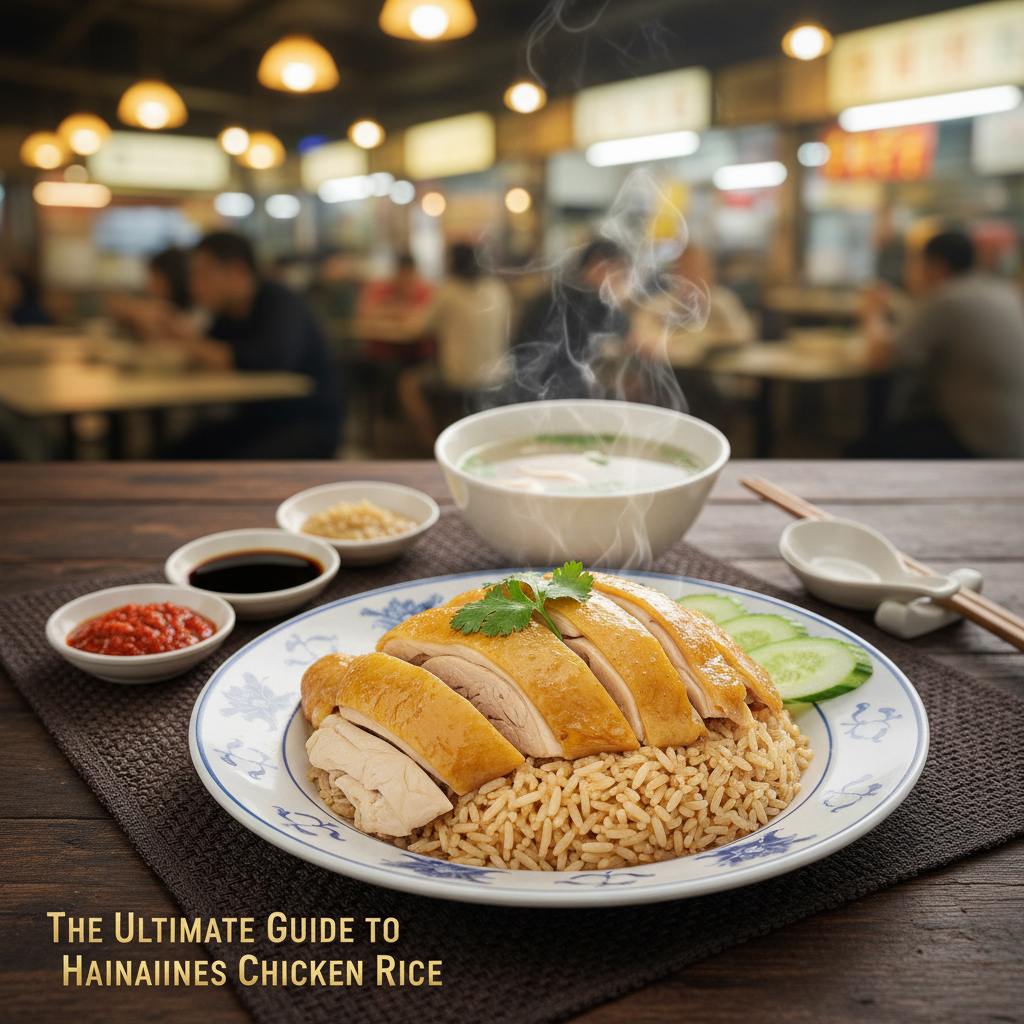
Understanding the components of a perfect Hainanese Chicken Rice plate is key to appreciating its genius:
* **The Chicken (Jī)**: * **Steamed White Chicken (Bái Jī)**: The classic choice. Poached to succulent perfection, resulting in incredibly tender meat with gelatinous skin. Often served 'cold' or at room temperature, which helps the collagen in the skin set, giving it a unique, silky texture. Don't be surprised by a hint of pink near the bone – it's a sign of perfectly cooked, juicy chicken. * **Roasted Chicken (Shāo Jī)**: A popular alternative. The chicken is marinated and then roasted, resulting in a beautiful crispy, slightly caramelised skin and a richer, more savoury flavour. Many stalls offer both, and some argue the roasted version is even more flavourful. * **The Rice (Fàn)**: This is often considered the soul of the dish. Cooked with chicken broth, ginger, garlic, and sometimes pandan leaves, the individual grains are glistening, fragrant, and bursting with flavour. It's so good, you could almost eat it on its own. * **The Sauces (Jiàng)**: The vital supporting cast, often presented in small bowls for you to mix and match: * **Chilli Sauce**: A vibrant, garlicky, spicy, and tangy concoction, often with calamansi lime and ginger. Absolutely essential for cutting through the richness. * **Ginger Paste**: Finely minced ginger, usually mixed with oil and sometimes spring onions. Adds a refreshing, aromatic warmth. * **Dark Soy Sauce**: Thick, slightly sweet, and savoury. Offers a deep umami counterpoint. A dash of light soy sauce might also be available for a saltier kick. * **The Soup (Tāng)**: A clear, comforting broth, usually made from the chicken poaching liquid. Simple, yet deeply flavourful, and a refreshing palate cleanser between bites.
Where to Find Your Chicken Rice Nirvana (Specific Locations)
Singapore boasts countless chicken rice stalls, each with its loyal following. Here are some legendary and highly recommended spots, ranging from Michelin-recognised hawkers to established restaurants:
* **Tian Tian Hainanese Chicken Rice (天天海南雞飯)** * **Location**: Maxwell Food Centre, #01-10/11, 1 Kadayanallur St, Singapore 069184 * **Why Visit**: A true icon, propelled to global fame by Anthony Bourdain and a Michelin Bib Gourmand recipient. Expect consistently long queues, but the intensely flavourful rice and tender chicken are worth every minute. They are famous for their unique, almost sticky rice. * **Boon Tong Kee (文東記)** * **Locations**: Multiple outlets (e.g., Balestier, MacPherson, East Coast Road). The Balestier Road outlet is a classic. * **Why Visit**: A long-standing restaurant chain known for its consistent quality and a slightly more 'restaurant' dining experience. Their steamed chicken is a standout, and they offer a wider menu beyond just chicken rice. * **Wee Nam Kee Hainanese Chicken Rice Restaurant (威南記海南雞飯餐室)** * **Locations**: Multiple outlets (e.g., United Square, Thomson Road). * **Why Visit**: Another popular restaurant with a strong following, particularly for its roasted chicken. Their chilli sauce often gets rave reviews, and the ambiance is family-friendly. * **Loy Kee Best Chicken Rice (来记)** * **Location**: 342 Balestier Rd, Singapore 329774 * **Why Visit**: Operating since 1953, Loy Kee offers a nostalgic, old-school chicken rice experience. They pride themselves on traditional preparation methods, resulting in beautifully executed steamed chicken and fragrant rice. * **Ah Tai Hainanese Chicken Rice (阿泰海南雞飯)** * **Location**: Maxwell Food Centre, #01-07, 1 Kadayanallur St, Singapore 069184 * **Why Visit**: Located just a few stalls down from Tian Tian, Ah Tai was founded by Tian Tian's former head chef. Many argue it's just as good, if not better, with shorter queues. A great alternative if Tian Tian's queue is too daunting. * **Tong Fong Fatt Hainanese Boneless Chicken Rice (東方發海南起骨雞飯)** * **Location**: Margaret Drive Hawker Centre, 38A Margaret Dr, Singapore 149306 (and other hawker centres like Ghim Moh) * **Why Visit**: Known for serving boneless chicken, which is a major convenience. Their chicken is consistently tender, and the rice is fragrant. A great option for those who prefer not to deal with bones.
Ordering Tips and Etiquette: How to Order Like a Local
Don't let the queues intimidate you! Here's how to navigate your chicken rice order like a seasoned local:
1. **Join the Queue**: This is non-negotiable at popular stalls. Be patient, it moves faster than you think. 2. **Decide Your Chicken Type**: Before you reach the front, know if you want **Steamed (Bái Jī)** or **Roasted (Shāo Jī)** chicken. Many stalls will ask. 3. **Specify Portion Size**: For a single plate, just say 'one plate chicken rice' (yī pán jī fàn). If sharing, you can order a quarter (sì fēn zhī yī), half (bàn zhī), or a whole chicken (yī zhī jī) separately, then order individual plates of rice. 4. **Boneless?**: If available and preferred, ask for 'boneless' (qǐ gǔ) – though this isn't always standard for all stalls. 5. **Add Sides**: Some stalls offer sides like braised eggs (lǔ dàn), tofu (dòu fu), or blanched vegetables (yóu cài). If you want them, ask 'add egg/tofu/vegetables'. 6. **Find a Seat (Hawker Centres)**: Especially during peak hours, secure your table first. Use tissue packets or other small items to 'chope' (reserve) your seat. Then, one person can queue while the others guard the spot. 7. **Self-Service Sauces**: Most hawker stalls have a separate table or counter for chilli, ginger, and dark soy sauce. Grab your desired amount. Don't be shy! 8. **Cash is King (but not always)**: While many hawkers now accept cashless payments, it's always wise to have small notes and coins ready, especially at older stalls.
Price Expectations: Value for Every Dollar
One of the beautiful things about chicken rice is its affordability, offering incredible value for money:
* **Hawker Centres**: A single plate of chicken rice typically ranges from **S$3.50 to S$7**. Portions are generous, and the quality can be outstanding. * **Mid-range Restaurants**: Expect to pay **S$8 to S$15** per plate, often with air-conditioning and table service. * **Whole Chicken**: If you're ordering a whole chicken to share, prices usually range from **S$20 to S$35**, depending on the size and establishment.
Considering the skill, effort, and flavour packed into each plate, it's truly one of the best food deals in Singapore.
Common Mistakes to Avoid for a Better Experience
To ensure your chicken rice journey is smooth and delicious, steer clear of these common pitfalls:
* **Underestimating the Rice**: Don't just see it as a carb filler. The rice is a key component; ignoring its fragrant flavour means you're missing half the dish. * **Skipping the Sauces**: These aren't just condiments; they complete the flavour profile. The chilli, ginger, and dark soy provide essential balance and zest. * **Eating the Skin First (or not at all)**: The gelatinous skin of steamed chicken is a delicacy. Savour it with the meat and rice. * **Going at Peak Hours Unprepared**: Lunch (12 PM - 2 PM) and dinner (6 PM - 8 PM) at popular stalls will mean long queues. Mentally prepare or aim for off-peak times. * **Not 'Chope-ing' Your Seat**: In crowded hawker centres, failing to reserve your table before queuing can leave you with a delicious plate but nowhere to sit. * **Expecting Uniformity**: Every stall has its unique recipe and flavour profile. What's 'best' is subjective, so be open to different interpretations.
Insider Tips from a Foodie
Here's how to elevate your chicken rice game, straight from a local expert:
* **Mix Your Own Chilli**: Don't just grab a scoop. Experiment by mixing the chilli with a dash of dark soy and a spoonful of ginger paste. Find your perfect balance! * **Ask for Extra Chicken Oil (If Available)**: Some stalls might offer to drizzle a bit of extra chicken oil over your rice. It's a sinful but incredibly flavourful addition – just ask 'ji you fàn duō yī diǎn' (more chicken oil for the rice). * **Observe and Learn**: Watch how locals eat. Notice their sauce mixing techniques, or how they pair bites of chicken, rice, and soup. * **Don't Forget the Soup**: The clear broth served alongside is not just for show. It's a fantastic palate cleanser and complements the meal beautifully. * **Go Boneless**: If you're new to eating with bones or just prefer convenience, seek out stalls explicitly advertising 'boneless chicken rice'. * **Try Both Types (If Sharing)**: If dining with company, order both steamed and roasted chicken to experience the contrast in textures and flavours. * **Visit a Neighbourhood Hawker Centre**: While the famous ones are great, sometimes the best, most authentic chicken rice experiences are found in smaller, less touristy hawker centres. Ask a local for their favourite neighbourhood spot!
Frequently Asked Questions (FAQ)
Still have questions? I've got you covered:
* **Q: What's the main difference between steamed and roasted chicken?** * **A**: Steamed chicken is poached, resulting in very tender meat and silky, often gelatinous skin. Roasted chicken is marinated and roasted, giving it a crispier, caramelised skin and a more intense savoury flavour. Both are delicious in their own right! * **Q: Is Hainanese Chicken Rice spicy?** * **A**: The chicken itself is not spicy. The spiciness comes entirely from the chilli sauce, which you can add to your preference. If you don't like spice, simply use less or skip the chilli altogether. * **Q: Can I get boneless chicken?** * **A**: Yes, many stalls (especially those catering to office crowds or tourist areas) offer boneless chicken. Look for signs that say 'boneless' (起骨 - qǐ gǔ). * **Q: Is chicken rice considered a healthy dish?** * **A**: While it contains protein and carbohydrates, the 'oily rice' and chicken skin contribute to its calorie and fat content. It's a delicious indulgence, but perhaps not an everyday diet food. Opting for less rice, less skin, and more lean breast meat can make it healthier. * **Q: What should I drink with chicken rice?** * **A**: Popular choices include refreshing local drinks like barley water (yì mǐ shuǐ), lime juice (níng méng shuǐ), or a simple cup of Kopi (coffee) or Teh (tea). * **Q: Is Hainanese Chicken Rice Halal?** * **A**: Traditionally, no, as pork products might be used in the broth or sauces, and the chicken is not always slaughtered according to Halal standards. However, there are dedicated Halal chicken rice stalls around Singapore. Always look for a 'Halal' certification at the stall if this is a requirement.
Conclusion: A Culinary Journey Awaits
Hainanese Chicken Rice isn't just a meal; it's an experience. It's a testament to Singapore's rich food heritage, a dish perfected through generations, and a comforting taste of home for many. Its simplicity belies a profound complexity of flavours – from the fragrant rice to the succulent chicken and the zingy sauces, every element plays a crucial role.
Now armed with this ultimate guide, you're ready to embark on your own chicken rice adventure. So, go forth, brave the queues, savour every bite, and discover why this iconic dish holds such a special place in the hearts (and stomachs) of Singaporeans and visitors alike. Happy eating, and remember to share your favourite finds!