The Ultimate Guide to Singapore's Wanton Mee: From Classic Stalls to Modern Twists
Introduction: Unravelling Singapore's Noodle Obsession
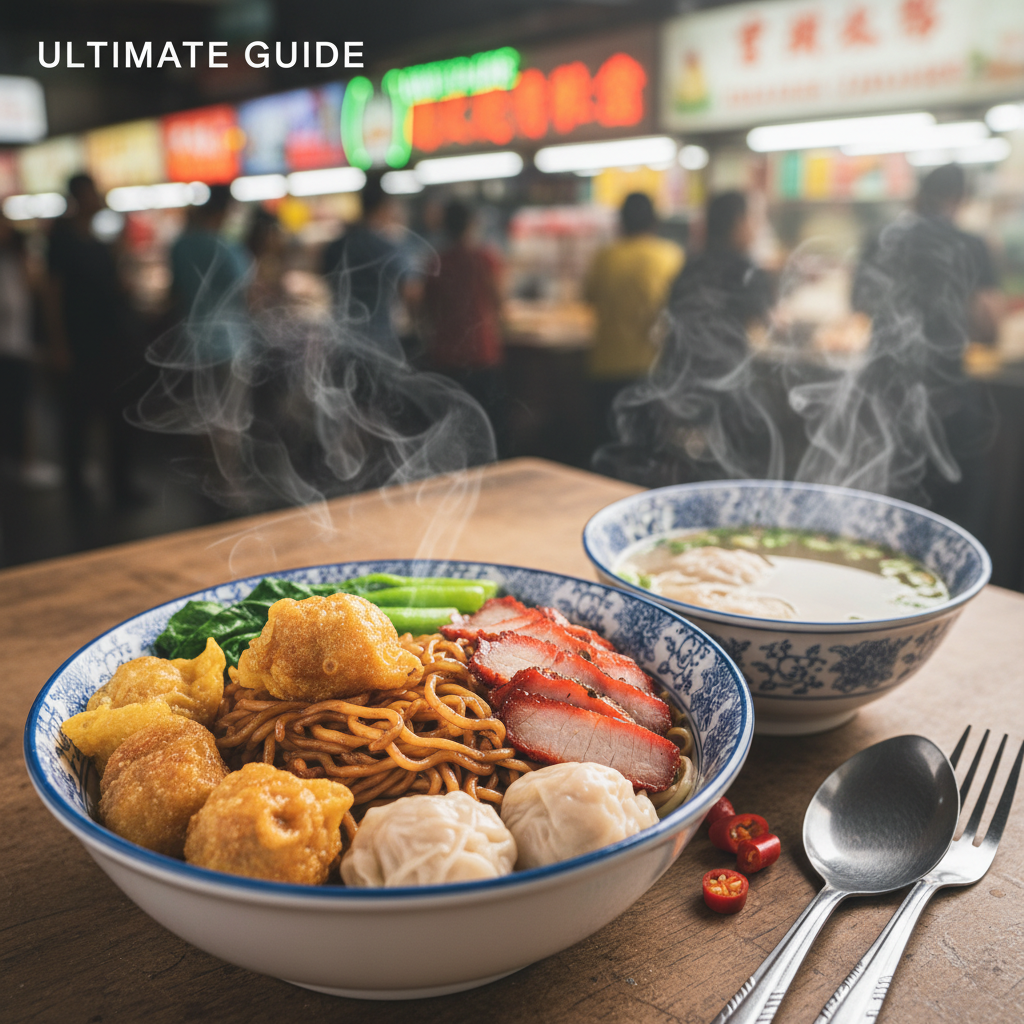
Ah, Wanton Mee. For many Singaporeans, it’s more than just a dish; it’s a culinary hug, a burst of flavour, and a testament to our vibrant hawker culture. From bustling hawker centres to air-conditioned food courts, this unassuming plate of springy noodles, succulent char siew, and delicate dumplings holds a special place in our hearts (and stomachs!).
As your resident Singapore food blogger, I'm thrilled to take you on a deep dive into the world of Wanton Mee. Whether you're a curious tourist, a new expat, or a seasoned local looking to refine your noodle-hunting skills, this ultimate guide will equip you with everything you need to know: its fascinating history, the anatomy of a perfect plate, where to find the absolute best, how to order like a pro, and insider tips to elevate your wanton mee experience. Prepare your tastebuds – we’re about to embark on a delicious journey!
A Taste of History: The Evolution of Singapore Wanton Mee
While its roots trace back to Guangdong, China, and famously evolved in Hong Kong, Wanton Mee has undergone a distinctive transformation in Singapore, creating a unique identity that sets it apart from its cousins across the Causeway and beyond.
Originally, Hong Kong style Wanton Mee is typically served in a light, savoury broth with thin, springy egg noodles and plump, shrimp-filled wantons. When the dish arrived on Singaporean shores with early migrants, it began to adapt to local palates and available ingredients. The most significant shift? The rise of the 'dry' version.
Singaporean Wanton Mee is predominantly served 'dry' – meaning the noodles are tossed in a glorious concoction of sauces, most notably a spicy chilli paste (often sambal-based), dark soy sauce, and sometimes a touch of sweet tomato sauce or a secret lard oil blend. This creates a more robust, piquant flavour profile compared to its soupy ancestors. The char siew (barbecued pork) also became a more prominent feature, often thinly sliced and glazed, providing a sweet and savoury counterpoint to the spicy noodles. While soup versions still exist, the dry chilli-tossed rendition is undeniably the Singaporean icon. This evolution showcases Singapore's knack for taking a classic and making it uniquely our own.
Key Components: What Makes a Perfect Plate?
Understanding the anatomy of Wanton Mee is key to appreciating its genius. Here’s what to look out for:
* **The Noodles:** The undisputed star! Singaporean Wanton Mee typically features thin, springy, and slightly chewy egg noodles (mee kia). Cooked al dente, they should have a satisfying bite and readily absorb the rich sauce.
* **The Sauce (Dry Version):** This is where the magic happens. A good dry Wanton Mee sauce is a complex blend, usually comprising: * **Chilli:** The fiery heart of many Singaporean versions. It can range from mildly piquant to explosively spicy, often a homemade sambal or chilli oil. You can usually request 'no chilli'. * **Dark Soy Sauce:** Provides depth, savouriness, and that characteristic dark hue. * **Lard Oil:** A controversial but highly beloved ingredient for its incredible aroma and richness (often optional or can be requested). * **Other Secret Ingredients:** Some stalls add a dash of sesame oil, oyster sauce, or a sweet-savoury concoction that's unique to their recipe.
* **The Char Siew:** Thinly sliced, glistening barbecued pork. Look for tender, flavourful slices with a good balance of lean meat and melt-in-your-mouth fat. Some stalls use traditional red-dyed char siew, while others offer a more natural, caramelised version.
* **The Wantons (Dumplings):** These delicate parcels are usually filled with seasoned minced pork. They are typically boiled and served alongside the noodles, either in the sauce or in the accompanying soup. Some stalls also offer **Fried Wantons** as an optional crispy add-on – highly recommended!
* **The Vegetables:** A garnish of blanched green vegetables, usually kailan (Chinese broccoli) or chye sim (mustard greens), provides a welcome crunch and a touch of freshness.
* **The Soup:** A small bowl of clear, savoury broth usually accompanies the dry Wanton Mee. It's perfect for sipping between bites or for moistening your noodles.
* **Shui Jiao (Optional):** Some stalls also offer larger, more elaborate dumplings called Shui Jiao, often containing prawns, water chestnuts, and minced pork, as an alternative or addition to wantons.
Where to Find the Best Wanton Mee in Singapore
Singapore is a treasure trove of Wanton Mee stalls, each with its unique charm and loyal following. Here are some of the most iconic and highly recommended spots to kickstart your noodle quest:
* **Kok Kee Wanton Mee (Lavender Food Square / Foch Road Coffee Shop):** A true heritage stall, known for its old-school, slightly sweet and savoury sauce with a hint of lard. Their springy noodles and traditional char siew evoke a sense of nostalgia. Prepare for a queue, but it's worth the wait for a taste of history. * *Location:* 30 Foch Rd, #01-04, Singapore 209276 (multiple stalls might use the name, ensure you find the original one at Foch Road Coffee Shop).
* **Eng's Wantan Noodle (Tanjong Katong Road / Multiple Outlets):** Famous (and somewhat controversial) for its incredibly fiery chilli, which packs a serious punch. If you love spice, this is your spot. Their noodles are famously springy, and the wantons are delicately made. * *Location:* 287 Tanjong Katong Rd, Singapore 437070 (and various other mall outlets like JEM, Northpoint).
* **Fei Fei Roasted Noodle (Joo Chiat Place):** A long-standing institution in the East, Fei Fei is known for its flavourful sauce and generous portions. They offer both wanton mee and roasted delights. It's a bustling spot, popular with the supper crowd. * *Location:* 72 Joo Chiat Pl, Singapore 427789.
* **Tiong Bahru Market Wanton Mee (Tiong Bahru Market):** This stall within the famous Tiong Bahru Market serves up a consistent, comforting plate that locals swear by. It’s a great example of a solid, neighbourhood favourite with balanced flavours. * *Location:* 30 Seng Poh Rd, #02-19 Tiong Bahru Market, Singapore 168898.
* **Dunman Wanton Mee (Dunman Food Centre):** Another East-side gem, this stall at Dunman Food Centre consistently draws crowds. Their noodles are well-tossed in a savoury sauce, and the char siew is tender. A reliable choice for a satisfying meal. * *Location:* 271 Onan Rd, #02-19 Dunman Food Centre, Singapore 424768.
* **Hon Kee Famous Wonton Noodle (Alexandra Village Food Centre):** A popular choice in the west, Hon Kee serves up a plate with good char siew and well-textured noodles. Their chilli is robust, and the soup is flavourful. * *Location:* Blk 120 Bukit Merah Lane 1, #01-07 Alexandra Village Food Centre, Singapore 150120.
*Remember, many excellent neighbourhood hawker centres across Singapore will also have fantastic local wanton mee stalls. Don't be afraid to explore!*
Ordering Tips & Etiquette: Navigate Like a Local
Ordering at a busy hawker stall can feel daunting, but with these tips, you'll be a pro in no time:
* **Queue Patiently:** Join the line! Cutting queues is a definite no-no in Singapore.
* **Know Your Order:** Have your order ready by the time you reach the front. The stallholders are efficient and appreciate quick decisions. * **Specify Size:** 'Small', 'medium', or 'large' are common options. * **Dry or Soup?** If not specified, most stalls will assume 'dry' for Wanton Mee, but it's good to confirm. * **Chilli or No Chilli?** This is crucial! If you can't handle spice, politely say 'no chilli' or 'less chilli'. If you love it, ask for 'more chilli' or 'extra chilli'! * **Add-ons:** Want extra char siew ('jia char siew') or fried wantons ('jia zha wonton')? Ask for it when ordering.
* **Payment:** Most hawker stalls primarily accept cash. Have small denominations ready (S$2, S$5, S$10 notes are ideal). Some may accept e-payment, but cash is king.
* **Find a Seat (Before or After):** At busy hawker centres, it's often a good idea to 'chope' (reserve) a table with a packet of tissues before ordering, especially during peak hours. If eating alone, you might order first and then look for a space.
* **Self-Service (Mostly):** You'll typically collect your order from the stall and bring it to your table.
* **Return Your Tray:** Tray return stations are increasingly common and encouraged across hawker centres and food courts. Please return your tray and clear your table after eating.
Price Expectations: A Delicious Bargain
One of the joys of hawker food in Singapore is its incredible affordability without compromising on flavour. Wanton Mee is no exception:
* **Hawker Centres:** Expect to pay between **S$3.50 to S$6.00** for a regular plate. A 'large' portion or added ingredients might go up to S$7.00 - S$8.00.
* **Food Courts:** Generally slightly higher than hawker centres, ranging from **S$5.00 to S$8.00**.
* **Standalone Eateries / Restaurants:** These can be pricier, sometimes S**$8.00 to S$12.00+**, especially if they offer premium ingredients or a more comfortable dining environment. However, the best value and most authentic experiences are often found in the hawker centres.
Common Mistakes to Avoid on Your Wanton Mee Quest
Don't let these common blunders dampen your wanton mee experience:
* **Underestimating the Chilli:** Singaporean chilli can be seriously potent. If you're sensitive to spice, always ask for 'no chilli' or 'less chilli' first, rather than regretting it later.
* **Not Mixing Your Noodles:** For the dry version, the sauce often pools at the bottom. Give your noodles a good toss to ensure every strand is coated in that glorious flavour.
* **Assuming All Wanton Mee is the Same:** Singapore, Malaysia, and Hong Kong all have distinct styles. Don't expect a carbon copy if you've tried it elsewhere. Embrace the local variation!
* **Ignoring the Fried Wantons:** While not part of the standard order, fried wantons are a fantastic, crispy accompaniment. Don't miss out on this textural delight!
* **Not Bringing Cash:** While some stalls have adopted e-payment, many hawker stalls still operate purely on cash. Always have some small notes on hand.
* **Coming at Peak Lunch/Dinner Times:** Expect long queues and potentially longer waiting times. If you're time-constrained, try to go during off-peak hours (mid-morning, late afternoon).
Insider Tips for the Savvy Noodle Hunter
Want to eat like a true local? Here are some seasoned tips to enhance your Wanton Mee adventure:
* **Ask for 'Lard Oil' (Zhu You):** If you're not calorie-conscious, some stalls will drizzle extra crispy pork lard bits and oil upon request. This adds an incredible depth of flavour and aroma. Heaven!
* **Observe the Queue:** A long queue is often (though not always) an indicator of good food. Singaporeans are willing to queue for quality.
* **Try the 'Soup' Version at Selected Stalls:** While dry is dominant, a few stalls excel at the soupy version. If you see one with a clear, fragrant broth and plump wantons, give it a go for a different experience.
* **BYO Tissues:** Always carry a packet of tissues. It's multi-purpose: for 'chopping' seats, wiping your mouth, or cleaning up any spills.
* **Pair with a Local Drink:** A glass of iced kopi (coffee with condensed milk) or teh (tea with condensed milk) is the perfect accompaniment to cut through the richness of the noodles.
* **Venture Beyond the Famous:** While the big names are great, some of the best wanton mee can be found in unassuming neighbourhood hawker centres. Don't be afraid to try a stall that looks popular with locals, even if it's not famous online.
* **Taste Test Multiple Stalls:** Every stall has its own unique recipe for the sauce, char siew, and wanton filling. The only way to find your ultimate favourite is to try several!
Frequently Asked Questions (FAQ)
* **Q: Is Singaporean Wanton Mee very spicy?** * A: The dry version typically comes with chilli, which can range from mild to very spicy. However, you can always request 'no chilli' ('bu yao la jiao') or 'less chilli' ('shao la jiao').
* **Q: What's the difference between Wanton Mee and Char Kway Teow?** * A: They are distinctly different noodle dishes. Wanton Mee uses thin egg noodles, usually with char siew and pork wantons. Char Kway Teow uses flat rice noodles and yellow noodles, stir-fried with prawns, cockles, lap cheong (Chinese sausage), and beansprouts in a dark soy sauce.
* **Q: Can I find a vegetarian version of Wanton Mee?** * A: Unfortunately, authentic Wanton Mee relies heavily on pork (char siew and wanton filling) and often pork lard. It is extremely rare to find a dedicated vegetarian version. You might find 'vegetarian noodles' at some stalls, but it won't be traditional Wanton Mee.
* **Q: What does 'wanton' mean?** * A: 'Wanton' is the English transliteration of 'wonton', a type of traditional Chinese dumpling. In Cantonese, 'wuntun' means 'swallowing clouds', referring to their delicate, cloud-like appearance when cooked.
* **Q: Is Wanton Mee a breakfast, lunch, or dinner dish?** * A: All of the above! Wanton Mee is a versatile dish enjoyed throughout the day – from a hearty breakfast to a satisfying lunch or dinner, and even as a late-night supper.
Conclusion: Your Wanton Mee Adventure Awaits!
From its humble beginnings to its current status as a national culinary icon, Wanton Mee truly embodies the spirit of Singapore's diverse food scene – a blend of tradition, innovation, and unwavering deliciousness. It’s a dish that tells a story with every springy bite, a testament to the dedication of generations of hawkers who have perfected their craft.
Now armed with this ultimate guide, you're ready to embark on your very own Wanton Mee adventure. Don't just eat; savour the experience, appreciate the history, and discover your personal favourite. Whether you chase the chilli heat, the aromatic lard oil, or the perfect balance of sweet and savoury, there's a plate of Wanton Mee in Singapore waiting to capture your heart. Happy slurping, foodies!