The Ultimate Guide to Laksa in Singapore: A Culinary Journey
Introduction: Your Passport to Laksa Paradise
Ah, Laksa! The mere mention sends a shiver of spicy, creamy delight down any true Singaporean food lover's spine. More than just a noodle soup, Laksa is a vibrant culinary tapestry, weaving together a rich history with an explosion of flavours that truly embodies the melting pot spirit of our island nation. As your trusted Singapore food blogger, I'm here to take you on a deep dive into this beloved dish. In this ultimate guide, you'll learn everything from its fascinating origins and distinct regional variations to where to find the absolute best bowls, how to order like a pro, and insider tips that even some locals might not know. Get ready to slurp your way through the ultimate Laksa experience!
A Taste of History: The Peranakan Roots of Laksa
Laksa's story is as rich and complex as its broth, deeply intertwined with the Peranakan (Straits Chinese) community – descendants of early Chinese migrants who settled in the Malay Archipelago and intermarried with local Malays. This beautiful fusion of cultures gave birth to Nyonya cuisine, and Laksa is one of its crown jewels.
The dish originated from the Hokkien and Cantonese communities and evolved with Malay influences, resulting in a coconut milk-based curry noodle soup that is uniquely Southeast Asian. The core ingredients – a fragrant paste (rempah) of galangal, turmeric, lemongrass, candlenuts, dried chillies, and belacan (shrimp paste), simmered with coconut milk and often a hint of dried shrimp – showcase this incredible blend of flavours. Over time, it developed various regional forms, but it's the Singaporean Katong Laksa and our broader 'Curry Laksa' that have truly captured the hearts (and stomachs!) of locals and visitors alike.
Unravelling the Varieties: Key Laksa Dishes to Savor
While 'Laksa' might seem like a singular term, Singapore offers a few distinct experiences. Here are the must-try variations:
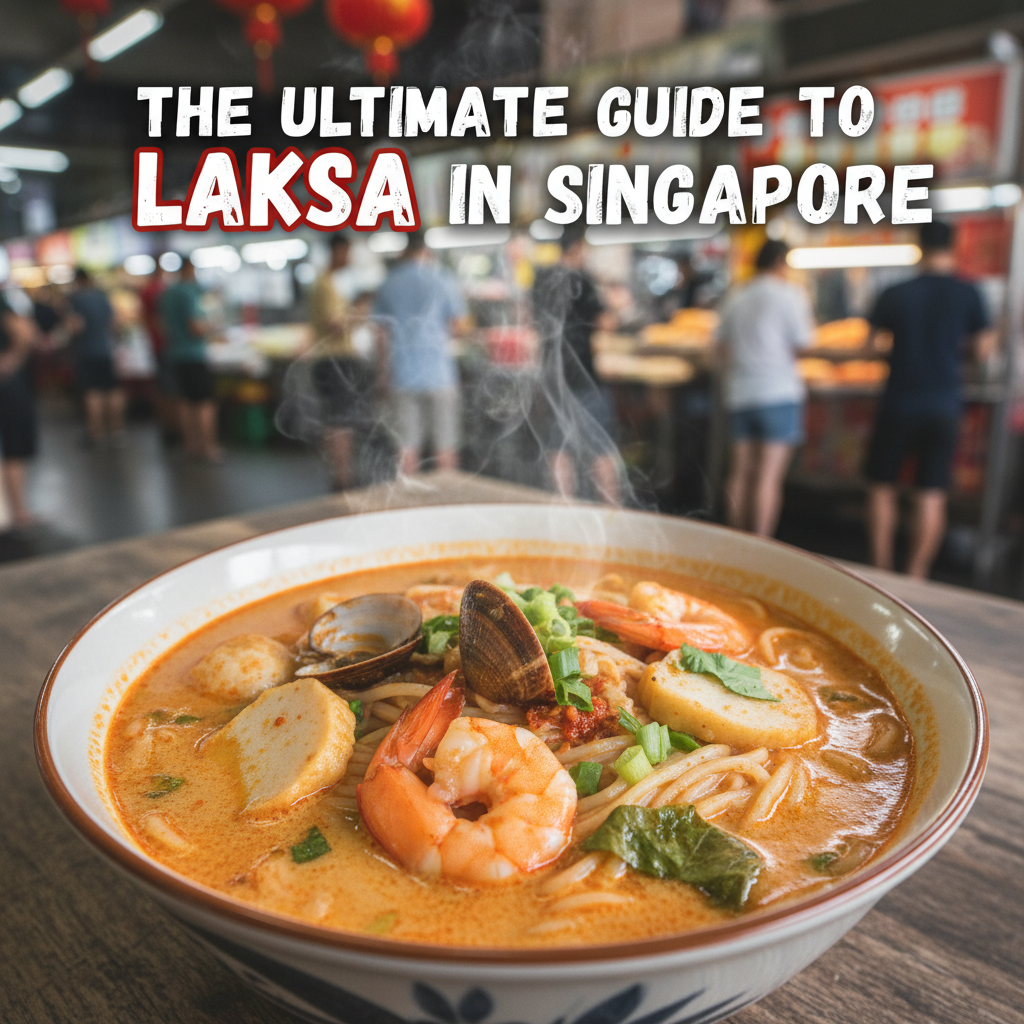
* **Katong Laksa:** This is arguably Singapore's most famous Laksa. Originating from the Katong area in the east, its signature feature is the **short vermicelli noodles**, cut into bite-sized pieces, allowing you to eat the entire dish with just a spoon. The broth is incredibly rich, thick, and intensely fragrant with coconut milk, dried shrimp, and a spicy kick. It typically comes with ingredients like cockles (hum), sliced fish cake, prawns, bean sprouts, and tau pok (fried beancurd puff), crowned with a dollop of sambal chilli.
* **Curry Laksa (or simply 'Laksa' outside Katong):** This is a broader category that you'll find across many hawker centres. While similar to Katong Laksa in its rich, coconut-based broth, Curry Laksa often uses a mix of thicker vermicelli and/or yellow noodles. The gravy can vary slightly in consistency and spice level from stall to stall, but it always delivers that comforting, aromatic punch. Common toppings include chicken, fish cake, tau pok, and sometimes a hard-boiled egg. Cockles are a popular addition, though not always standard.
* **Laksa Yong Tau Foo (A Delicious Detour):** While not a standalone Laksa dish, it's worth noting that some Yong Tau Foo stalls offer a 'Laksa broth' option. This allows you to choose your own Yong Tau Foo items (fish paste-stuffed tofu, vegetables, mushrooms) and have them served in a lighter, yet still flavourful, Laksa-inspired soup.
Where to Find Your Laksa Fix: Top Stalls & Locations
Ready to hunt down the best bowls? Here are some legendary and beloved spots:
* **For Katong Laksa:** * **328 Katong Laksa (Multiple Outlets, e.g., East Coast Road, Siglap Road):** Perhaps the most internationally recognised Katong Laksa, famous for beating Gordon Ramsay in a hawker challenge! Expect a robust, creamy broth and perfectly cut noodles. Can be touristy but consistently good. * **Janggut Laksa (Queensway Shopping Centre, Roxy Square):** Often claims to be 'The Original Katong Laksa' and offers a more old-school, slightly milder but deeply flavourful broth. A true classic for many locals. * **Roxy Laksa (East Coast Lagoon Food Village):** A hidden gem in a beachfront hawker centre, offering a delicious and authentic Katong Laksa experience with a refreshing sea breeze.
* **For Curry Laksa (General):** * **Sungei Road Laksa (Jalan Berseh Food Centre):** Famous for its unique charcoal-cooked broth, giving it a smoky depth. They don't include cockles, making it a distinct old-school experience. Cash only and prepare for a queue! * **Depot Road Zhen Shan Mei Claypot Laksa (Alexandra Village Food Centre):** Award-winning and served in a claypot, ensuring your Laksa stays piping hot throughout your meal. A wonderfully rich and spicy rendition. * **Tiong Bahru Laksa (Tiong Bahru Market):** A bustling hawker centre stall known for its well-balanced, aromatic Curry Laksa with generous toppings. * **Amoy Street Food Centre / Maxwell Food Centre:** Both these iconic hawker centres house several excellent stalls serving various versions of Curry Laksa. Explore and find your favourite!
Ordering Like a Local: Tips & Etiquette
Navigating a busy hawker centre can be daunting, but with these tips, you'll be ordering like a pro:
* **Join the Queue:** Singaporeans love a good queue because it usually signifies great food. Find the back and wait your turn patiently. * **Order Clearly:** When it's your turn, state your order clearly (e.g., 'Laksa, small/medium/large', 'add hum' for cockles). Most stalls understand English. * **Specify Spice Levels (If Available):** While most Laksa is medium spicy, some stalls might allow you to request less or more chilli (though the broth is often pre-made). * **Add-Ons:** Most stalls offer extra cockles (hum), prawns, or fish cake for a small additional charge. Just ask! ('Extra hum, please'). * **Cash is King (but e-payments growing):** Many hawker stalls still operate predominantly on cash, so have small notes (S$5, S$10) handy. Some newer stalls accept QR code payments. * **Find a Table First (Sometimes):** In very busy hawker centres, it's customary for one person to 'chope' (reserve) a table with a packet of tissues while another queues for food. If dining solo, just head to the stall and hope for a spot to open up. * **The Golden Rule for Katong Laksa: NO CHOPSTICKS!** I cannot stress this enough. Katong Laksa noodles are cut short specifically to be eaten with a spoon. Asking for chopsticks is a dead giveaway you're a newbie!
Price Expectations: What to Budget for Your Bowl
One of the joys of Singaporean hawker food is its affordability. Laksa is no exception:
* **Hawker Stalls:** A standard small bowl of Laksa at a hawker centre typically ranges from **S$4.00 to S$7.00**. Larger portions or bowls with extra ingredients might go up to S$8.00 - S$10.00. * **Food Courts/Cafes:** In air-conditioned food courts within shopping malls, prices might be slightly higher, usually between **S$7.00 to S$12.00**. * **Restaurant Versions:** Upscale restaurants or Peranakan eateries offering Laksa will naturally charge more, potentially from **S$15.00 upwards**. * **Add-ons:** Expect to pay an extra S$1.00 - S$3.00 for additional servings of cockles, prawns, or fish cake.
Common Mistakes to Avoid for a Perfect Laksa Experience
Don't let these common pitfalls spoil your Laksa adventure:
* **Asking for Chopsticks with Katong Laksa:** Seriously, don't do it! It's a spoon-only affair. * **Ignoring the Sambal:** That dollop of fiery red paste on the side isn't just for show. It's meant to be stirred into your broth, adding depth, heat, and another layer of flavour. Start with a little, then add more to taste. * **Skipping the Cockles (Hum):** Unless you have a genuine aversion, cockles are an integral part of the authentic Laksa experience, especially for Katong Laksa. Their briny sweetness complements the rich broth beautifully. * **Underestimating the Spice:** While not always scorching hot, the chilli in Laksa can build up. Have a refreshing drink on standby if you're sensitive to spice. * **Not Carrying Cash:** As mentioned, many hawker stalls are cash-only, and you don't want to be caught without it after a long queue!
Insider Tips from Your Food Blogger Friend
Time to level up your Laksa game with some pro advice:
* **Follow the Locals (and the Queues!):** If a stall has a long queue, especially with many local patrons, it's a good sign. Join it! It's usually worth the wait. * **Go Early for Popular Stalls:** Many famous Laksa stalls sell out by early afternoon, or even earlier on weekends. Get there for breakfast or a late lunch to avoid disappointment. * **Pair it Right:** A refreshing glass of 'Kopi O' (black coffee) or 'Teh O' (black tea) without sugar is a classic hawker accompaniment. For cooling down the spice, an iced Milo or fresh sugar cane juice hits the spot. * **Explore Beyond the Tourist Traps:** While the famous stalls are great, don't be afraid to try a less-known stall in a neighbourhood hawker centre. You might just discover a new favourite! * **Don't Be Afraid to Get Messy:** Laksa can be a bit splashy, especially if you're enthusiastically slurping. Embrace it! It's part of the fun.
FAQ: Your Laksa Questions Answered
Here are some common questions I get about Laksa:
* **Q: Can I find vegetarian Laksa?** A: Traditional Laksa relies heavily on dried shrimp and fish paste for its flavour base, making true vegetarian versions rare at hawker stalls. Some modern cafes might offer a plant-based Laksa, but it won't be the authentic taste.
* **Q: How spicy is Laksa usually?** A: Most Laksa in Singapore is medium spicy. The chilli is present but usually balanced by the coconut milk. You can always adjust the heat with the sambal provided.
* **Q: What exactly are 'hum'?** A: 'Hum' are cockles – small, bivalve shellfish. They are usually lightly blanched and add a unique, slightly briny flavour and soft texture that many Laksa lovers adore.
* **Q: Is Laksa considered healthy?** A: While delicious, Laksa is rich in coconut milk, making it a calorically dense dish. It's best enjoyed as an occasional treat rather than an everyday health food.
* **Q: Can I take Laksa away (dabao)?** A: Yes, almost all stalls offer takeaway options. They usually pack the noodles and broth separately to prevent the noodles from getting soggy.
* **Q: What's the difference between Laksa and Curry Mee?** A: While similar, Curry Mee is primarily a Malaysian dish, often featuring a slightly thinner, less rich coconut broth, and usually includes ingredients like chicken, char siu (BBQ pork), bean sprouts, and sometimes green beans, with a mix of yellow noodles and vermicelli. Laksa in Singapore typically refers to the richer, Peranakan-style coconut-based noodle soup.
Conclusion: Embrace the Laksa Legacy
There you have it – your ultimate guide to conquering the world of Laksa in Singapore! From its historical roots in Peranakan culture to the distinct flavours of Katong and Curry Laksa, and the best places to find them, you're now equipped with all the knowledge to embark on your own delicious journey. Laksa isn't just a dish; it's a piece of Singapore's soul, a comforting bowl that tells a story of heritage, migration, and culinary innovation.
So go forth, be brave, slurp away with gusto, and let your taste buds dance to the symphony of spices and coconut milk. Every bowl is an experience, a memory waiting to be made. Happy Laksa hunting, my fellow food adventurers!