🫓 Roti Prata vs 🍴 Naan: Singapore's Ultimate Food Showdown
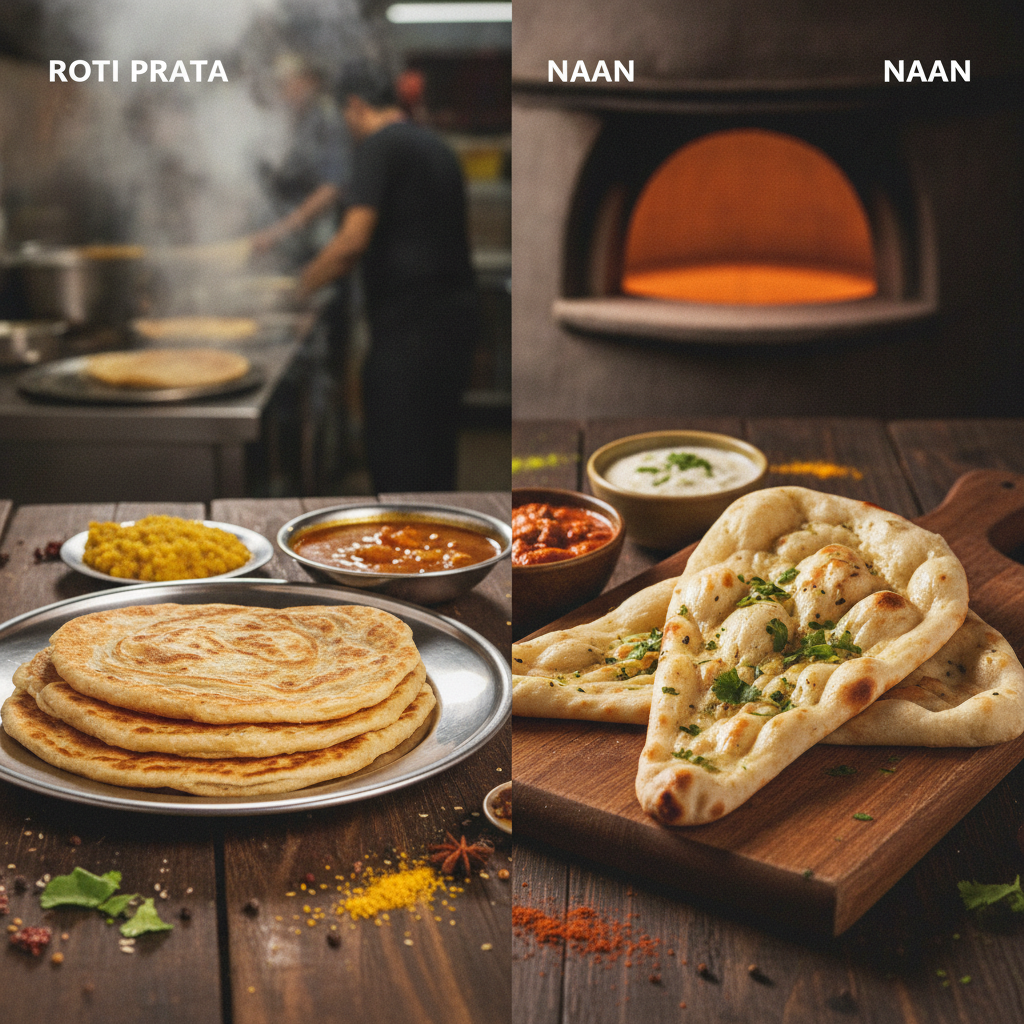
Aiyah, Singaporeans and our food, right? We love a good debate, especially when it involves two incredibly delicious contenders. Today, we're pitting two titans of the Indian culinary world against each other: the flaky, buttery champion, Roti Prata, and the fluffy, smoky sensation, Naan! Both are iconic, carb-loaded delights that pair perfectly with a myriad of curries and gravies, but they hail from different traditions and offer distinct dining experiences here on our sunny island. So, which one truly reigns supreme in the hearts (and stomachs!) of Singaporeans and visitors alike? Get ready for a delicious deep dive as we explore their histories, taste profiles, best haunts, and finally, declare a winner in this epic food battle. Don't say bojio, this is going to be a shiok one!
Team Prata: The Local Legend 🇸🇬
History and Origin in Singapore
Roti Prata, a local adaptation of the South Indian 'paratha', has been a breakfast and supper staple in Singapore for decades. Its origins trace back to Indian immigrants who brought their culinary traditions to our shores. Over time, it evolved to suit local tastes, becoming the crispy, chewy, and utterly addictive flatbread we know and love today. It’s more than just food; it’s a communal experience, often made by skilled 'prata men' who expertly flip and stretch the dough in a mesmerising dance.What Makes It Special
The magic of prata lies in its layers. Expertly pan-fried, it boasts a golden, crispy exterior that gives way to a soft, fluffy interior. It’s incredibly versatile – traditionally served with fish curry or dhal, but also famously eaten with a sprinkling of sugar for a sweet treat. Beyond the plain or egg versions, innovative stalls now offer cheese prata, mushroom prata, and even 'tissue prata' – a towering, paper-thin, crispy cone that's a spectacle to behold and even more fun to eat! It’s the ultimate comfort food, perfect for any time of day.Best Places to Eat It
When the prata craving hits, these are our die-die must-try spots:- Mr and Mrs Mohgan's Super Crispy Roti Prata: (300 Joo Chiat Rd, Singapore 427551) Known for their incredibly crispy prata and delicious curries. Expect a queue!
- Springleaf Prata Place: (57B Thong Soon Ave, Singapore 787440) Offers a wide range of creative pratas like the 'Murtabak Goreng' and 'Plaster Blaster', alongside excellent classic versions.
- Casuarina Curry: (136 Casuarina Rd, Singapore 599814 - Macpherson Road outlet also popular) A long-standing favourite for generations, consistent quality with a good variety of curries.
Price Range
A plain prata typically costs around SGD 1.20 - SGD 1.60. Egg prata goes for about SGD 1.80 - SGD 2.50, while specialty pratas can range from SGD 3.00 - SGD 6.00+.Taste Profile
Crispy, flaky, and slightly chewy with a hint of oiliness that's oh-so-satisfying. It has a mild, almost neutral flavour on its own, making it a perfect canvas for savoury curries or a sprinkle of sweet sugar. The aroma of freshly cooked prata is truly unmistakable and instantly brings a smile to any Singaporean's face – confirm plus chop!Team Naan: The Tandoor King 👑
History and Origin in Singapore
Naan, distinct from prata, hails from North India and Central Asia. It's a leavened flatbread traditionally baked in a tandoor, a cylindrical clay oven. While prata made its way to Singapore with South Indian communities, naan became prominent with the growth of North Indian cuisine, particularly in areas like Little India. It's often associated with more elaborate meals and special occasions, though its popularity means you can enjoy it anytime now.What Makes It Special
The tandoor oven is naan's secret weapon. The extreme heat creates characteristic smoky char marks and gives the bread its signature soft, chewy, and slightly elastic texture. Unlike prata's layers, naan is typically a single, fluffy disc. It's often brushed with butter or ghee and comes in delightful variations like garlic naan, butter naan, cheese naan, or keema (minced meat) naan, making it an incredibly versatile accompaniment to rich gravies, tandoori meats, and biryanis.Best Places to Eat It
For a truly authentic naan experience, head to these spots:- Bismillah Biryani: (50 Dunlop St, Singapore 209379) While famous for their biryani, their freshly made naan (especially garlic naan!) is excellent and complements their rich curries perfectly.
- The Banana Leaf Apolo: (54 Race Course Rd, Singapore 218564) A Little India institution, offering not just South Indian fare but also fantastic North Indian curries and a reliable naan selection.
- Tandoori Corner: (31 Changi Rd, Singapore 419736) A go-to for many when craving authentic North Indian flavours, their naan is always fresh from the tandoor.
Price Range
Naan typically costs more than prata, ranging from SGD 3.00 - SGD 6.00 per piece, depending on whether it's plain, garlic, butter, or cheese naan.Taste Profile
Soft, fluffy, and slightly chewy with a distinct smoky aroma and flavour from the tandoor oven. It often has a lovely elasticity and a richer, more substantial feel than prata. The various flavour infusions (garlic, butter, cheese) add layers of savoury deliciousness, making it a powerful vehicle for soaking up robust gravies. So sedap, you'll want more!⚔️ Head-to-Head: The Ultimate Showdown 🥊
Alright, the contenders have showcased their strengths! Now, let's put them side-by-side in a proper Singaporean comparison, lah.
Taste Comparison
This is where personal preference truly shines. Prata wins for its incredible crispiness and delicate layers, making it supremely satisfying for those who love textural contrast. Its lighter flavour also makes it more versatile for pairing with a wider range of accompaniments, even sweet ones. Naan, on the other hand, triumphs with its pillowy softness, chewiness, and that undeniable smoky char. It’s richer, more substantial, and often infused with powerful flavours like garlic or cheese, making it a perfect partner for heavy, aromatic North Indian curries. If you're after light and crispy, it's prata. If you crave fluffy and robust, it's naan.Value for Money
Generally, Prata is the more wallet-friendly option. You can grab a couple of plain pratas and a generous dollop of curry for under SGD 5, making it an everyday, affordable meal or snack. Naan, while delicious, comes with a slightly higher price tag per piece, reflecting the more specialised cooking method (tandoor oven) and restaurant setting where it's typically served. If budget is your main concern, prata gives you more bang for your buck.Availability
Prata is undeniably more ubiquitous across Singapore. From hawker centres and coffee shops to dedicated prata stalls, you'll find it almost everywhere, especially for breakfast or supper. It's deeply ingrained in our local food culture. Naan is primarily found in North Indian restaurants, which are plentiful in areas like Little India but less common in neighbourhood coffee shops. So, if you're out and about and suddenly crave flatbread, prata is much easier to locate.Tourist-Friendliness
Both are incredibly tourist-friendly, offering unique insights into Singapore's multicultural food scene. However, Prata edges out slightly here. It offers a quintessential hawker experience, allowing visitors to immerse themselves in local daily life. Watching the 'prata man' flip the dough is an attraction in itself! Naan, while delicious, usually involves a sit-down restaurant experience, which is also great but perhaps less 'street food' authentic than prata.🏆 The Verdict: Who Wins This Food Battle? 🏆
Winner: Roti Prata
Okay, this was tougher than choosing between chicken rice and laksa! Both Roti Prata and Naan are absolute legends in their own right, bringing unique flavours and textures to the table. But if I *had* to pick a winner for the 'Ultimate Singapore Food Showdown', my heart (and stomach, and sense of local pride) leans towards… ROTI PRATA! 🥳
Why? Because Prata embodies the spirit of Singapore's hawker culture: affordable, accessible, incredibly versatile, and deeply woven into our everyday lives. It’s the breakfast, supper, or even anytime snack that brings comfort and joy, whether you pair it with dhal, fish curry, or just good old sugar. The theatre of its preparation, its widespread availability, and its ingenious adaptations (hello, tissue prata!) make it a truly quintessential Singaporean food experience.
Don't get me wrong, Naan holds a special place too! For a rich, robust, and truly satisfying North Indian meal, Naan is king. Its smoky flavour and chewy texture are unparalleled. But for an everyday, accessible, and truly 'local' food battle champion, Prata takes the crown. It's just... *chef's kiss* perfection!
📍 Where to Try: Your Culinary Quest Begins! 📍
- Mr and Mrs Mohgan's Super Crispy Roti Prata
- Springleaf Prata Place
- Casuarina Curry
- Bismillah Biryani
- The Banana Leaf Apolo
- Tandoori Corner
❓ Frequently Asked Questions
🎯 Final Thoughts
So there you have it, folks! The delicious battle between Roti Prata and Naan has come to a close. While my heart might lean towards Prata for its local charm and ubiquity, both flatbreads offer incredible culinary journeys that showcase the rich tapestry of Indian cuisine in Singapore. Whether you're a fan of crispy layers or fluffy perfection, there's no losing when you get to indulge in either of these carb-tastic delights. Don't just take my word for it – go out there, try both, and decide your own winner! Which team are you on? Let us know in the comments below, and share your favourite prata or naan spots. Happy eating, always! #SingaporeFood #HawkerFood #RotiPrata #Naan #FoodShowdown #MustTrySG