🍚 Nasi Lemak vs 🍴 Nasi Biryani: Singapore's Ultimate Food Showdown!
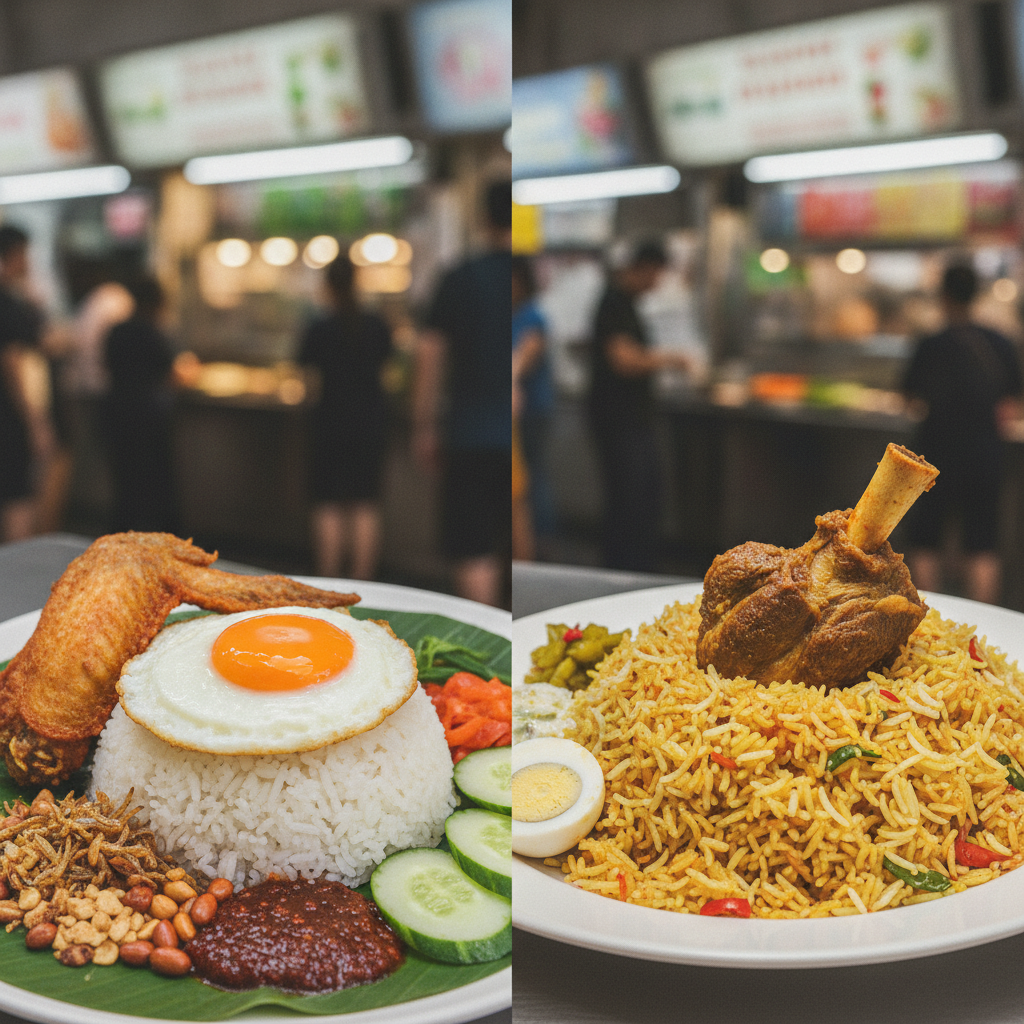
Singapore, oh Singapore! Our little red dot is a melting pot of cultures, and nowhere is this more evident than in our food scene. We've got so many incredible dishes, it’s hard to pick a favourite, right? But what if we pitted two giants against each other in a delicious culinary clash? Today, we’re strapping on our makan boots for a flavour-packed showdown: the humble, fragrant Nasi Lemak versus the majestic, aromatic Nasi Biryani! 🇸🇬 These two rice dishes, though distinct in their origins and flavour profiles, both hold a special place in the hearts (and stomachs!) of Singaporeans. One offers comfort and a subtle symphony of flavours, while the other promises a bold, spiced adventure. But which one truly reigns supreme? This isn't just about what tastes good; it's a battle of heritage, texture, spice, and that indescribable 'shiok' factor. Get ready, foodies, because this is going to be a tough call!
Team Nasi Lemak: The Fragrant Coconut Champion 🥥
Ah, Nasi Lemak! This iconic Malay dish is practically a national treasure. Its roots are firmly planted in Malay culture, traditionally served as a hearty breakfast, though Singaporeans now happily devour it at any time of day, sometimes even for supper! The magic begins with its star ingredient: rice cooked in rich, creamy coconut milk, infused with pandan leaves for an irresistible fragrance. This isn't just plain rice, lah – it's a flavour bomb on its own!
What makes Nasi Lemak truly special is the harmonious blend of its components. You've got the sweet and spicy sambal (the soul of the dish!), crispy fried ikan bilis (anchovies) and peanuts for that delightful crunch, a perfectly fried egg (usually runny yolk, *sedap*!), and cooling cucumber slices. Many stalls elevate it further with a choice of crispy fried chicken wing, fish, or even otah. It's a comforting, balanced plate that hits all the right notes – sweet, salty, spicy, and savoury.
**Where to taste the magic:** 1. **Chong Wen Nasi Lemak (Maxwell Food Centre):** Famous for its traditional style, generous portions, and a sambal with a real kick! 2. **Boon Lay Power Nasi Lemak (Boon Lay Place Market and Food Centre):** A supper institution in the West, queues are legendary for their flavourful rice and crispy chicken. 3. **The Coconut Club (Beach Road):** For a gourmet, elevated Nasi Lemak experience with premium ingredients and a price tag to match.
**Price Range:** From a super affordable SGD 3.50 (basic hawker stall) to SGD 15+ (gourmet restaurant version).
**Taste Profile:** Comforting, fragrant, subtly sweet from the coconut rice, contrasted beautifully by the fiery, tangy sambal. The crispy fried elements add texture, making every bite an exciting mix of soft, crunchy, and chewy.
Team Nasi Biryani: The Royal Aromatic Challenger 👑
Now, let's talk about Nasi Biryani! This regal dish hails from the Indian subcontinent, perfected and adapted by Singapore's vibrant Indian-Muslim community. Unlike Nasi Lemak's fragrant but plainer rice, Biryani's basmati rice is a spectacle in itself – long-grained, fluffy, and infused with an intoxicating blend of spices like cardamom, cinnamon, cloves, saffron, and star anise. It's often slow-cooked with tender, marinated meat (usually chicken or mutton) using the *dum* cooking method, sealing in all those glorious aromas and flavours.
What truly distinguishes Biryani is its profound depth of flavour. The rice isn't just cooked *with* spices; it's *part* of the spice blend, absorbing the richness of the meat and gravies. It's often served with a side of *dalcha* (a lentil and vegetable curry) and *achar* (pickled vegetables), which add a tangy counterpoint to the rich, savoury main dish. Every forkful is a journey through layers of aromatic spices and succulent meat. It's a truly satisfying and substantial meal that leaves you feeling full and utterly content.
**Where to taste the grandeur:** 1. **Allauddin's Briyani (Tekka Centre):** A legendary spot in Little India, known for its consistent, flavourful biryani and long queues that move surprisingly fast. 2. **Koothurar Nasi Briyani (Broadway Food Centre, Bukit Merah):** A hidden gem beloved by many for its moist, tender mutton and perfectly spiced rice. 3. **Islamic Restaurant (North Bridge Road):** A heritage establishment since 1921, offering classic, traditional biryani in a more formal setting.
**Price Range:** Typically SGD 6 to SGD 12 for a generous plate at a hawker centre or coffee shop.
**Taste Profile:** Rich, deeply aromatic, savoury, with a complex tapestry of warm spices. The meat is usually fall-off-the-bone tender, and the long-grain rice provides a satisfying texture. The accompanying dalcha and achar cut through the richness, offering a balanced dining experience.
⚔️ Head-to-Head: The Ultimate Showdown! 🥊
Let's put these two culinary titans side-by-side and see how they stack up!
* **Taste Comparison:** * **Nasi Lemak:** A symphony of contrasts. You get the subtle sweetness of coconut rice, the fiery kick of sambal, the crunch of nuts, and the savoury satisfaction of fried protein. It's bright, fresh, and incredibly addictive. It’s a dish you can eat every day and not get tired of. * **Nasi Biryani:** A deep, robust flavour profile. It's all about the aromatic spices permeating every grain of rice and the tender meat. It's hearty, luxurious, and undeniably complex. This is a dish for when you want something truly substantial and flavourful.
* **Value for Money:** * Both offer fantastic value, but Nasi Lemak can be the undisputed champion for budget-conscious eaters. A basic plate is often cheaper than a Biryani, making it an excellent everyday option. Biryani, while still affordable, typically comes with more expensive meat cuts and a larger portion, justifying its slightly higher price.
* **Availability:** * Nasi Lemak stalls are practically everywhere in Singapore, from hawker centres to coffee shops, and even fancy cafes. It's easily found for breakfast, lunch, or dinner. * Nasi Biryani is also widely available, especially in hawker centres, but less common as a breakfast item. You'll find it predominantly for lunch and dinner, with some famous stalls even selling out by early afternoon!
* **Tourist-Friendliness:** * **Nasi Lemak:** Arguably more 'approachable' for those new to Singaporean flavours. The components are familiar, and while the sambal can be spicy, it's generally a flavour that resonates well. It's often the first local dish tourists fall in love with. * **Nasi Biryani:** A fantastic experience for adventurous foodies and spice lovers. Its rich, complex flavours might be a bit strong for very mild palates, but it's an absolute must-try for anyone wanting to dive deep into Singapore's Indian-Muslim cuisine.
🏆 The Verdict: And the Winner Is... 🏆
Winner: Nasi Lemak (by a narrow margin for versatility)
This was tougher than choosing between buying another plate of char kway teow or laksa, *seriously*! Both Nasi Lemak and Nasi Biryani are absolute masterpieces of Singaporean cuisine, each offering a unique and deeply satisfying experience.
However, if I *had* to pick a winner for its sheer versatility, widespread appeal, and comforting familiarity that transcends all meal times, I’m leaning ever so slightly towards **Nasi Lemak**! 🥥 It's a chameleon – perfect for a quick, cheap breakfast, a satisfying lunch, or even a late-night supper. Its balance of textures and flavours, from the fragrant rice to the spicy sambal and crispy sides, makes it a consistently 'shiok' experience that appeals to almost everyone.
Nasi Biryani, on the other hand, is a majestic, celebratory dish. It's a meal that feels special, grand, and utterly soul-satisfying. It's probably the dish I'd crave when I want something truly rich and flavourful for a substantial meal. So, while Nasi Lemak wins by a hair for its everyday champion status, Nasi Biryani is undoubtedly the king of flavour and richness. Honestly, Singaporeans, why choose? Just eat both, lah!
📍 Where to Try These Culinary Gems! 👇
- Chong Wen Nasi Lemak
- Boon Lay Power Nasi Lemak
- The Coconut Club
- Allauddin's Briyani
- Koothurar Nasi Briyani
- Islamic Restaurant
❓ Frequently Asked Questions
🎯 Final Thoughts
And there you have it, folks! The delicious duel between Nasi Lemak and Nasi Biryani has come to an end, proving once again that Singapore's food scene is a treasure trove of incredible flavours. Both dishes, with their rich histories and mouth-watering appeal, stand tall as culinary icons. Whether you're craving the comforting embrace of coconut rice and spicy sambal, or the grand, aromatic adventure of spiced basmati and tender meat, Singapore has you covered. So, what are you waiting for? Head out and try them both, compare notes, and tell us in the comments – which dish wins YOUR ultimate food showdown? Share your favourite spots, too! Happy makan, everyone! 😋