🍚 Nasi Lemak vs 🍴 Nasi Biryani: Singapore's Ultimate Food Showdown
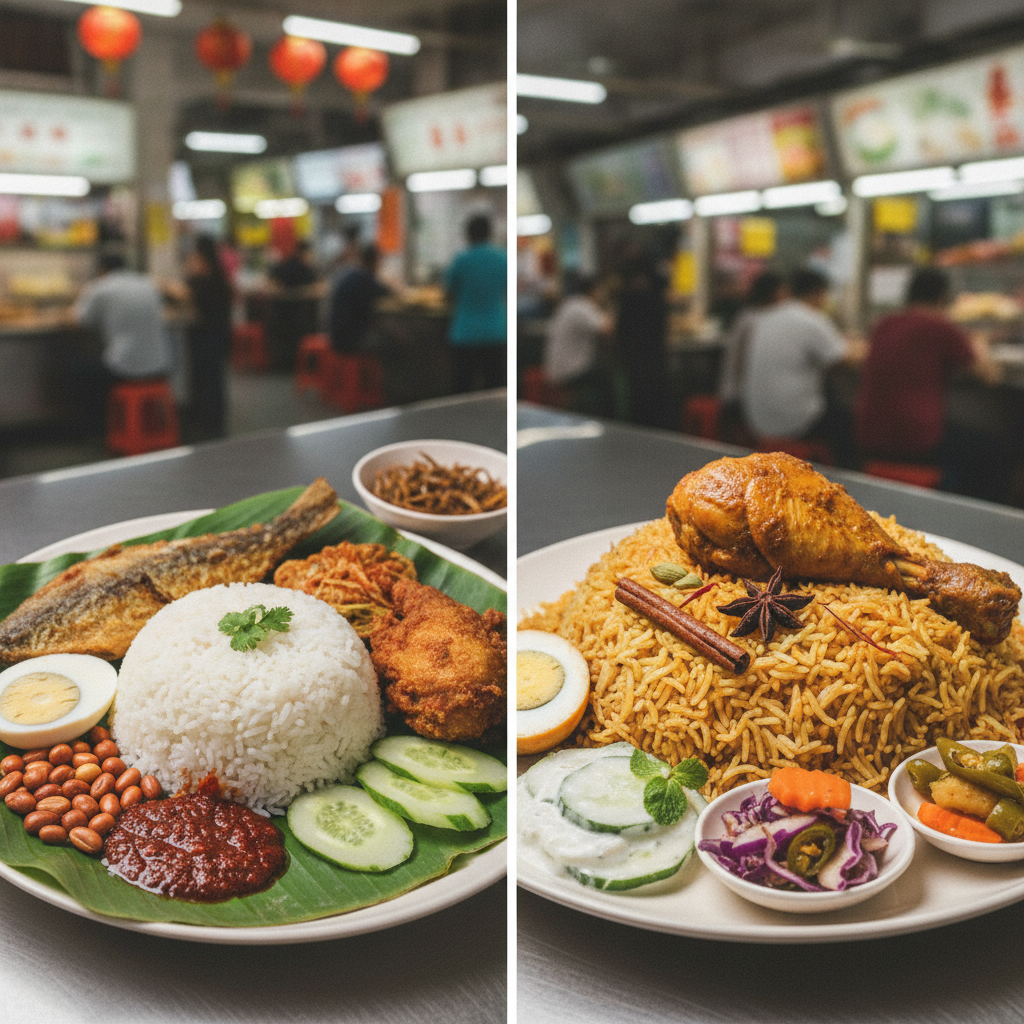
Eh, fellow foodies! If there’s one thing Singaporeans are passionate about, it’s our food. And when it comes to iconic rice dishes, two heavyweights consistently spark delightful debates: the creamy, comforting Nasi Lemak and the aromatic, spice-laden Nasi Biryani. Both boast legions of fans, rich histories, and flavours that transport you straight to culinary heaven. But what happens when we pit these titans against each other in a no-holds-barred food battle? 🤔 Today, we’re diving deep into the fragrant world of these two beloved dishes, exploring their origins, unique charms, and where to find the absolute best versions in our Lion City. Get ready for a delicious showdown – may the best rice win! Let's go, makan time!
Team Nasi Lemak: The Fragrant Coconut Dream
History and Origin in Singapore
Nasi Lemak, meaning 'fatty rice' (in a good way!), is a quintessential Malay dish with roots deep in Southeast Asian cuisine, particularly Malaysia and Singapore. Traditionally, it was a humble breakfast fare, wrapped in banana leaves, sold by hawkers early in the morning. Over time, it transcended its breakfast origins to become a beloved meal at any time of day, a true comfort food staple in our multicultural hawker centres.What Makes it Special
Oh, where to begin! The star, of course, is the rice itself – cooked with rich coconut milk and pandan leaves, giving it an intoxicating aroma and a subtly sweet, creamy flavour. But Nasi Lemak is more than just rice; it's a symphony of textures and tastes. The spicy-sweet sambal chili is non-negotiable, providing that fiery kick that Singaporeans crave. Add to that crispy ikan bilis (anchovies), roasted peanuts, a sunny-side-up egg, and slices of cucumber for freshness. Many stalls offer an array of delectable add-ons like fried chicken wing, otah, fish fillet, or even begedil (fried potato patty). It's a complete, satisfying meal, bursting with contrasting flavours that somehow just *work*.Best Places to Eat it in Singapore
1. **Punggol Nasi Lemak (Jalan Besar Branch):** Famous for its 'supper' hours, their perfectly crisp chicken wings and variety of add-ons are legendary. Expect queues, but it’s worth it for a plate of shiokness! 2. **Boon Lay Power Nasi Lemak (Boon Lay Place Market & Food Centre):** A true west-side icon! Their sambal strikes a fantastic balance of sweet and spicy, and their fried chicken is always juicy and flavourful. It’s sibei sedap! 3. **Chong Wen Ge Cafe (130 Telok Ayer Street):** For a more modern, café-style Nasi Lemak experience, this charming spot offers beautifully presented plates with gourmet toppings, perfect for a leisurely lunch.Price Range
Typically, a basic plate starts from **SGD 3.50 - 5.00**. With additional proteins like a chicken wing or fish, you can expect to pay anywhere from **SGD 6.00 - 8.50**.Taste Profile
Creamy, fragrant, spicy, sweet, salty, and crunchy. It’s a harmonious blend of rich coconut, the pungent kick of sambal, the savoury crunch of anchovies, and often the umami of fried proteins. Pure comfort food at its finest.Team Nasi Biryani: The Aromatic Spice King
History and Origin in Singapore
Nasi Biryani, or Biryani as it's more commonly known, hails from the Indian subcontinent, with Persian influences. Its journey to Singapore came with migrant communities, evolving into the vibrant Indian-Muslim and Malay versions we cherish today. Traditionally a celebratory dish, prepared for special occasions, Biryani is revered for its complex preparation and rich flavours, a testament to culinary artistry.What Makes it Special
What truly sets Biryani apart is its exquisite long-grain Basmati rice, cooked 'dum' style – meaning slow-cooked in a sealed pot with fragrant spices, saffron, ghee, and marinated meat (usually chicken or mutton). This method locks in all the incredible aromas and flavours. The result is tender, fall-off-the-bone meat, and rice that's incredibly fluffy, distinct, and infused with layers of warmth and spice. It's typically served with a rich curry gravy or dhal, and sometimes a side of achar (pickled vegetables) or raita (yogurt dip) to balance the richness.Best Places to Eat it in Singapore
1. **Allauddin's Briyani (Tekka Centre, #01-229):** A legendary spot in Little India, known for its consistent quality and generous portions. Their mutton biryani is a perennial favourite, offering tender meat and flavourful rice that keeps regulars coming back. 2. **Bismillah Biryani (50 Dunlop Street):** Often lauded as one of Singapore's best, Bismillah prides itself on authentic 'dum' biryani. Their rice is particularly fragrant and fluffy, and the meat is incredibly tender. A slightly pricier but highly recommended experience. 3. **Hajjah Mona Nasi Padang (Geylang Serai Market, #02-166):** While primarily a Nasi Padang stall, their Biryani offerings (especially on weekends) are fantastic, representing a Malay-style Biryani that's slightly different from the Indian-Muslim version, often with a more prominent sambal.Price Range
Given the ingredients and preparation, Biryani tends to be a bit pricier. A plate of chicken biryani typically costs **SGD 6.00 - 8.00**, while a mutton biryani can range from **SGD 8.00 - 12.00**.Taste Profile
Aromatic, deeply spiced, savoury, and incredibly rich. It’s a complex tapestry of flavours – warm spices like cardamom, cloves, cinnamon, and bay leaf, coupled with the tenderness of slow-cooked meat and the subtle sweetness of Basmati rice. It's a truly indulgent and satisfying meal.⚔️ Head-to-Head: Nasi Lemak vs Nasi Biryani
Taste Comparison
This is where it gets tough! Nasi Lemak offers a delightful dance of sweet, spicy, salty, and crunchy – a comfort food sensation that’s universally appealing. It’s direct, vibrant, and always hits the spot. Nasi Biryani, on the other hand, is a journey of complex, aromatic spices and deep, savoury richness. It's more nuanced, an experience to savour, with each grain of rice telling a story. If you love bold, straightforward flavours, Nasi Lemak might win your heart. If you're into intricate spice blends and a truly gourmet rice dish, Biryani is your champion.Value for Money
Generally, Nasi Lemak takes the lead here. Its base price is lower, making it a fantastic everyday meal option, easily customised to your budget. Biryani, with its premium ingredients and elaborate preparation, usually comes at a higher price point. While both offer excellent value for the deliciousness they provide, Nasi Lemak is arguably the more budget-friendly hawker staple.Availability
Nasi Lemak stalls are ubiquitous across Singapore, from hawker centres to coffee shops, and even some cafes. You can find it for breakfast, lunch, dinner, and even supper. Biryani is slightly less common and often concentrated in Indian-Muslim or Malay food stalls, primarily for lunch and dinner. While still widely available, Nasi Lemak definitely has the edge in sheer accessibility.Tourist-Friendliness
Both dishes are must-tries for any visitor to Singapore! Nasi Lemak might be a slightly easier entry point for those less accustomed to strong spices, offering a more familiar comfort food vibe. Its components are distinct and easy to identify. Biryani, while incredibly delicious, has a more complex flavour profile that might be a bolder step for some, though equally rewarding for adventurous eaters. Both showcase the incredible diversity of Singapore's culinary landscape, lah!🏆 The Verdict: And the Winner Is...
Winner: Nasi Lemak
This was a *sibei* tough fight, a true clash of titans! Both Nasi Lemak and Nasi Biryani are culinary masterpieces, each deserving of immense praise. However, in the spirit of this ultimate food showdown, I have to pick a winner based on its sheer iconic status, versatility, and undeniable comfort factor for Singaporeans from all walks of life.
My pick, by a *hair's breadth*, goes to **Nasi Lemak**! 🏆
Why? Because Nasi Lemak is more than just a dish; it's a cultural cornerstone, a symbol of Singapore's hawker heritage. It’s the ultimate chameleon, equally at home as a simple breakfast or a hearty dinner with all the fixings. Its harmonious blend of flavours and textures is instantly recognisable and deeply comforting. It’s the dish you can always count on for that satisfying, shiok feeling, any time, any day.
But let's be clear: Nasi Biryani is a king in its own right – a regal, aromatic, and deeply satisfying dish that offers an unparalleled flavour experience. It's the dish you crave for a special treat or when you want to truly indulge in complex, well-crafted spices. It’s a close second, showcasing the incredible depth of Indian and Malay culinary traditions in Singapore.
So really, the true winner is YOU, the eater, for getting to enjoy both these amazing dishes! 😉
📍 Where to Try: Your Makan Map!
- Punggol Nasi Lemak
- Boon Lay Power Nasi Lemak
- Chong Wen Ge Cafe
- Allauddin's Briyani
- Bismillah Biryani
- Hajjah Mona Nasi Padang (Geylang Serai Market)
❓ Frequently Asked Questions
🎯 Final Thoughts
There you have it, folks – a delicious, albeit tough, food battle between two of Singapore's most beloved rice dishes! Whether you pledge allegiance to the creamy comfort of Nasi Lemak or the aromatic grandeur of Nasi Biryani, one thing is certain: your taste buds are in for a treat. Both dishes are incredible culinary experiences that truly capture the heart and soul of Singapore's diverse food culture.
So, what are you waiting for? Go forth, explore, and embark on your own flavour adventure! Try these amazing dishes at the recommended spots, or discover your own hidden gems. Then, come back here and let me know in the comments: **Which team are YOU on? Nasi Lemak or Nasi Biryani? Share your favourite spots and why you think your pick reigns supreme!** Happy eating, and remember to always eat with your heart (and stomach!), lah! 😉