🍝 Char Kway Teow vs 🍜 Hokkien Mee: Singapore's Ultimate Food Showdown
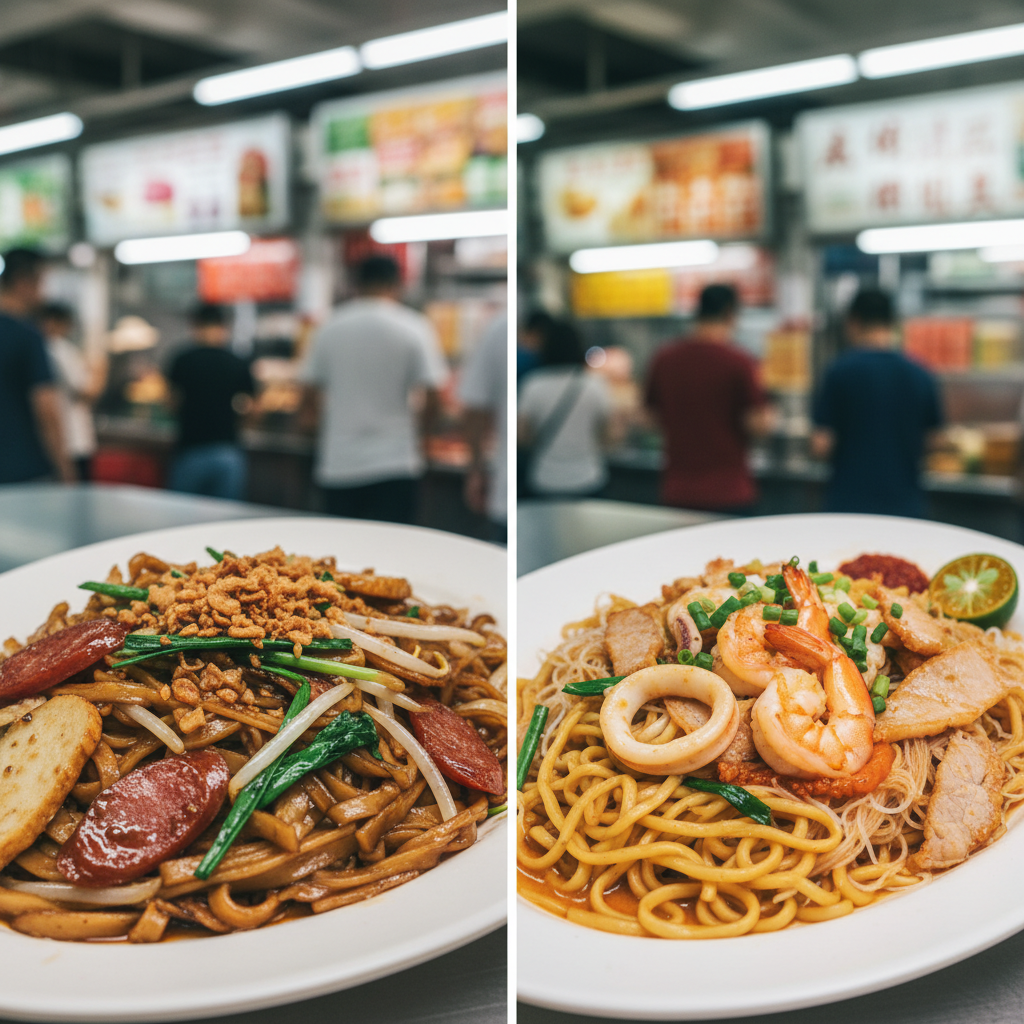
Alright, foodies! 🇸🇬 If there's one thing Singaporeans are passionate about, it's our hawker food. And when it comes to late-night cravings or a hearty lunch, two titans of the noodle world often duke it out for supremacy: the smoky, seductive Char Kway Teow and the flavour-packed, umami-laden Hokkien Mee. Both are stir-fried noodle dishes, yes, but oh, how different their personalities are! You might think it's an apples-to-apples comparison, but trust me, it's more like a fiery dragon versus a majestic phoenix. We're talking about dishes steeped in history, perfected by generations of hawkers, and beloved by locals and tourists alike. So, grab a drink, loosen your belt, and let's dive deep into this epic culinary battle to crown Singapore's ultimate fried noodle champion! Will it be the flat, dark noodles or the round, slurpy ones? Let the food fight begin!
Team Char Kway Teow: The Wok Hei Wizard 🧙♂️
History and Origin in Singapore
Char Kway Teow, meaning 'stir-fried ricecake strips' in Teochew, has humble beginnings. It was traditionally a high-calorie, cheap meal for labourers and fishermen, often sold by street vendors from pushcarts. It's a testament to Singapore's multicultural heritage, with its roots in Chinese diaspora cuisine, adapted and perfected with local ingredients and techniques over the decades. What started as a simple sustenance has evolved into a national culinary treasure, celebrated for its unique smoky flavour.What Makes It Special?
The magic of Char Kway Teow lies in one glorious phrase: 'wok hei' (鑊气). This 'breath of the wok' is the smoky, charred aroma infused into the noodles from high heat and expert stir-frying. Beyond the wok hei, it's the symphony of ingredients: flat rice noodles (kway teow) and yellow noodles, stir-fried with dark soy sauce, chilli, cockles (hum), Chinese sausage (lap cheong), bean sprouts, chives, and often, crispy cubes of pork lard. The balance of sweet, savoury, and spicy, coated in that incredible smoky essence, is what makes it utterly addictive. It’s rich, sinful, and absolutely sedap!Best Places to Eat It (Our Top 3 Picks)
1. Hill Street Char Kway Teow (Bedok South Market & Food Centre, #01-187): Renowned for its consistent wok hei and generous portions. Prepare for a queue! 2. No. 18 Zion Road Fried Kway Teow (Zion Riverside Food Centre, #01-17): A long-standing favourite, celebrated for its slightly wetter style and perfectly cooked cockles. 3. Outram Park Fried Kway Teow Mee (Hong Lim Market & Food Centre, #02-17): Often hailed as one of the best, with a darker sauce and deeply satisfying flavour profile.Price Range
Expect to pay around SGD 4.00 - SGD 8.00 for a plate, depending on the portion size and the stall's popularity. A small plate usually starts from $4-$5, while larger, more premium versions can go up to $7-$8.Taste Profile
Char Kway Teow delivers an intoxicating blend of smoky (wok hei!), savoury, and slightly sweet notes. The dark soy sauce gives it a caramelised depth, while the chilli adds a pleasant kick. The noodles are tender yet have a slight chew, beautifully coated in the sauce. The cockles provide a briny burst, and the lap cheong a hint of sweet-salty goodness. The lard, oh the glorious lard, adds an irresistible richness. It’s a flavour bomb – robust, greasy in the best possible way, and profoundly satisfying.Team Hokkien Mee: The Umami Overlord 👑
History and Origin in Singapore
Hokkien Mee, or 'fried prawn noodles,' in Singapore, has a distinct identity from its Malaysian counterpart. It's believed to have originated from post-war Fujian (Hokkien) immigrants in Singapore, who stir-fried leftover noodles with pork and prawn stock. The dish has since evolved, with the emphasis on a rich, flavourful prawn broth that coats the noodles, rather than a drier, darker soy sauce style.What Makes It Special?
The heart and soul of Singaporean Hokkien Mee is its incredibly rich, intensely umami prawn-and-pork broth. Yellow noodles and thick bee hoon (vermicelli) are simmered and stir-fried in this heavenly stock, allowing them to absorb all that flavour. Throw in fresh prawns, squid, strips of pork belly, eggs, bean sprouts, and often, a generous sprinkle of crispy pork lard croutons. Served with a dollop of fiery sambal belacan and a squeeze of lime, it’s a symphony of textures and tastes. The way the noodles soak up that broth is pure magic; every spoonful is a burst of savoury goodness. This isn't just fried noodles; it's a flavour journey!Best Places to Eat It (Our Top 3 Picks)
1. Geylang Lor 29 Hokkien Mee (399 Changi Rd): Famous for its wet, intensely flavourful rendition, cooked over charcoal for an extra smoky touch. A true institution! 2. Hainan Fried Hokkien Prawn Mee (Golden Mile Food Centre, #B1-34): Known for its generous portions of succulent seafood and perfectly balanced broth. Long queues are common. 3. Ah Hock Fried Hokkien Noodles (Chomp Chomp Food Centre, #01-27): A favourite supper spot, serving up a classic, slightly drier style with fantastic wok hei and crunchy pork lard.Price Range
A plate of Hokkien Mee typically ranges from SGD 5.00 - SGD 10.00. Prices tend to be slightly higher than Char Kway Teow due to the fresh seafood ingredients, especially large prawns or squid. Expect to pay $6-$8 for a decent portion, and up to $10 for a large or special order.Taste Profile
Hokkien Mee is all about that deep, complex umami from the prawn and pork stock. It’s savoury, often with a slight sweetness from the prawns, and gets a fantastic zing from the squeeze of lime. The sambal adds a fiery, pungent kick that cuts through the richness beautifully. The combination of yellow noodles and bee hoon gives a varied texture, some springy, some soft, all soaking up that incredible broth. It's a comforting, flavour-packed dish that leaves you craving more. It's truly shiok!⚔️ Head-to-Head: The Ultimate Noodle Knockout!
Taste Comparison
This is where personal preference truly kicks in! Char Kway Teow is the master of 'wok hei' – smoky, dark, sweet-savoury, and rich with lard and cockles. It’s a drier, more intense flavour hit. Hokkien Mee, on the other hand, is the king of umami broth, saucier, prawn-centric, and gets a tangy, spicy boost from lime and sambal. If you love a powerful smoky char, CKT is your go-to. If you prefer a comforting, flavour-soaked, seafood-rich broth, Hokkien Mee will win your heart.Value for Money
Both dishes offer incredible value for money, especially given the skill and fresh ingredients involved. Char Kway Teow typically ranges from $4-$8. Hokkien Mee, due to its seafood content, often starts from $5 and can go up to $10. While CKT might be *slightly* cheaper on average, both are incredibly affordable for a full meal and offer fantastic bang for your buck at any hawker centre. You're getting a culinary masterpiece for less than a fast-food combo!Availability
Both are widely available across Singapore's hawker centres and coffee shops. You'd be hard-pressed to find a major food centre without at least one stall selling either. However, good Char Kway Teow stalls with genuine wok hei might be slightly easier to stumble upon. For truly exceptional Hokkien Mee, you might need to seek out the more famous stalls, as the quality of the broth is paramount.Tourist-Friendliness
Both dishes are generally tourist-friendly. Char Kway Teow, being a drier dish, is less messy to eat. Some tourists might be put off by the cockles, but you can always request it without. Hokkien Mee, with its saucier consistency, might be a bit messier, but the flavour is universally appealing. The sambal can be adjusted for spice levels, and the fresh seafood is a big draw. Both offer an authentic taste of Singaporean hawker culture, but perhaps CKT has a slight edge in terms of initial approachability due to its less 'soupy' nature and familiar dark sauce appeal.🏆 The Verdict: Who Reigns Supreme? 🏆
Winner: Char Kway Teow
This was a sibei tough call, lah! Both Char Kway Teow and Hokkien Mee are undisputed champions of Singapore's hawker scene, each with its own loyal following and unique charms. However, if I absolutely *have* to pick a winner for this ultimate food showdown, my heart (and stomach!) leans ever so slightly towards... 🥁 **Char Kway Teow!**
Why? Because the elusive 'wok hei' of a perfectly executed Char Kway Teow is, to me, the quintessential taste of Singaporean street food mastery. That smoky, caramelised, greasy goodness is a flavour profile you simply won't find anywhere else in the world, achieved through pure skill and tradition. While Hokkien Mee offers a comforting, umami explosion, the unique magic of wok hei in Char Kway Teow edges it out as the slightly more iconic and uniquely Singaporean experience. It’s a dish that truly embodies the spirit of our hawker culture. But let's be clear: a fantastic plate of Hokkien Mee is equally capable of giving you goosebumps. In the end, it’s a win-win for anyone who gets to eat both!
📍 Where to Try These Legendary Noodle Dishes
- [object Object]
- [object Object]
- [object Object]
- [object Object]
❓ Frequently Asked Questions
🎯 Final Thoughts
So there you have it, folks – a deep dive into the magnificent world of Char Kway Teow and Hokkien Mee! While I've declared a 'winner' in this friendly food battle, the truth is, Singapore's culinary landscape is rich enough for both these noodle titans to coexist and thrive. Each offers a distinct, unforgettable experience that tells a story of our island's heritage and passion for food. The only way to truly understand is to try both for yourself! Which noodle dish captured your heart? Let me know in the comments below, and don't forget to share your favourite stalls. Now go forth, explore, and makan like a true Singaporean! 🤤