🍝 Char Kway Teow vs 🍜 Hokkien Mee: Singapore's Ultimate Food Showdown
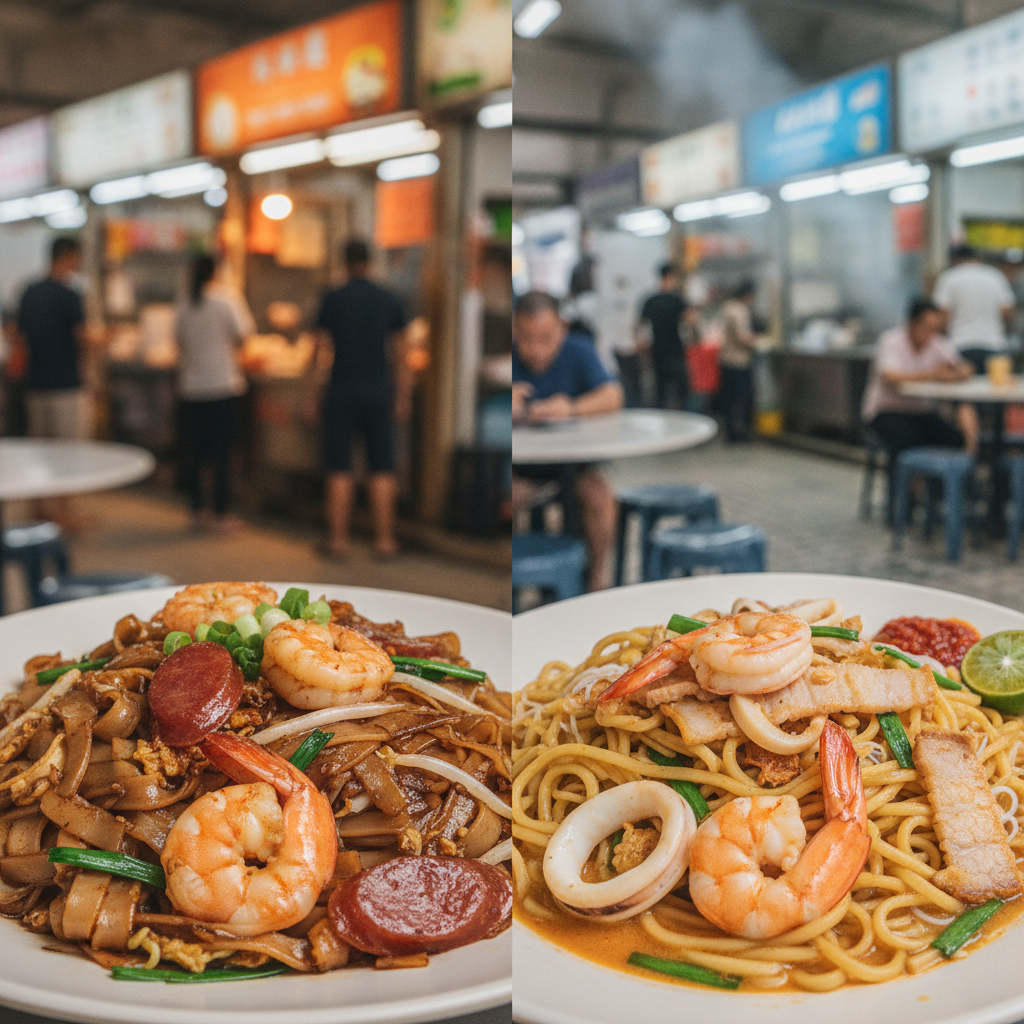
Aiyah, Singaporeans, you know the drill! You walk into a hawker centre, the air thick with tantalising aromas, and suddenly, you're faced with the ultimate dilemma: Which iconic noodle dish will conquer your cravings today? In our little red dot, where food is practically our national sport, two titans of the hawker world often spark the fiercest debates: the fiery Char Kway Teow and the flavour-packed Hokkien Mee. Both are legends, both boast legions of loyal fans, and both offer a unique taste of Singapore's culinary heritage. But which one truly reigns supreme? 🤔 Today, your expert makan kaki (food buddy) is diving deep into this delicious rivalry. We're breaking down everything – from their humble beginnings to their mouth-watering taste profiles, and, of course, where to find the best of the best. So, grab your chopsticks (or a fork, no judgment!), because we’re about to kick off Singapore’s most delicious food showdown!
The Fiery Champion: Char Kway Teow (CKT)
Ah, Char Kway Teow! The very mention of it conjures images of a master hawker vigorously frying flat rice noodles over a scorching hot wok, the 'wok hei' aroma filling the air. This Teochew-origin dish was once a humble, cheap meal for labourers and fishermen, made with leftover ingredients. But oh, how it has evolved into a beloved national treasure!
**What Makes it So Special?** It's all about that *wok hei* (breath of the wok) – the elusive smoky char imparted by high heat and skill. Flat rice noodles (kway teow) and yellow noodles are stir-fried with sweet dark soy sauce, crunchy bean sprouts, chives, lap cheong (Chinese sausage), eggs, and, crucially, blood cockles (hum) and crispy pork lard. The balance of savoury, sweet, and smoky, with the slight chewiness of the noodles and the burst of the cockles, is simply unbeatable. It's an art form!
**Best Places to Eat It:** 1. **Hill Street Char Kway Teow (Bedok South Market & Food Centre)**: Famous for its incredible wok hei and slightly wetter style. Be prepared for a queue! 2. **Outram Park Fried Kway Teow Mee (Hong Lim Market & Food Centre)**: Consistently ranked among the best, their version is rich, eggy, and super flavourful. Another long wait, but shiok lah! 3. **No. 18 Zion Road Fried Kway Teow (Zion Riverside Food Centre)**: A true classic, known for its generous portions and perfectly balanced flavour profile.
**Price Range:** Typically SGD 4.00 - SGD 8.00, depending on size and stall popularity.
**Taste Profile:** A symphony of smoky, savoury, and sweet, with a hint of spice (if you add chilli). Rich, slightly oily (in a good way!), with diverse textures from the noodles, cockles, and crispy lard. Pure indulgence!
The Brothy Brawler: Hokkien Mee
Stepping into the ring is Hokkien Mee, a dish that boasts a rich, umami broth as its very soul. Originating from Fujian province and adapted by Hokkien immigrants in Singapore, this dish was historically cooked by sailors on ships using leftover noodles and seafood. Today, it’s a hearty, flavourful staple that warms you from the inside out.
**What Makes it So Special?** Unlike CKT's dry, smoky char, Hokkien Mee's magic lies in its incredible prawn and pork bone broth. Yellow noodles and thick bee hoon (vermicelli) are wok-fried and then simmered in this intensely flavourful broth, absorbing all that goodness. It's served with succulent prawns, tender squid rings, slices of pork belly, eggs, bean sprouts, and chives. The secret weapon? A dollop of fiery sambal belacan and a squeeze of fresh lime to cut through the richness and add a zesty kick. Some prefer the 'wet' version, simmering in more broth, while others crave the 'dry' style, where the noodles have absorbed almost all the broth, intensifying the flavours.
**Best Places to Eat It:** 1. **Come Daily Fried Hokkien Prawn Mee (Blk 127 Toa Payoh Lorong 1)**: Known for its robust, flavourful broth and generous, fresh seafood. A truly sedap experience. 2. **Nam Sing Hokkien Fried Prawn Mee (Old Airport Road Food Centre)**: Famous for its drier, more 'fried' style, where every strand of noodle is coated in deliciousness. Expect a wait! 3. **Eng Ho Fried Hokkien Prawn Mee (Pasir Ris Central Hawker Centre)**: A newer generation stall upholding the tradition with great wok hei and a balanced flavour profile.
**Price Range:** Typically SGD 5.00 - SGD 10.00, often slightly higher due to the seafood content.
**Taste Profile:** Rich, deeply umami from the seafood broth, savoury, with a refreshing tang from the lime and a spicy punch from the sambal. The noodles are coated in flavour, with a satisfying slurp. Hearty and comforting.
⚔️ Head-to-Head: Let the Battle Commence!
Alright, makan kaki, it's time for the ultimate face-off! How do these two hawker heavyweights stack up against each other?
**Taste Comparison:** * **Char Kway Teow:** This is for the lovers of strong, smoky flavours. The wok hei is the star, delivering a distinct char that’s almost caramelised. It's sweet, savoury, and incredibly rich from the lard and dark soy. A textural playground with soft noodles, crunchy sprouts, and chewy cockles. * **Hokkien Mee:** If you're all about that intense, complex umami bomb, Hokkien Mee is your jam. The prawn broth is key, infusing every ingredient. It's savoury, briny, and can be wonderfully tangy and spicy with the lime and sambal. A more 'wet' and slurpable experience, often with a smoother mouthfeel. * **Winner for Taste?** This is incredibly subjective! CKT offers a unique smoky experience that's hard to replicate elsewhere, making it uniquely Singaporean. HM offers a profound depth of flavour from its broth. If I had to pick, the *unique character* of CKT's wok hei gives it a *slight* edge for sheer impact, but HM's broth is pure comfort.
**Value for Money:** * Both dishes offer excellent value for their generous portions and complex flavours. CKT can sometimes be found at a slightly lower entry price point (e.g., SGD 4-5) compared to HM, which often starts around SGD 5-6 due to the seafood. * **Winner for Value?** Char Kway Teow, by a narrow margin, for its consistently lower starting price.
**Availability:** * Both are ubiquitous at hawker centres across Singapore. You'd be hard-pressed to find a hawker centre without at least one stall offering either. CKT might have a *slight* edge in sheer number of stalls. * **Winner for Availability?** Tie! You won't struggle to find either delicious option.
**Tourist-Friendliness:** * **Char Kway Teow:** Generally very approachable. The flavours are bold but familiar, and the lack of a strong 'brothy' element might make it less daunting for some first-timers. The optional chilli means you can control the spice. * **Hokkien Mee:** Also highly recommended for tourists, but the strong seafood broth flavour and the need for sambal/lime might be a more acquired taste for some. It’s a bit more adventurous for those not used to intense seafood flavours. * **Winner for Tourist-Friendliness?** Char Kway Teow. It's a fantastic entry point into Singaporean hawker food.
🏆 The Verdict: Who Reigns Supreme?
Winner: Char Kway Teow (by a whisker)
This was a tough fight, folks, like deciding between your two favourite children! Both Char Kway Teow and Hokkien Mee are undisputed champions of Singapore’s hawker scene, each bringing unique strengths to the table.
However, if I *absolutely* had to pick a winner for its sheer, inimitable character and the addictive power of its unique smoky fragrance, my vote goes to the **Char Kway Teow**! That wok hei is just something else – a culinary signature that few dishes around the world can truly replicate. It’s a masterpiece of flavour, texture, and aroma all on one plate.
But let's be real, a true makan kaki knows that the *actual* winner depends on your mood, your craving, and perhaps even the weather. On a rainy day, a steaming plate of Hokkien Mee hits different! So, while CKT takes the crown today for its distinct personality, both are absolute must-tries for anyone wanting to experience the soul of Singaporean food. You cannot go wrong with either, seriously!
📍 Where to Try These Culinary Gladiators!
- [object Object]
- [object Object]
- [object Object]
- [object Object]
- [object Object]
- [object Object]
❓ Frequently Asked Questions
🎯 Final Thoughts
And there you have it, folks! The ultimate food battle between two of Singapore's most beloved noodle dishes has concluded. While Char Kway Teow might have edged out a win today for its unique wok hei, the truth is, you can’t go wrong with either of these hawker legends. They represent the heart and soul of Singapore’s culinary identity.
So, what are you waiting for? Head down to your nearest hawker centre, try both, and form your own delicious opinion! Will you be team CKT, or team Hokkien Mee? Let me know in the comments below – your makan kaki wants to hear from you! Happy eating, everyone! Don't forget to share your favourite stalls too, okay?