The Ultimate Guide to Singapore's Wanton Mee: A Culinary Deep Dive
Introduction: Your Passport to Wanton Mee Wonderland
Ah, Wanton Mee! A dish so deeply woven into the fabric of Singapore's hawker culture, it's practically a national treasure. More than just noodles and dumplings, it's a symphony of textures and flavours – spicy, savoury, sweet, and comforting all at once. Whether you're a seasoned local seeking new haunts or a curious traveller eager to taste authentic Singapore, this ultimate guide is your comprehensive companion. We'll peel back the layers of this beloved dish, from its humble origins to the bustling hawker stalls where it reigns supreme, ensuring you're well-equipped to embark on your own delicious Wanton Mee adventure.
A Taste of History: The Evolution of Wanton Mee in Singapore
Wanton Mee (or Wonton Mee, as it's sometimes spelt) traces its roots back to Guangdong, China, a classic Cantonese noodle dish. Traditionally, it features thin egg noodles, plump prawn-and-pork wontons, and often char siu (barbecued pork), served in a clear, flavourful broth.
When this culinary delight made its way to Singapore, it began a delicious transformation, evolving into its distinct local style. While the Hong Kong version remains predominantly soup-based, Singaporean Wanton Mee largely embraced the 'dry' style. Here, the noodles are tossed in a glorious, often fiery, dark sauce concoction, accompanied by a small bowl of clear soup on the side. This adaptation, heavily influenced by local palates and a love for chilli and richer flavours, cemented its status as a uniquely Singaporean hawker staple.
The Anatomy of a Perfect Plate: Key Dishes & Components
To truly appreciate Singapore's Wanton Mee, it's essential to understand its key players:
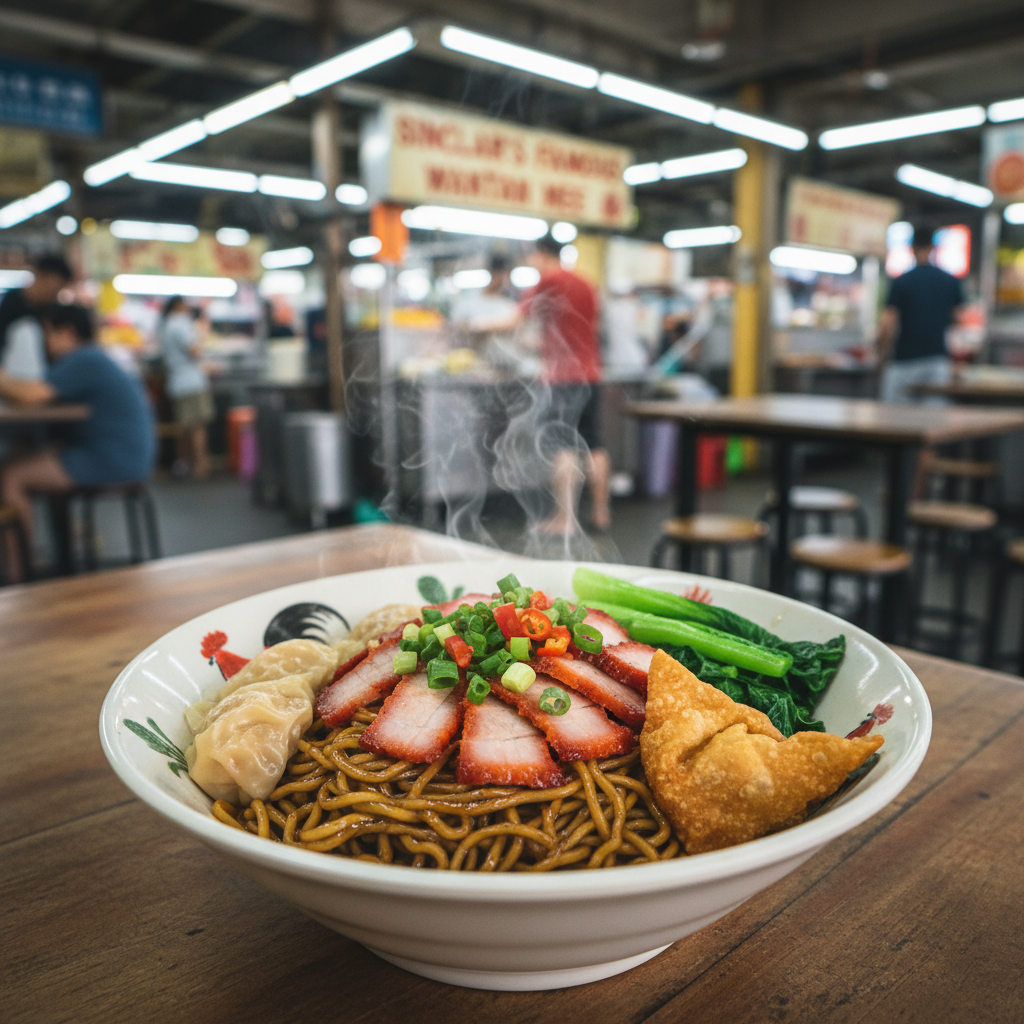
* **Dry Wanton Mee (干捞云吞面):** This is the quintessential Singaporean experience. The star is a plate of springy egg noodles, tossed vigorously in a concoction of dark soy sauce, chilli paste (ranging from mild to volcanic!), lard oil, and sometimes a touch of vinegar or sugar. It's a flavour bomb that's savoury, sweet, and spicy, creating an addictive coating for every strand of noodle. Served with a side of clear, usually pork-based, soup. * **Soup Wanton Mee (汤云吞面):** While less common in Singapore than its dry counterpart, you can still find this traditional style. Here, the noodles and wontons are submerged in a delicate, flavourful broth, offering a lighter, more comforting experience. Perfect for those who prefer subtler flavours or are nursing a cold. * **Char Siu (叉烧):** The slices of barbecued pork are critical. Good char siu should be tender, slightly caramelised, and have a good fat-to-lean ratio. The quality of the char siu can make or break a plate of Wanton Mee. * **Wantons (云吞):** These delicate dumplings are the dish's namesake. Singaporean wantons are typically filled with seasoned minced pork, sometimes with a touch of prawn. They are usually boiled and served in the accompanying soup, but many stalls offer **Fried Wantons (炸云吞)** as an irresistible crunchy side or topping. * **Noodles (面):** Thin, springy egg noodles (mee kia) are the standard. The perfect texture is al dente – firm with a satisfying bite, never soggy. * **Kai Lan (芥兰):** A few blanched stalks of Chinese kale add a touch of freshness and a much-needed green crunch to balance the richness.
Where to Find the Best: Our Top Hawker Haunts
Singapore is brimming with Wanton Mee stalls, each boasting its own unique twist. Here are some legendary and beloved spots you simply must try:
* **Kok Kee Wanton Mee (国记云吞面):** *30 Foch Rd, #01-04, Singapore 209276 (Lavender Food Square)* * **Why it's a must-try:** An old-school institution, Kok Kee is famous for its distinct dark, slightly sweet sauce and tender char siu. It offers a nostalgic taste of Singapore's past, less spicy than some modern versions, focusing on a robust, savoury depth. Expect queues, especially during peak hours, but it's worth the wait for this classic flavour. * **Eng's Wanton Noodle (荣记云吞面):** *287 Tanjong Katong Rd, Singapore 437070 (and various other outlets)* * **Why it's a must-try:** If you love your Wanton Mee with a fiery kick, Eng's is your pilgrimage. Their signature chilli sauce is legendary for its intense spiciness, which elevates the otherwise simple dish to exhilarating heights. They also do a decent char siu and generous portions of springy noodles. Be warned: the chilli is no joke! * **Fei Fei Roasted Noodle (肥肥烧腊面家):** *63 Joo Chiat Place, Singapore 427787* * **Why it's a must-try:** While their name suggests roasted noodles, their Wanton Mee is a standout. Fei Fei is renowned for its succulent, well-caramelised char siu and a sauce that's rich and flavourful without being overly sweet. It's a consistently good option for those seeking a balance of great char siu and perfectly cooked noodles in a vibrant chilli sauce. * **Koka Wanton Noodle (高佳云吞面):** *531A Upper Cross St, #01-94, Hong Lim Market & Food Centre, Singapore 051531* * **Why it's a must-try:** Tucked away in the bustling Hong Lim Market, Koka offers a more traditional, lighter style of dry Wanton Mee. Their sauce is less heavy on the dark soy, allowing the natural flavours of the springy noodles and delicate wantons to shine through. The char siu is lean but flavourful, and their soup is wonderfully clear and comforting. * **Ji Ji Wanton Noodle Specialist (基记面家):** *531A Upper Cross St, #02-104, Hong Lim Market & Food Centre, Singapore 051531* * **Why it's a must-try:** Also in Hong Lim but on the second floor, Ji Ji is famous for its long queues and variety. They offer different noodle types (mee kia, mee pok, hor fun) and excellent plump wantons. Their char siu is often lauded, and their sauce strikes a great balance, making it a crowd-pleaser. A fantastic option if you're looking for customisation.
Ordering Like a Pro: Tips & Etiquette
Navigating a hawker centre can be daunting, but ordering Wanton Mee is straightforward with these tips:
* **Choose Your Style:** Most stalls offer 'dry' (干捞 - gān lāo) or 'soup' (汤 - tāng). If unsure, go for dry for the quintessential Singaporean experience. * **Spice Level:** If you prefer spicy, ask for 'more chilli' (多辣 - duō là) or 'less chilli' (少辣 - shǎo là). If you can't handle spice, simply say 'no chilli' (不要辣 - bù yào là). * **Add-ons:** Many stalls allow you to add extra char siu (加叉烧 - jiā chā shāo) or fried wantons (加炸云吞 - jiā zhà yún tūn) for a small additional charge. Highly recommended! * **Queuing Etiquette:** Join the queue! It's an unspoken rule and a sign of good food. Don't try to cut. * **Table Reservations:** In hawker centres, locals often 'chope' (reserve) seats with tissue packets, umbrellas, or even employee passes. Respect these 'reservations' and look for an empty, un-chopped table.
Price Expectations: Wallet-Friendly Indulgence
Wanton Mee is incredibly affordable, making it a staple for all budgets.
* **Hawker Centres:** Expect to pay between SGD $4.00 and $6.00 for a standard plate. Adding extra ingredients might bring it up to $7.00-$8.00. * **Food Courts/Air-conditioned Eateries:** Prices might be slightly higher, ranging from SGD $6.00 to $9.00.
Common Mistakes to Avoid
Even seasoned foodies can stumble. Here's what to watch out for:
* **Underestimating the Chilli:** Singaporean chilli can pack a punch! Start with a moderate amount if you're not sure. * **Not Mixing Your Dry Noodles:** The magic of dry Wanton Mee lies in its sauce. Don't just eat the top layer; toss everything thoroughly to get that even, flavourful coating. * **Ignoring the Fried Wantons:** These crispy, savoury morsels are often an optional add-on, but they provide an amazing textural contrast to the soft noodles and boiled wantons. * **Expecting the Same as Hong Kong Style:** While both share a name, Singaporean dry Wanton Mee is a distinctly different beast. Embrace its unique qualities rather than comparing it directly to its HK cousin. * **Only Trying One Stall:** Every stall has its unique charm. Don't settle for the first one you try; explore a few to find your personal favourite.
Insider Tips from a Local Foodie
Elevate your Wanton Mee experience with these pro tips:
* **Follow the Queue (Wisely):** Long queues usually indicate good food, but observe if it's specifically for the Wanton Mee or another dish from the same stall. * **Ask for 'Lard Scraps':** If available and you're not calorie-counting, crispy fried pork lard (猪油渣 - zhū yóu zhā) adds an incredible depth of flavour and crunch. Some stalls offer it on request. * **Pair with a Drink:** A refreshing glass of iced Kopi-O (black coffee) or Teh-O (black tea) makes for a perfect hawker meal pairing. * **Observe Locals:** See how locals order and eat. It's often the best way to pick up on nuances and secret menu items. * **Be Adventurous with Chilli:** If you enjoy spice, gradually increase your chilli level on subsequent visits. You might discover a new favourite kick!
Frequently Asked Questions (FAQ)
### What's the main difference between Singaporean and Hong Kong Wanton Mee? Singaporean Wanton Mee is predominantly served dry, with noodles tossed in a savoury, often spicy dark sauce, accompanied by a side of soup. Hong Kong Wanton Mee is typically served in a clear, delicate broth, with the wontons submerged in the soup.
### Is Wanton Mee usually spicy? Singaporean dry Wanton Mee often comes with chilli paste, and the spice level can range from mild to extremely hot, depending on the stall. You can always request 'no chilli' or adjust the amount.
### Can I find vegetarian Wanton Mee? It's very rare. Traditional Wanton Mee heavily relies on pork (in the wantons and char siu) and often pork broth. Some vegetarian-specific stalls might offer a plant-based noodle dish, but it won't be traditional Wanton Mee.
### How do I know if a Wanton Mee stall is good? Look for queues, especially during lunch or dinner hours. Also, observe the char siu – good char siu is often glistening, well-caramelised, and looks tender.
### What are char siu? Char siu are slices of Cantonese-style barbecued pork. They are usually marinated in a mixture of honey, five-spice powder, red fermented bean curd, and soy sauce, then roasted until tender with a slightly charred, caramelised exterior.
Conclusion: Your Wanton Mee Journey Awaits!
From its Cantonese origins to its distinct Singaporean identity, Wanton Mee is more than just a dish; it's a testament to Singapore's vibrant culinary evolution and a beloved comfort food for millions. Armed with this guide, you're now ready to navigate the bustling hawker centres, decipher menus, and savour every strand of springy noodle and every tender wanton. So go forth, be adventurous, and discover your ultimate plate of Wanton Mee. Don't forget to share your favourite finds with us – the hunt for the next perfect bowl never truly ends!