The Ultimate Guide to Oyster Omelette (Orh Luak & Orh Jian) in Singapore
Introduction: Unlocking the Secrets of Singapore's Beloved Oyster Omelette
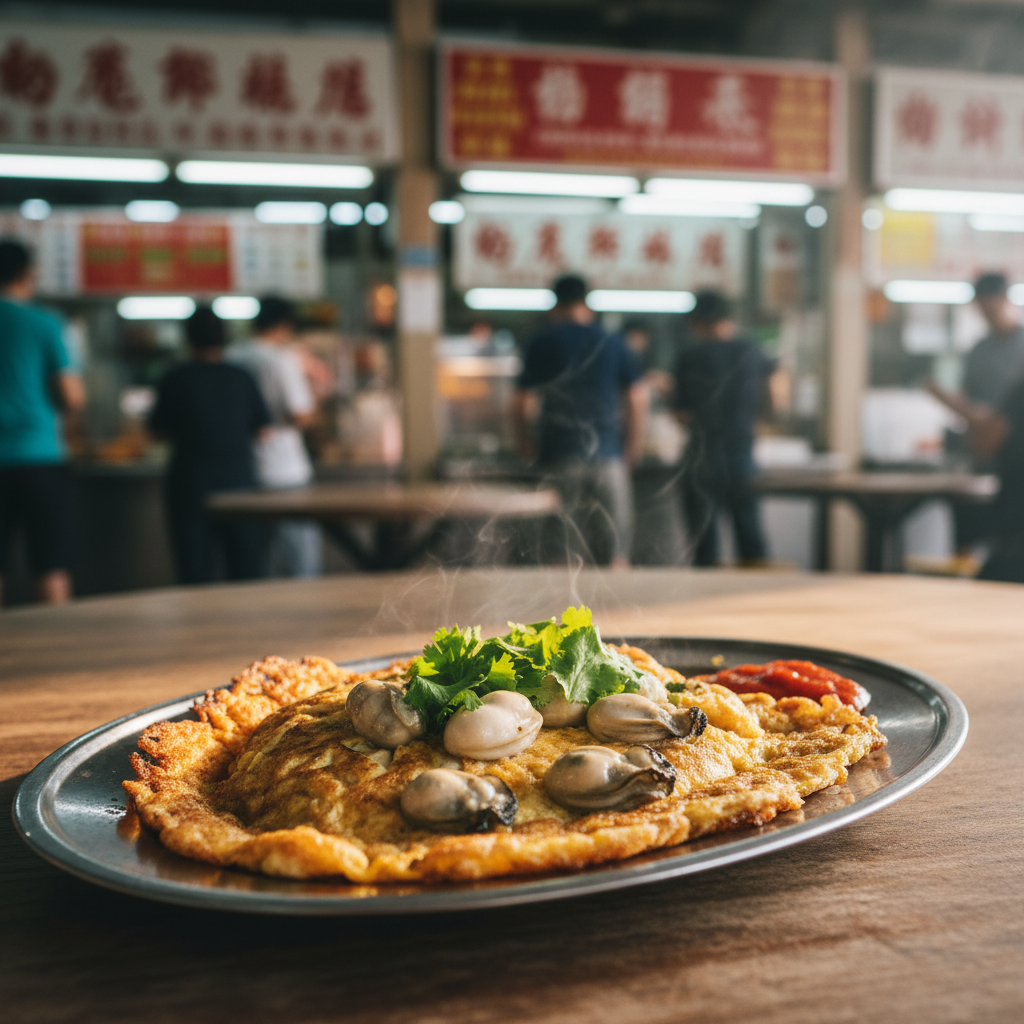
Ah, *orh luak* (or *orh jian*)! Just the mention of Singapore's iconic oyster omelette can send a true food lover into a blissful reverie. This humble hawker dish, a symphony of eggs, starch, and succulent oysters, holds a special place in the hearts of locals and dazzles visitors with its unique texture and flavour. But beneath its seemingly simple exterior lies a world of nuanced differences – from the crispy edges of a perfectly executed *orh luak* to the gooey, starchy embrace of a classic *orh jian*.
As your trusty Singapore food blogger, I'm here to guide you through every delicious facet of this culinary gem. In this ultimate guide, you'll learn its rich history, discover the best places to savour it, master the art of ordering, understand price expectations, avoid common pitfalls, and unlock insider tips to truly appreciate Singapore's oyster omelette like a seasoned local. Get ready to embark on a flavour journey that will redefine your appreciation for eggs and oysters!
A Taste of History: The Teochew Roots of Orh Luak
The origins of the oyster omelette, or *orh luak* (and its variant *orh jian*), can be traced back to the coastal regions of Chaoshan in Southern China, the ancestral home of the Teochew people. Faced with limited resources, resourceful cooks combined readily available ingredients like small oysters, eggs, and sweet potato starch to create a filling and flavourful dish.
As Teochew immigrants settled in Singapore and other parts of Southeast Asia, they brought their culinary traditions with them. The oyster omelette evolved over time, adapting to local ingredients and palates. In Singapore, it typically features fresh, plump oysters, eggs, a generous amount of potato or tapioca starch (which gives it its distinctive chewy texture), spring onions, and sometimes a dash of fish sauce, all fried together on a sizzling hot griddle or wok. The unique Singaporean chilli sauce, often a tangy, garlicky, and slightly spicy concoction, is an indispensable accompaniment, cutting through the richness of the omelette and elevating every bite.
Key Dishes & Variations to Savor: Orh Luak vs. Orh Jian
While often used interchangeably, 'orh luak' and 'orh jian' actually denote subtle but distinct styles of oyster omelette. Understanding the difference is key to ordering your perfect plate:
* **Orh Luak (Crispy Oyster Omelette):** This is perhaps the more popular style in Singapore. Characterized by its wonderfully crispy, charred edges and a firm, almost biscuit-like texture in parts, *orh luak* typically uses a higher proportion of starch and is fried until beautifully golden brown and crunchy. The oysters are often added towards the end to prevent overcooking, ensuring they remain plump and juicy, nestled amongst the crispy egg and starch mixture. The flavour is rich, savoury, with a delightful textural contrast.
* **Orh Jian (Gooey/Soft Oyster Omelette):** Less prevalent but equally delicious, *orh jian* leans towards a softer, more gelatinous, and gooey texture. It uses a higher ratio of egg and often a slightly different starch mixture, resulting in a dish that's less crispy and more uniformly soft and chewy. The oysters are often mixed more thoroughly into the batter. This style offers a more pronounced 'eggy' and 'oystery' flavour throughout the omelette, for those who prefer a less textural crunch.
* **The Chilli Sauce:** Regardless of your preference, the accompanying chilli sauce is non-negotiable! It's usually a bright red, tangy, garlicky chilli with a hint of vinegar. It provides a crucial acidic counterpoint to the richness of the omelette, elevating the entire dish. Don't skip it!
Where to Find the Best Oyster Omelettes in Singapore
Singapore is a hawker paradise, and great *orh luak* can be found in many corners. Here are some renowned spots and general tips for your oyster omelette hunt:
* **Newton Food Centre (500 Clemenceau Ave N, S229495):** * **Hup Kee Fried Oyster Omelette (Stall #01-73):** A legendary stall, often cited as one of the best. Expect consistently good, crispy *orh luak* with fresh oysters. Prepare for a queue, especially during peak hours.
* **Old Airport Road Food Centre (51 Old Airport Rd, S390051):** * **51 Fried Oyster (Stall #01-155):** Known for its generous portions and perfectly balanced flavour profile. A solid choice that many locals swear by.
* **Chomp Chomp Food Centre (20 Kensington Park Rd, S557269):** * **Ang Mo Kio 409 Fried Carrot Cake & Fried Kway Teow (Stall #30):** While known for other dishes, their *orh luak* is highly praised – a testament to the versatility of skilled hawkers.
* **Bedok 85 Fengshan Centre (Blk 85 Bedok North Street 4, S460085):** * Look for stalls specializing in fried oyster omelette. This supper spot is a treasure trove of good food, and you're bound to find a tasty rendition here.
* **Amoy Street Food Centre (7 Maxwell Rd, S069118):** * Often features stalls with a strong following for their fried oyster dishes. Explore the ground floor for potential gems.
* **Hong Lim Food Centre (531A Upper Cross St, S051531):** * Another hawker institution where quality is generally high across the board. Keep an eye out for stalls with long queues or 'Best Fried Oyster' signs.
**General Tip:** Don't be afraid to venture into lesser-known hawker centres or even coffee shops (kopitiams). Many neighbourhood stalls serve up incredible *orh luak* that rivals the famous ones.
Ordering Tips & Hawker Etiquette for a Smooth Experience
Navigating a bustling hawker centre can be an art form. Here’s how to order your oyster omelette like a pro:
1. **Chope Your Table First:** Before joining any queue, use a pack of tissue paper, a name card, or an umbrella to 'chope' (reserve) a table. This is standard hawker etiquette.
2. **Specify Your Preference:** Don't just say 'oyster omelette'. Be precise: * "*Orh luak*, please!" (for crispy) * "*Orh jian*, please!" (for gooey)
3. **Indicate Size/Price:** Most stalls offer small, medium, and large portions, or prices like $5, $8, $10, etc. "$8 *orh luak*!" is a common way to order.
4. **Chilli or No Chilli:** Unless you specifically say "no chilli" (不要辣 - *bù yào là*), your omelette will come with a dollop of that glorious chilli sauce on the side. If you want more, you can ask for "extra chilli" (加多辣 - *jiā duō là*).
5. **Be Ready to Pay:** Hawkers operate on speed. Have your cash (small denominations preferred) ready when you reach the front of the queue.
6. **Listen for Your Order:** Many stalls will call out your table number or a description of your order. Be attentive, especially if it's busy.
7. **Self-Collection:** Unless you're in a more modern food court with tray return systems, you'll generally collect your food from the stall and return your trays/plates to a designated collection point after eating.
Price Expectations: What Your Oyster Omelette Will Cost
Oyster omelette remains a relatively affordable hawker delight, offering fantastic value for its fresh ingredients and skilled preparation.
* **Small Portion:** Expect to pay around **$5 - $7**. * **Medium Portion:** Typically ranges from **$8 - $12**. * **Large Portion:** Can go up to **$15 - $20**, especially if it features a generous amount of premium oysters.
Prices can vary slightly between stalls and depending on the size and quality of the oysters used. Some stalls might offer an 'extra oysters' option for an additional charge. Remember, these are cash-only transactions at most traditional hawker stalls, though cashless options (PayLah!, PayNow) are becoming more common.
Common Mistakes to Avoid When Eating Orh Luak
To ensure your oyster omelette experience is top-notch, steer clear of these common missteps:
1. **Not Specifying Your Preference:** The biggest mistake! If you don't say *orh luak* or *orh jian*, you'll get the stall's default, which might not be what you crave.
2. **Ignoring the Chilli Sauce:** The chilli is an integral part of the experience. It adds zest, cuts through richness, and completes the flavour profile. Don't push it aside! (Unless you genuinely dislike spice, of course).
3. **Letting It Get Cold:** Oyster omelette is best enjoyed piping hot, straight from the wok. The crispy edges soften, and the gooey parts firm up if left to cool too long. Eat it immediately!
4. **Not Trying Different Stalls:** While you might find a favourite, half the fun of hawker food is discovering new interpretations. Don't limit yourself to just one stall.
5. **Expecting a Fine Dining Meal:** This is glorious street food. Embrace the casual, bustling hawker environment, plastic plates, and simple seating. It's part of the charm.
6. **Being Impatient:** Good food takes time. Be patient with the hawkers, especially during peak hours. Your delicious plate is worth the wait.
Insider Tips for the Ultimate Orh Luak Experience
Want to elevate your oyster omelette game? Here are some secrets from a seasoned food blogger:
1. **Look for High Turnover:** Stalls with a constant queue usually mean fresh ingredients, especially the perishable oysters, and a consistently good product. This is a reliable indicator of quality.
2. **Observe the Wok Skills:** A skilled *orh luak* hawker is a master of their wok. Watch for quick, confident movements, even distribution of ingredients, and precise temperature control. It's a culinary dance!
3. **Fresh Oysters are King:** A truly great oyster omelette boasts plump, sweet, fresh oysters. If they taste 'off' or too small and shrivelled, it detracts from the dish. Some premium stalls even use larger, more succulent oysters.
4. **Pair with a Cooling Drink:** The richness of the omelette and the tang of the chilli are perfectly complemented by a refreshing cold drink. Think ice-cold sugarcane juice, *kopi-o-peng* (iced black coffee), or a simple lime juice.
5. **Go During Off-Peak Hours (Sometimes):** While queues often indicate quality, visiting during slightly off-peak times (e.g., late afternoon, or early dinner before the main rush) might mean a shorter wait and possibly a fresher, more lovingly prepared batch from a less stressed hawker.
6. **Ask for Extra 'Crispy Bits' (If Available):** Some stalls are generous with the extra crispy egg-starch bits that form at the edges of the wok. If you love crunch, you can try asking for 'more crispy' (多点脆 - *duō diǎn cuì*) – but be polite and don't be disappointed if it's not possible.
Frequently Asked Questions (FAQs) About Oyster Omelette
**Q1: What's the main difference between *orh luak* and *orh jian*?** **A:** *Orh luak* is known for its crispy, charred edges and a firmer texture due to more starch and intense frying. *Orh jian* is softer, gummier, and more uniformly gooey, often with the oysters mixed more into the batter.
**Q2: Is oyster omelette spicy?** **A:** The omelette itself is not spicy. The spiciness comes entirely from the accompanying chilli sauce, which is usually served on the side. You can control the level of spice by how much chilli you add, or by asking for 'no chilli'.
**Q3: Can I find a vegetarian version of oyster omelette?** **A:** Unfortunately, a vegetarian version is highly unlikely as the oysters are the star ingredient. The dish is fundamentally seafood-based.
**Q4: Is it considered a main meal or a side dish/snack?** **A:** It can be both! A small plate is a fantastic snack or a dish to share among friends. A larger plate can easily serve as a satisfying main meal, especially for supper.
**Q5: What kind of oysters are typically used?** **A:** Typically, small to medium-sized fresh oysters are used. They are prized for their briny sweetness and tender texture. The quality and freshness of the oysters are paramount to a good *orh luak*.
**Q6: What other ingredients are in an oyster omelette?** **A:** Besides oysters, eggs, and starch (usually sweet potato or tapioca starch), common ingredients include spring onions, garlic, and sometimes a dash of fish sauce for umami. The specific batter and seasoning can vary slightly between stalls.
Conclusion: Your Oyster Omelette Adventure Awaits!
From its humble Teochew origins to its status as a quintessential Singaporean hawker delight, the oyster omelette, whether you call it *orh luak* or *orh jian*, is a dish that truly captures the heart of local cuisine. It's a testament to simple ingredients transformed by skilled hands into something utterly extraordinary.
Now armed with this ultimate guide, you're no longer just a diner – you're an informed explorer, ready to navigate the bustling hawker centres, differentiate between crispy and gooey, and savour every single, briny, eggy, starchy, chilli-kissed bite. So, go forth, queue up, and immerse yourself in the delicious world of Singapore's oyster omelette. Your ultimate plate of *orh luak* is waiting for you!