The Ultimate Guide to Kaya Toast in Singapore: A Complete Culinary Journey
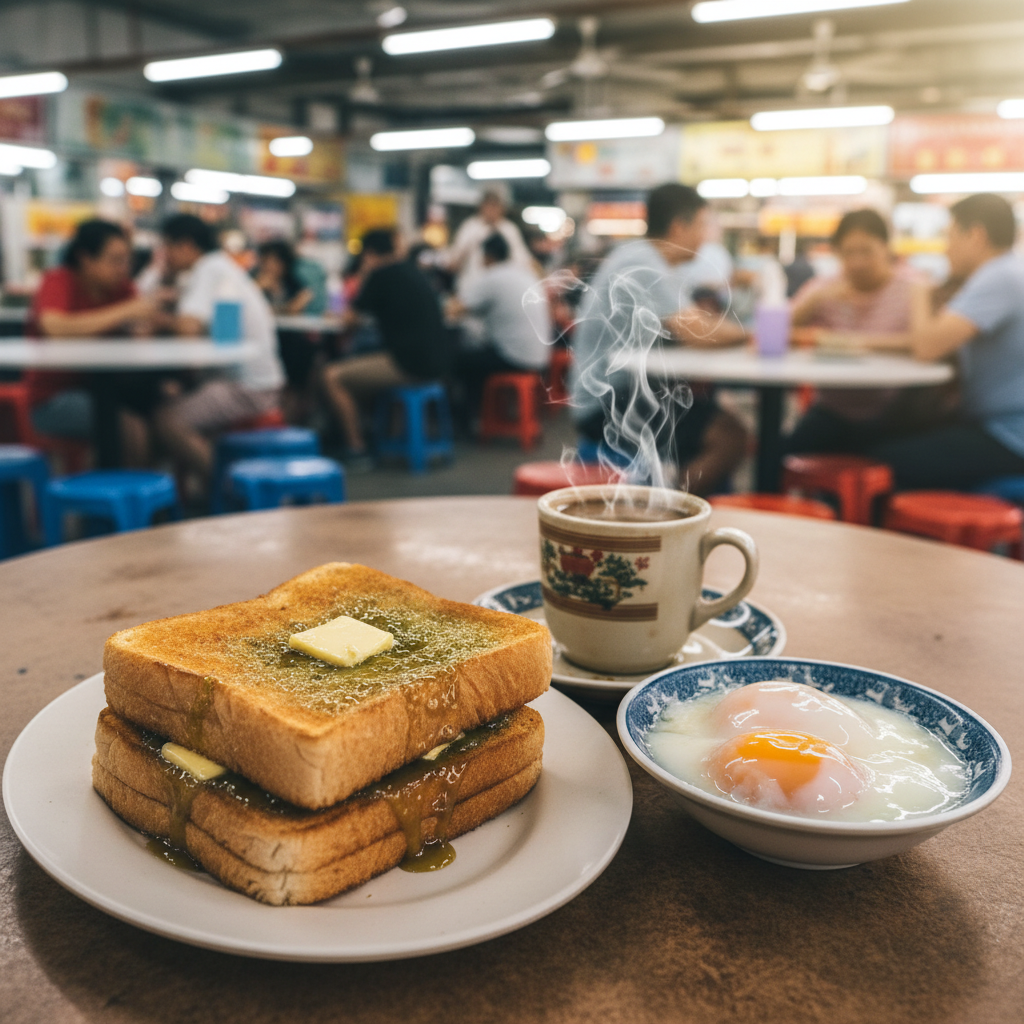
Ah, Kaya Toast. For many, it's not just a breakfast item; it's a warm, comforting hug, a quintessential taste of Singapore. This seemingly simple dish – toasted bread, coconut jam, and a slab of butter – holds a special place in the hearts of locals and is often the first culinary adventure for visitors. As your expert Singapore food blogger, I'm here to take you on a deep dive into the crispy, creamy, sweet, and savoury world of Kaya Toast. By the end of this guide, you'll know its fascinating history, where to find the absolute best, how to order like a true local, and all the insider tips to truly savour this iconic Singaporean staple. Get ready to embark on your ultimate Kaya Toast journey!
The story of Kaya Toast is deeply intertwined with Singapore's colonial past and the ingenuity of its Hainanese community. In the early 20th century, Hainanese immigrants, often employed as cooks by British families, adapted Western breakfasts for local palates. Toast and butter were common, but resourceful Hainanese chefs created 'kaya' (meaning 'rich' in Malay) – a creamy, fragrant jam made from coconut milk, eggs, sugar, and pandan leaves – as an affordable and delicious substitute for Western jams and marmalades. These early Hainanese coffee shops, or 'kopitiams', became community hubs, serving this unique fusion alongside strong local coffee. Over the decades, Kaya Toast evolved from a simple snack for labourers to a beloved national breakfast, a symbol of Singapore's rich multicultural heritage and its ability to blend influences into something uniquely delicious.
A true Kaya Toast experience is more than just the toast itself. It's a symphony of flavours and textures. Here’s what makes up the iconic set:
* **Kaya Toast (Traditional)**: This is the classic. Thin slices of white bread, expertly grilled (often over charcoal for a smoky char) until perfectly crisp, then slathered with a generous layer of fragrant kaya and a thick slice of cold, unsalted butter. The contrast of the hot toast, sweet kaya, and melting salty butter is pure magic. * **Kaya Toast (Steamed)**: For those who prefer a softer bite, steamed bread offers a fluffy, pillow-like texture. It absorbs the kaya and butter beautifully, providing a different, yet equally comforting, experience. * **Kaya Toast (French Toast Style)**: A modern twist found in some cafes, where the kaya-and-butter-filled toast is dipped in egg batter and pan-fried, creating a rich, savoury-sweet delight. * **The Kaya Itself**: There are primarily two styles: * **Hainanese Kaya**: Often darker brown, with a more pronounced caramelised sugar flavour and a rich, custardy texture. * **Nyonya Kaya**: Typically green, vibrant with pandan essence, and slightly smoother, showcasing the fragrant tropical leaf. * **Soft-Boiled Eggs (Half-Boiled Eggs)**: An indispensable companion! Served barely set, these wobbly, creamy eggs are meant to be seasoned with a dash of dark soy sauce and a sprinkle of white pepper. Dip your Kaya Toast into the runny yolk for an explosion of umami. * **Kopi & Teh (Local Coffee & Tea)**: Don't just order 'coffee' or 'tea'. Dive into the local lingo! These robust, intense brews are prepared with condensed and evaporated milk and come in various permutations: * **Kopi-O**: Black coffee with sugar. * **Kopi-C**: Coffee with evaporated milk and sugar. * **Kopi-Gao**: Extra strong coffee. * **Kopi-Siew Dai**: Coffee with less sugar. * **Kopi-Peng**: Iced coffee. * (Similar variations exist for 'Teh' – tea)
Singapore is dotted with fantastic places to enjoy Kaya Toast, from heritage chains to modern cafes. Here are some of my top recommendations:
* **Ya Kun Kaya Toast**: Perhaps the most famous name, Ya Kun is synonymous with classic Hainanese Kaya Toast. Known for their thin, crisp, charcoal-grilled brown bread and rich Hainanese kaya, served with perfectly runny soft-boiled eggs and strong Kopi. You'll find their numerous outlets across Singapore, from shopping malls to office buildings. * *Recommended Outlets*: Far East Square (original vibe), VivoCity (convenient for tourists). * **Killiney Kopitiam**: Dating back to 1919, Killiney is one of Singapore's oldest kopitiams. They pride themselves on traditional methods, serving their Kaya Toast on thick, fluffy white bread that's crisp on the outside and soft within, paired with their signature Nyonya-style kaya. Their Teh (tea) is also highly regarded. * *Recommended Outlets*: Killiney Road (flagship and most authentic experience), Lucky Plaza (bustling spot). * **Toast Box**: A more modern take on the traditional kopitiam, Toast Box offers a comfortable, air-conditioned environment. While a chain, they maintain decent quality and offer a wider variety of local snacks alongside their Kaya Toast (which is typically on thicker, softer white bread). A good entry point for those less accustomed to traditional kopitiam settings. * *Recommended Outlets*: ION Orchard (prime location), Raffles City (central). * **Local Hawker Centres & Coffeeshops**: For a truly local experience, seek out independent stalls within hawker centres or traditional coffeeshops. These often offer incredible value and unique variations. Look for stalls with long queues, a good sign of quality. Some notable ones: * **Heap Seng Leong (North Bridge Road)**: A truly old-school coffeeshop, complete with marble-top tables and proprietors brewing kopi over charcoal. Their Kaya Toast is simple, unpretentious, and utterly delicious. A true step back in time. * **Chin Mee Chin Confectionery (East Coast Road)**: An iconic, vintage café famous for its fluffy, steamed Kaya Buns rather than toast, but equally beloved and a must-try for a different texture. * **Boutique Cafes**: Modern cafes like Tiong Bahru Bakery also offer high-quality versions of toast with artisanal kaya, sometimes with sourdough or specialty bread, providing a gourmet twist on the classic.
Navigating a kopitiam can be an experience in itself. Here’s how to order and enjoy your Kaya Toast like a pro:
1. **Order a 'Set'**: Most places offer a 'Kaya Toast Set' which typically includes two slices of Kaya Toast, two soft-boiled eggs, and a hot drink (Kopi or Teh). It's the most economical and complete way to experience it. 2. **Customise Your Drink**: Don't be shy! Use the local lingo for your coffee or tea (e.g., 'Kopi-C Siew Dai' for coffee with evaporated milk and less sugar). Baristas are used to it. 3. **Self-Service is Common**: In most traditional kopitiams and even some chains, you'll order and pay at the counter, then either collect your food when ready or wait for it to be brought to your table. 4. **Embrace the Eggs**: Don't leave the soft-boiled eggs untouched! Crack them gently into the saucer, add a few dashes of dark soy sauce and a sprinkle of white pepper, then mix gently. You can either drink them straight from the saucer or, even better, dip your Kaya Toast into the creamy, savoury goodness. 5. **Don't Linger During Peak Hours**: Kopitiams are bustling, especially in the mornings. Enjoy your meal, but be mindful of others waiting for tables. It's not a place for long, leisurely chats during peak times.
Kaya Toast is one of Singapore's most affordable culinary delights. A typical Kaya Toast set (toast, eggs, drink) will usually cost:
* **Hawker Centres/Traditional Kopitiams**: S$3.50 - S$5.00 * **Heritage Chains (Ya Kun, Killiney)**: S$5.00 - S$7.00 * **Modern Chains (Toast Box) & Boutique Cafes**: S$6.00 - S$9.00 (depending on variations or premium ingredients)
It’s a fantastic value for a delicious and filling breakfast or snack.
To ensure your Kaya Toast adventure is nothing short of perfect, steer clear of these common pitfalls:
* **Skipping the Eggs**: The soft-boiled eggs are not just an accompaniment; they're an integral part of the experience. Their richness and umami perfectly balance the sweet toast. * **Not Customising Your Drink**: If you're sensitive to sweetness, ordering a standard Kopi/Teh might be too sweet. Learn the 'Siew Dai' (less sugar) or 'Kosong' (no sugar) options. * **Ignoring the Dipping**: Many tourists eat the eggs separately or don't know what to do with them. The true local way is to season them and then dip your toast, creating a beautiful flavour combination. * **Only Trying One Place**: While the big chains are great, venturing into a local kopitiam or hawker centre can reveal different preparation styles and unique atmospheres. Each place has its own charm! * **Expecting Restaurant Service**: Kopitiams are typically fast-casual. Be prepared for self-service and a bustling, sometimes noisy, environment.
Ready for some pro-level advice to elevate your Kaya Toast game?
1. **Seek Out Charcoal Grills**: For the most authentic flavour, look for places that still grill their toast over charcoal. The subtle smokiness elevates the toast significantly. 2. **Ask for Extra Butter (or Kaya!)**: Don't be shy to request an extra slab of butter or a dollop of kaya if you're feeling indulgent. Some places might charge a small fee, but it's often worth it. 3. **Go Early**: The freshest toast, the crispiest bread, and the most vibrant atmosphere are found early in the morning, right when the kopitiams open. Plus, you beat the lunch crowds! 4. **Experiment with Toast Types**: Don't just stick to the classic crispy. Try the steamed bread for a softer, pillowy texture, or the French toast version for a richer treat. 5. **Buy a Jar of Kaya**: Love the jam? Most heritage kopitiams and supermarkets sell jars of their signature kaya. It makes for a fantastic souvenir or a way to recreate a taste of Singapore at home. 6. **Pair it with Local Snacks**: Enhance your experience by pairing your Kaya Toast set with other local favourites like a 'curry puff' or 'otah' (grilled fish paste) for a truly Singaporean breakfast spread.
Got more questions about Kaya Toast? I've got answers!
* **What exactly is Kaya?** Kaya is a traditional Southeast Asian coconut jam made from coconut milk, eggs, sugar, and pandan leaves. The ingredients are slow-cooked until they form a smooth, fragrant, and rich custard-like spread. * **Is Kaya Toast only for breakfast?** Traditionally, yes, it's a breakfast staple. However, in modern Singapore, it's widely enjoyed as a snack throughout the day – for lunch, afternoon tea, or even a light dinner. * **Is Kaya Toast Halal?** Many major chains like Ya Kun Kaya Toast and Toast Box are Halal-certified, meaning they adhere to Islamic dietary laws. However, it's always best to check for the Halal certification logo at individual outlets, especially in smaller, independent kopitiams. * **Can I make Kaya Toast at home?** Absolutely! You can buy pre-made kaya from supermarkets or specialty stores, or even try making your own from scratch. Just toast your bread, spread kaya, and add a slice of cold butter. * **Are there vegetarian options?** The Kaya itself is vegetarian (coconut, eggs, sugar, pandan). If you skip the soft-boiled eggs, the toast with kaya and butter is vegetarian. Vegan options would require a plant-based kaya and butter, which are less common but might be found in some health-conscious cafes.
From its humble origins in Hainanese kopitiams to its status as a beloved national icon, Kaya Toast truly embodies the spirit of Singaporean cuisine – a delicious blend of heritage, innovation, and irresistible flavour. It's more than just a meal; it's a cultural experience, a daily ritual, and a taste that evokes a deep sense of nostalgia for many. Now armed with this ultimate guide, you're ready to confidently navigate the kopitiams, order like a local, and savour every crispy, creamy, and utterly delightful bite. So go forth, explore, and let your Kaya Toast journey be filled with delicious discoveries. Happy eating, my fellow food adventurers!