🍚 Nasi Lemak vs 🍴 Nasi Biryani: Singapore's Ultimate Food Showdown
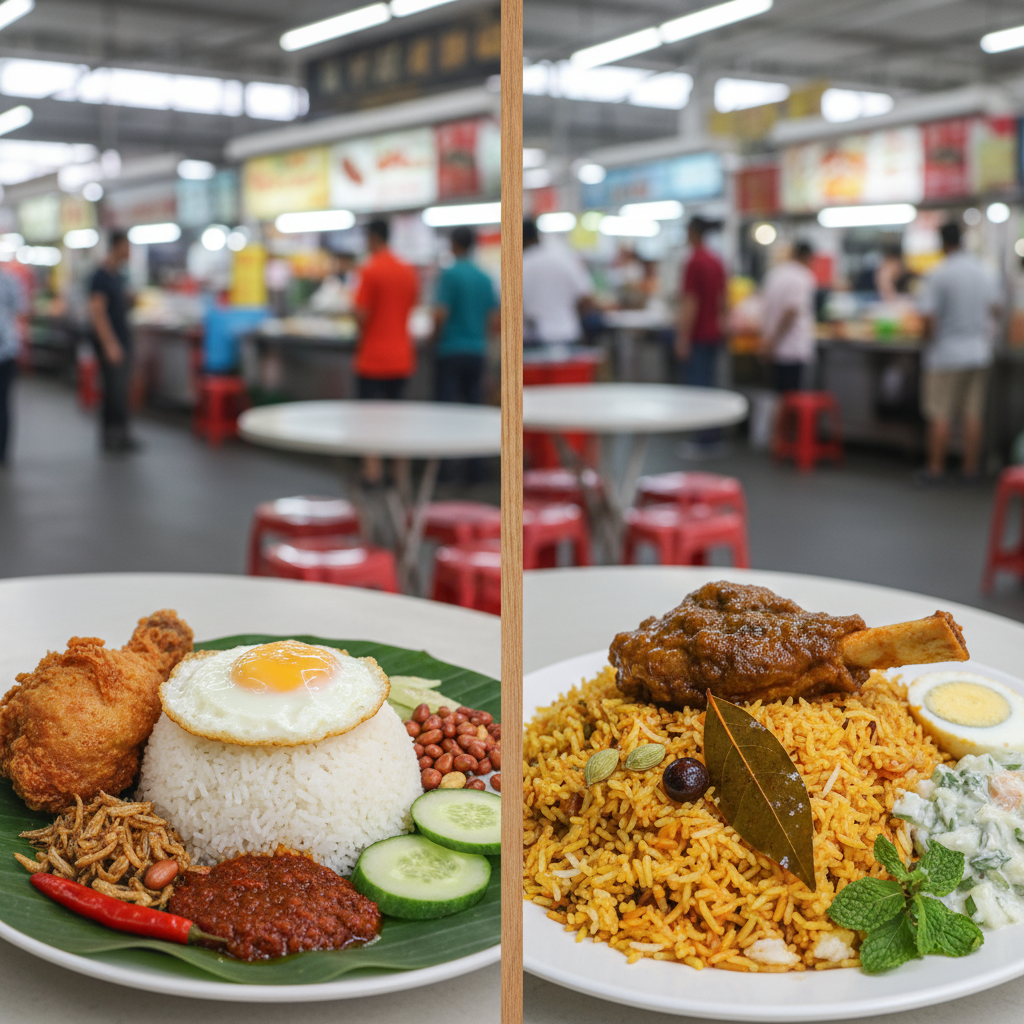
Auntie, one Nasi Lemak! Uncle, satu Briyani! Ah, the familiar cries echoing through Singapore's hawker centres. Here in our Little Red Dot, food isn't just sustenance; it's a way of life, a cultural touchstone, and sometimes, a fiercely debated topic. Today, we're diving fork-first into a showdown of epic proportions: two titans of the rice world, both beloved, both incredibly flavourful, but distinctly different. We're talking about the fragrant, coconut-infused goodness of Nasi Lemak going head-to-head with the aromatic, spice-laden majesty of Nasi Biryani! 💥 Why this battle, you ask? Because both dishes represent a cornerstone of our multicultural culinary landscape. One a Malay breakfast staple that’s evolved into an all-day delight, the other an Indian subcontinent import perfected with local flair. They both bring joy, comfort, and serious 'shiok' factor to thousands daily. So, buckle up, foodies! It’s time to settle this (or at least have a lot of fun trying)!
Team Nasi Lemak: The Coconut Dream 🥥
Nasi Lemak, a dish whose very name translates to 'fatty rice' (in the best possible way!), is a quintessential Malay delight that has been wholeheartedly adopted by Singaporeans of all races. Its origins trace back to Malaysia, where it started as a humble village breakfast. In Singapore, it evolved from simple packets sold by roadside vendors into a customizable feast available everywhere from hawker stalls to swanky restaurants.
What makes it so special? It all starts with the rice, cooked in coconut milk and pandan leaves, giving it an intoxicating fragrance and a creamy richness. This fragrant base is then typically accompanied by a fiery, sweet-spicy sambal, crispy ikan bilis (anchovies), roasted peanuts, a slice of cucumber, and a perfectly fried egg. But wait, there’s more! The magic truly happens with the add-ons: crispy fried chicken wings, otah, begedil (potato patties), fish fillet, hotdogs – you name it, you can probably add it. It's a symphony of textures and flavours, from the soft rice to the crunchy peanuts, the tangy cucumber to the explosive sambal. Every spoonful is a party in your mouth!
**Best Places to Eat Nasi Lemak:** 1. **Chong Wen Nasi Lemak (Maxwell Food Centre):** A hidden gem often overshadowed, but their fragrant rice and balanced sambal, paired with perfectly fried chicken wings, are top-notch. Expect to pay around SGD 4.00 - SGD 7.00. 2. **Punggol Nasi Lemak (Jalan Besar):** An institution! Known for its extensive range of crispy add-ons and consistently good quality. It’s slightly pricier, around SGD 5.00 - SGD 9.00, but worth it for the variety and generous portions. 3. **Boon Lay Power Nasi Lemak (Boon Lay Place Food Village):** A legendary spot in the West, famous for its long queues and 'power' (strong) sambal. Their chicken wing is legendary. Expect SGD 3.50 - SGD 8.00.
**Price Range:** Typically SGD 3.50 for a basic set to SGD 9.00+ for a fully loaded plate.
**Taste Profile:** Aromatic, savoury, creamy, spicy, sweet, crunchy. A harmonious blend that hits all the right notes.
Team Nasi Biryani: The Aromatic King 👑
Hailing from the Indian subcontinent, Nasi Biryani is a majestic dish with Persian roots, brought to Southeast Asia by traders and immigrants. It's a celebratory meal, often served at special occasions, but in Singapore, we’re lucky enough to enjoy its rich flavours daily. Our local versions, particularly the 'Hyderabad style' or 'dum biryani', are a testament to Singapore’s diverse culinary tapestry.
What elevates Nasi Biryani to royalty status? It’s the meticulous preparation. Basmati rice, known for its long, slender grains and fragrant aroma, is cooked 'dum' style (slow-cooked in a sealed pot) with tender marinated meat – usually chicken or mutton – and a complex blend of aromatic spices like cardamom, cloves, cinnamon, saffron, and bay leaves. The rice absorbs all the rich flavours and colours from the spices and meat, resulting in a deeply satisfying, incredibly fragrant dish. It’s typically served with a side of flavourful dalcha (lentil-based gravy) and refreshing achar (pickled vegetables), which cut through the richness beautifully. Every bite is an explosion of complex, layered flavours that will leave you craving more – truly 'sedap'!
**Best Places to Eat Nasi Biryani:** 1. **Allauddin's Briyani (Tekka Centre):** A staple at Tekka, known for its consistent quality and generous portions. The queue is always long, but moves fast! A plate of chicken biryani is around SGD 6.00 - SGD 8.00. 2. **Bismillah Biryani (Dunlop Street):** A Michelin Bib Gourmand recipient, Bismillah is renowned for its artisanal, 'dum' style biryani with incredibly tender meat and exceptionally fragrant rice. Expect to pay around SGD 9.00 - SGD 12.00. 3. **Koothurar Nasi Briyani (Tekka Centre):** Another crowd favourite at Tekka, offering a different, yet equally delicious, take on the dish, often with a slightly spicier kick. Prices are similar to Allauddin's.
**Price Range:** Typically SGD 6.00 for a chicken biryani to SGD 12.00+ for premium or mutton versions.
**Taste Profile:** Complex, aromatic, rich, savoury, deeply spiced, tender meat. A truly fulfilling and hearty meal.
⚔️ Head-to-Head: The Ultimate Showdown! 🥊
Now that we’ve acquainted ourselves with our contenders, let's put them side-by-side for the ultimate comparison!
**Taste Comparison:** * **Nasi Lemak:** Offers a brighter, more diverse flavour profile with distinct components. The sweetness of coconut rice, the punch of sambal, the crunch of peanuts, the savouriness of the egg and chicken – it’s a playful mix of textures and bold, yet balanced, tastes. * **Nasi Biryani:** Provides a deeper, more integrated flavour experience. The spices infuse every grain of rice and piece of meat, creating a cohesive, aromatic richness. It’s less about contrasting elements and more about a symphony of warm, earthy spices.
**Value for Money:** * **Nasi Lemak:** Generally more affordable, especially for a basic set. You can get a satisfying meal for under SGD 5, making it a fantastic everyday option. * **Nasi Biryani:** Tends to be pricier due to the quality of basmati rice, the meat, and the intricate cooking process. However, it's a very substantial and filling meal, often considered a special treat.
**Availability:** * **Nasi Lemak:** Extremely widespread. You can find it at almost any hawker centre, coffee shop, or even convenience stores, often from early morning till late at night. It’s a true anytime meal. * **Nasi Biryani:** While also popular, it’s slightly less ubiquitous than Nasi Lemak. You’ll find fantastic biryani at Indian Muslim hawker stalls and dedicated restaurants, typically focused on lunch and dinner service.
**Tourist-Friendliness:** * **Nasi Lemak:** Highly tourist-friendly. Its vibrant colours and diverse textures are very appealing. The level of spiciness in the sambal can be controlled or even omitted for those with milder palates, making it a versatile choice for newcomers. * **Nasi Biryani:** Also very tourist-friendly for those who appreciate aromatic spices and hearty meals. It's a fantastic introduction to Indian Muslim cuisine. The richness might be a bit much for some, but generally, it’s a universally loved dish.
🏆 The Verdict: And the Winner Is... 🏆
Winner: Nasi Lemak
This was a tough one, like choosing between your favourite child! Both Nasi Lemak and Nasi Biryani are culinary masterpieces that deserve all the accolades. However, if I had to pick just *one* for its sheer versatility, ubiquity, and undeniable status as Singapore's everyday comfort food, my heart (and stomach) lean slightly towards **Nasi Lemak**.
Nasi Lemak wins for its ability to be both a quick, satisfying breakfast and a customizable, hearty lunch/dinner. Its combination of sweet, spicy, savoury, and crunchy elements makes it incredibly addictive and broadly appealing. It’s a dish that truly embodies the casual, diverse, and accessible spirit of Singaporean hawker food. While Biryani is undoubtedly more 'regal' and complex, Nasi Lemak's humble charm and widespread embrace make it the everyday champion. But let's be real, you absolutely NEED to try both when you're here. They both bring different kinds of joy!
📍 Where to Try These Iconic Dishes 📍
- Chong Wen Nasi Lemak
- Punggol Nasi Lemak
- Boon Lay Power Nasi Lemak
- Allauddin's Briyani
- Bismillah Biryani
- Koothurar Nasi Briyani
❓ Frequently Asked Questions
🎯 Final Thoughts
There you have it, folks – a deep dive into the delightful world of Nasi Lemak and Nasi Biryani! Two incredible rice dishes, each with its own unique charm, history, and legions of fans. Whether you're craving the comforting embrace of coconut rice and spicy sambal, or the aromatic, complex flavours of spice-infused basmati and tender meat, Singapore has got you covered. This isn't just a food battle; it's a celebration of our vibrant culinary heritage. So, what are you waiting for? Go forth and feast! Which one gets your vote? Let me know in the comments – I’m always keen to hear your favourites! ✨