🍝 Char Kway Teow vs 🍜 Hokkien Mee: Singapore's Ultimate Food Showdown
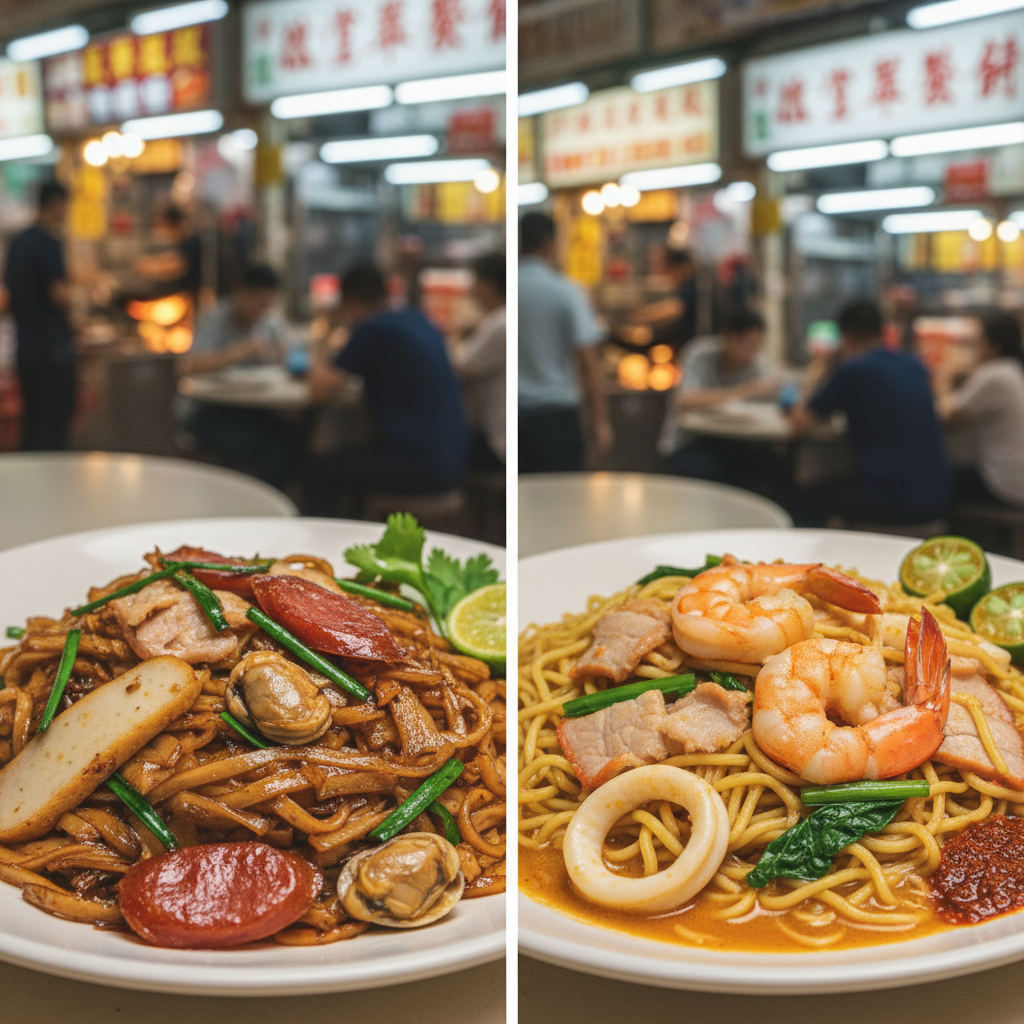
Alright, foodies! If you've ever set foot in a Singapore hawker centre, you know the drill. The intoxicating aromas, the sizzle and clang of woks, and the impossible choices. Among the pantheon of local delights, two noodle titans often spark heated debates: the smoky, sweet Char Kway Teow and the rich, prawn-broth infused Hokkien Mee. Both are quintessential Singaporean experiences, deeply etched into our culinary DNA. But which reigns supreme? 🤔 Today, we're not just savouring; we're launching a full-blown food battle! This isn't just about ingredients; it's about history, technique, the 'wok hei' magic, and the soul-satisfying comfort each dish delivers. Whether you're a long-time resident or a curious traveller planning your next makan adventure, understanding the nuances between these two legendary dishes is key to unlocking Singapore's vibrant food scene. So, grab your chopsticks, unbutton your pants, and let's dive into the ultimate showdown! May the best noodles win!
Team Char Kway Teow: The Wok Hei Warrior
History and Origin in Singapore
Originating from the Teochew and Hokkien communities in Southeast Asia, Char Kway Teow (炒粿條) literally means 'stir-fried rice cakes' (referring to the flat rice noodles). In Singapore, its roots trace back to humble beginnings, often prepared by fishermen or labourers for a quick, energy-packed meal. It was initially sold by vendors who would push their mobile stalls around, frying up this glorious dish right on the spot. The addition of cockles (hum) and pork lard were economic choices that became iconic flavour enhancers, giving it that unmistakable Singaporean touch.What Makes It Special
Ah, Char Kway Teow! What truly sets it apart is the elusive, magical 'wok hei' – the breath of the wok. This unique smoky aroma and flavour infused into the noodles comes from high-heat stir-frying in a well-seasoned wok. Paired with flat rice noodles (kway teow) and yellow noodles, it's stir-fried with dark soy sauce, lap cheong (Chinese sausage), eggs, bean sprouts, chives, and those juicy cockles, all generously coated in crispy pork lard. The balance of sweet, savoury, and a hint of spiciness, along with that irresistible smoky char, makes it utterly addictive. Shiok, lah!Best Places to Eat It
1. **Hill Street Char Kway Teow (Bedok South Market & Food Centre):** Consistently long queues are a testament to their legendary CKT. The perfect balance of sweet and savoury, with generous 'wok hei'. 2. **Outram Park Fried Kway Teow Mee (Hong Lim Market & Food Centre):** Famous for its wetter, eggier rendition. A truly unique and satisfying experience that's often described as 'power'. 3. **Lau Goh Teochew Choon Fried Kway Teow (Zion Riverside Food Centre):** An old-school classic with a loyal following, known for its consistent wok hei and flavour.Price Range
A plate of Char Kway Teow typically ranges from **SGD $4.00 to $7.00**, depending on the stall and portion size. Expect to pay a little more for extra ingredients like cockles.Taste Profile
Smoky, sweet, savoury, slightly spicy (if you ask for chilli), and wonderfully greasy from the pork lard. The texture is a delightful mix of chewy noodles and crunchy bean sprouts, with bursts of umami from the cockles and lap cheong. It's a symphony of flavours and textures that hits all the right spots.Team Hokkien Mee: The Broth Master
History and Origin in Singapore
Hokkien Mee (福建炒虾面) in Singapore, often called 'Fried Prawn Mee', has a fascinating history. It's believed to have originated post-WW2, when Hokkien fishermen from Fujian province would fry leftover noodles with their catch. Over time, it evolved into the beloved dish we know today, characterized by its rich prawn-based broth used to braise and fry the noodles, imbuing them with deep seafood flavour. It's a comforting dish, particularly popular at night, perfect for a hearty supper.What Makes It Special
The star of Hokkien Mee is undoubtedly its robust, flavourful broth, simmered for hours with prawn heads, shells, and pork bones. This liquid gold infuses every strand of yellow noodles and thick bee hoon (rice vermicelli) as they're stir-fried and braised together. The dish typically includes fresh prawns, squid, slices of pork belly, and often garnished with crispy pork lard (though sometimes less prominent than CKT's). Served with a dollop of sambal belacan and a squeeze of calamansi lime, it's a juicy, umami-rich experience. The texture is gloriously slurpable, often slightly gooey or 'wet', making it incredibly satisfying.Best Places to Eat It
1. **Come Daily Fried Hokkien Prawn Mee (Blk 127 Lorong 1 Toa Payoh):** Known for its incredibly rich, dark, and flavourful prawn broth that coats the noodles beautifully. A true benchmark. 2. **Hainan Fried Hokkien Prawn Mee (Golden Mile Food Centre):** A popular spot famous for its slightly drier, yet incredibly aromatic and flavourful rendition, always served with a fiery sambal. 3. **Ah Hock Fried Hokkien Noodles (Chomp Chomp Food Centre):** A consistent crowd-pleaser at the famous Chomp Chomp, delivering a classic, well-balanced plate with generous portions.Price Range
A standard plate of Hokkien Mee usually costs between **SGD $5.00 to $8.00**, depending on the stall and the quantity of seafood.Taste Profile
Rich, intensely savoury, with a profound seafood umami that lingers. It's often slightly garlicky, with a comforting, almost stew-like quality. The sambal adds a spicy kick, and the calamansi lime cuts through the richness, adding a bright, tangy finish. The combination of different noodle textures provides a delightful chew.⚔️ Head-to-Head: Char Kway Teow vs Hokkien Mee
Now that we've paid our respects to each contender, let's pit them against each other across several crucial rounds!
Taste Comparison
* **Char Kway Teow:** Dominates with its smoky 'wok hei', a sweeter profile, and the glorious richness of pork lard. It's a dry, punchy dish with distinct flavours. If you love savoury-sweet-smoky, CKT is your champion. * **Hokkien Mee:** Stands out with its deep, oceanic prawn broth and a more savoury, umami-laden flavour. It's a 'wetter' dish, often more comforting and less aggressive than CKT. If you crave seafood richness and a comforting slurp, Hokkien Mee calls your name.Value for Money
Both dishes offer incredible value for their price, especially considering the skill and ingredients involved. Char Kway Teow typically starts from $4, while Hokkien Mee often begins at $5. The slight price difference usually reflects the cost of fresh prawns and the long hours spent simmering the broth for Hokkien Mee. Generally, both give you a generous, satisfying meal that won't break the bank.Availability
Both are ubiquitous across Singapore's hawker centres and coffee shops. You'll be hard-pressed to find a major food centre without at least one stall selling either. However, finding truly *exceptional* versions of either dish requires a bit of research and sometimes, a willingness to queue. Good quality CKT with strong wok hei, or Hokkien Mee with a deeply flavourful broth, are true treasures.Tourist-Friendliness
* **Char Kway Teow:** While incredibly popular, the inclusion of cockles (blood cockles) and significant pork lard can be a turn-off for some international visitors or those with dietary restrictions. You can usually request 'no hum' and 'less lard', but it fundamentally changes the experience. * **Hokkien Mee:** Generally more approachable for a wider audience. The seafood flavours are universally appealing, and while it contains pork belly, it's often less overtly 'greasy' than CKT. Spice levels can be adjusted by adding less sambal. The only caveat might be the slurp-factor and getting a bit messy, but hey, that's part of the hawker charm!🏆 The Verdict: And the Winner Is...
Winner: Char Kway Teow
This was a truly tough call, like asking a parent to pick their favourite child! Both Char Kway Teow and Hokkien Mee represent the pinnacle of Singapore's hawker heritage, each offering a distinct and deeply satisfying experience. However, if I absolutely *had* to pick a winner for its sheer uniqueness and the mastery required, I'd lean towards **Char Kway Teow**.
My reasoning? The elusive, perfectly executed 'wok hei' in Char Kway Teow is a culinary art form that truly defines Singaporean stir-frying. When done right, that smoky char combined with the sweet, savoury, and slightly spicy notes, enhanced by crispy lard and juicy cockles, is simply unparalleled. It’s an explosion of flavour and texture that screams 'Singapore!' in every bite. It’s bold, it’s unapologetic, and it demands attention.
That said, Hokkien Mee is a phenomenal dish in its own right – a comforting, rich, and deeply umami bowl that consistently delivers. It’s the perfect antidote to a rainy day or a late-night craving. While CKT wins this particular battle for its unique character, let’s be real, you absolutely *need* to try both when you're here. There’s no losing when these two are involved!
📍 Where to Try These Legendary Dishes
- [object Object] - Bedok South Market & Food Centre, Blk 16 Bedok South Road, #01-187, Singapore 460016
- [object Object] - Hong Lim Market & Food Centre, Blk 531A Upper Cross Street, #02-17, Singapore 051531
- [object Object] - Zion Riverside Food Centre, 70 Zion Road, #01-17, Singapore 247792
- [object Object] - Blk 127 Lorong 1 Toa Payoh, #02-27, Singapore 310127
- [object Object] - Golden Mile Food Centre, 505 Beach Road, #B1-34, Singapore 199583
- [object Object] - Chomp Chomp Food Centre, 20 Kensington Park Road, #01-27, Singapore 557269
❓ Frequently Asked Questions
🎯 Final Thoughts
Well, folks, what a battle that was! While Char Kway Teow edged out a win in my books for its unique 'wok hei' charm, the truth is, both these dishes are champions in their own right, defining the very essence of Singaporean hawker food. They tell stories of our past, celebrate our diverse culinary heritage, and continue to bring immense joy to millions.
So, whether you're a CKT purist or a Hokkien Mee devotee, the real victory is in experiencing these incredible flavours for yourself. Don't just read about it; go forth and devour! What's *your* favourite in this noodle showdown? Drop a comment below and let me know – let the debate continue! And remember, when in Singapore, always eat like a local, with an open mind and an empty stomach. Happy eating, everyone!